The Best Books About Ancient Rome (Where to Start and What to Read Next)
Most reading lists for the best books about ancient Rome hand you a shelf of seven hundred years of imperial history in alphabetical order and tell you to figure it out. That is how readers bounce off Roman history. The right first book pulls you in; the wrong one makes Rome feel like homework. This guide ranks the books that real readers finish, with a clear order so each title prepares you for the next.
At Skriuwer we rank books by verified Amazon review count rather than editorial picks, so the titles below are the ones reviewers and historians keep coming back to. Each entry tells you what the book actually covers, what reading level it expects, and where it fits in a longer reading plan. If you want the full ranked collection, jump to the history books category; otherwise, read on for the curated route in. The arena side of Roman life gets its own ranked list in the Skriuwer guide to the best books about gladiators, and Rome's place in the wider sweep from Sumer to the medieval world is mapped in our best books about ancient civilizations.
Where to Start: The One Book Almost Every Reading List Agrees On
If you compare the major Roman-history reading lists (Five Books, Goodreads top shelf, the Daily History tens, modern academic syllabi), one title appears on every list: SPQR by Mary Beard. It is the modern single-volume history that historians actually recommend to friends, not just to students.
1. SPQR: A History of Ancient Rome by Mary Beard
Beard covers the first millennium of Roman history, from the legendary founding through the Caracalla edict of 212 CE that granted citizenship to all free inhabitants of the empire. She writes with the impatience of someone who has spent a career listening to bad popular history, and she keeps cutting back to what the evidence actually says versus what later writers invented. The result is a Rome that feels lived in rather than mythologised.
Best for: Total beginners. Anyone who wants one book that explains the shape of Roman history before diving deeper.
2. Rubicon: The Last Years of the Roman Republic by Tom Holland
The Roman Republic did not fall slowly. It collapsed in two violent generations, and Holland tells that story in the most propulsive narrative history of Rome ever written for general readers. By the time Caesar crosses the Rubicon on page 280, you understand why he had to. This is the book that turned a generation of readers into Roman-history obsessives.
Best for: Readers who liked SPQR and want a single late-Republic story told at full pace.
3. The Storm Before the Storm by Mike Duncan
Duncan is the historian behind The History of Rome podcast, and his book fills in the half-century before Rubicon. It is the story of the generation that broke the Republic without realising they were doing it: Marius, Sulla, the Gracchi brothers, and the slow normalisation of political violence. Read it before Rubicon if you want to see the collapse from the start.
Best for: Readers who want the political and economic causes of the Republic's failure, not just the dramatic end.
The Best Books on the Roman Empire After the Republic
The Republic ends with Caesar. The Empire begins with Augustus and runs for five centuries. These are the books that cover the imperial period without flattening it into a list of emperors.
4. Dynasty: The Rise and Fall of the House of Caesar by Tom Holland
Holland's sequel to Rubicon covers the Julio-Claudian dynasty: Augustus, Tiberius, Caligula, Claudius, Nero. The family that founded the empire was also one of the most dysfunctional in recorded history. Holland writes them as the soap opera they actually were, without losing the underlying political analysis.
5. Pax: War and Peace in Rome's Golden Age by Tom Holland
The third volume in Holland's trilogy covers the empire from Nero through the Antonines (roughly 69 to 138 CE), the period historians call Rome's golden age. If SPQR is your single-volume history, Holland's trilogy is the long-form companion.
6. The Decline and Fall of the Roman Empire by Edward Gibbon
Gibbon's eighteenth-century masterpiece is still the most ambitious history of Rome ever attempted. Modern abridged editions are the practical way in. Some of his conclusions have aged badly (his thesis that Christianity caused the fall is treated as one factor among many today), but as a piece of historical writing it remains unmatched.
Best for: Readers who have finished a modern history and want the canonical literary treatment.
Primary Sources: Reading the Romans Themselves
Most reading lists skip the ancient sources entirely. That is a mistake. Roman writers are far more readable than later commentary suggests, and a single primary source teaches you more about Roman thinking than a dozen secondary books.
7. The Twelve Caesars by Suetonius (Robert Graves translation)
Suetonius worked in the imperial archives and wrote short biographies of Julius Caesar plus the first eleven emperors. The Graves translation is the version that reads like modern narrative non-fiction. It is also the source for nearly every famous anecdote about the early emperors that you have ever heard.
8. Meditations by Marcus Aurelius (Gregory Hays translation)
The private notebook of a Roman emperor, the closest you will get to the inner life of a second-century stoic ruler. We cover this one in depth in the best books about stoicism if you want the wider philosophical context.
9. The Histories by Tacitus (Penguin Classics)
Tacitus on the year of the four emperors (69 CE) is the single greatest piece of political history surviving from antiquity. He writes with a cold precision that no later imperial historian matched.
Roman Daily Life, Economy, and Military: Topics Most Lists Skip
The top-ranking competitor pages for this keyword almost all stop at narrative political history. The gap they leave is the everyday Rome, the economy, the army, the people who were not senators or emperors. These two books fill that gap.
Roman history is also still a moving field. In late 2025, archaeologists led by Marcello Mogetta uncovered a massive stone-lined water basin at the ancient city of Gabii, eleven miles east of Rome, built around 250 BCE. It is one of the earliest examples of Roman monumental architecture beyond temples and walls, and a reminder that the books below sit on top of evidence that is still being dug up.
10. The Fate of Rome by Kyle Harper
Harper rewrites the fall of Rome through climate and disease data: the Antonine plague, the Justinianic plague, the Late Antique Little Ice Age. It is the book that changed how working historians think about why the empire ended, and it reads like detective work.
11. The Roman Army at War by Adrian Goldsworthy
Goldsworthy on the Roman military is the standard reference, and his shorter books on Roman warfare are accessible enough for general readers. If you want to understand how Rome actually held a Mediterranean-wide empire for centuries, the answer lies in the legions, and this is where to read about them.
How to Read Roman History in the Right Order
The most common mistake is to start with Gibbon or with primary sources cold. A workable sequence:
- Start with SPQR for the shape of Roman history.
- Then The Storm Before the Storm for the long causes of the Republic's fall.
- Then Rubicon for the dramatic end of the Republic.
- Then Dynasty and Pax for the early Empire.
- Then a primary source: The Twelve Caesars or Meditations.
- Then The Fate of Rome for the new economic and climate framing of the end.
This is six books, not seven hundred. By the end you will have a working timeline from Romulus to Constantine and the vocabulary to read anything else in the field.
Three Ancient Rome Books Worth Buying Today
The three titles below appear at the top of Amazon's Roman history category by verified review count. These are the books real readers keep buying.
- SPQR: A History of Ancient Rome by Mary Beard, the modern single-volume history that historians keep recommending.
- Rubicon: The Last Years of the Roman Republic by Tom Holland, the most readable narrative history of the Republic's collapse in print.
- The Storm Before the Storm by Mike Duncan, the long political backstory that explains why Rubicon happens at all.
For the full ranked list of Roman history titles by verified Amazon review count, see our history books collection. If you want to continue into specific figures, our companion guide on the best books about Julius Caesar covers the central figure in late-Republic Rome, our best books about Cleopatra covers his Egyptian counterpart and the final Ptolemaic ruler Rome absorbed, and our best books about Alexander the Great covers the conqueror whose Hellenistic legacy Rome inherited. For the wider classical world, our sleep story on ancient Rome is an unusual entry point, and our daily life in ancient Rome piece covers the texture most history books miss. For the five centuries before the emperors, our best books about the Roman Republic covers how Rome governed itself before it crowned a single ruler.
Your next good book, in your inbox
We only write when we find a book worth your time. Hand-picked recommendations across history, mythology, true crime and more.
Books You Might Like

Sapiens: A Brief History of Humankind
Yuval Noah Harari
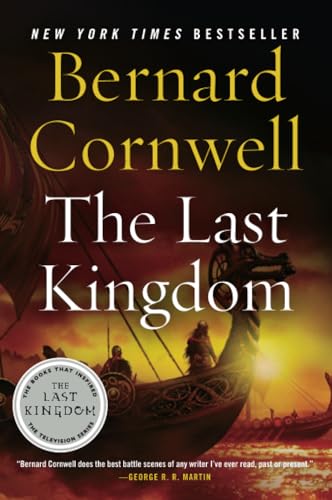
The Last Kingdom (The Saxon Stories, Book 1)
Bernard Cornwell

Meditations
Marcus Aurelius

The Hiding Place
Elizabeth Sherrill, John Sherrill Corrie ten Boom