Best Books About Ancient Rome: Republic, Empire and the City Eternal
Rome began as a settlement on seven hills and became an empire that stretched from Scotland to Iraq. It lasted a thousand years. Its law, architecture, engineering, and military systems shaped the world that followed. Rome did not fall so much as transform. Its culture, religion, and political ideas persist in Western civilization today. These books explore the Republic and the Empire, the people who built Rome and those who tried to save it, and the ideas that make Roman civilization endlessly compelling.
The Republic and Its Decline
The Fall of the Roman Republic by Tom Holland is a narrative history of the political crises that transformed Rome from a republic into a military autocracy. Holland focuses on individuals: Pompey, Julius Caesar, Cato, Cicero, and the lesser-known figures who made the choices that mattered. The book covers the civil wars, the betrayals, and the slow realization among senators that the Republic could not survive intact. Holland is a gifted storyteller who makes two thousand year old politics feel urgent and personal.
Cicero: A Life by Anthony Everett is a biography of the orator, philosopher, and politician whose speeches against Caesar's ally Mark Antony cost him his life. Cicero was not born to the highest rank, but his words made him powerful. He defended the Republic with eloquence even when military force had already determined its fate. Everett's biography shows how Cicero lived by his words and died by them.
SPQR: A History of Ancient Rome by Mary Beard is a comprehensive history that moves beyond traditional narratives. Beard asks new questions about Roman society: What was life like for ordinary people? What roles did women and enslaved persons play? How did Rome's expansion change its culture? The book is scholarly but written for general readers and challenges assumptions about what Roman civilization was and how it actually functioned.
The Emperors and Their World
Augustus: First Emperor of Rome by Anthony Everett tells the story of the man who transformed the Republic into an autocracy while claiming to preserve it. Augustus was shrewd, ruthless, and politically brilliant. He ended a century of civil war and created a system of government that lasted four hundred years. Everett shows both Augustus' genius and the ruthlessness required to build an empire.
The Twelve Caesars by Suetonius is an ancient source written by someone who lived within living memory of the emperors he describes. Suetonius includes stories, scandals, and personal details alongside political achievements. His accounts of Caligula, Nero, and others shaped how later generations understood them. The book is gossipy and sometimes unreliable, but it is a primary source that reveals how Romans saw their rulers.
Hadrian and the Triumph of Rome by Anthony Everett covers the reign of one of Rome's most capable emperors. Hadrian traveled throughout the empire consolidating its borders. He rebuilt the Pantheon. He constructed the wall in Britain that still bears his name. His reign marks the apex of Roman power and the beginning of a slow contraction. Everett shows why Hadrian is often considered the last of Rome's good emperors.
Military and Political Strategy
Caesar: A Life by Adrian Goldsworthy is a biography of Julius Caesar that separates the man from the legend. What made him militarily superior to his enemies? How did he navigate Roman politics? What did he actually accomplish in Gaul? Goldsworthy is a historian of Roman warfare and uses military analysis to explain Caesar's success. The book covers his civil war against Pompey and his assassination, placing them in the context of his entire life.
The Complete Roman Legions by Lesley Adkins explores the structure, training, and operations of Rome's armies. The legions were the instrument of empire. Understanding how they worked explains how Rome conquered and held territory across three continents. The book covers tactics, discipline, logistics, and the daily life of soldiers.
Mastering the Art of War by Sun Tzu and Vegetius combines classical writings on military strategy. While Sun Tzu was Chinese, his principles influenced thinkers across cultures. Vegetius was a Roman military theorist whose work influenced medieval and modern armies. Together they represent centuries of thinking about war, strategy, and the organization of force.
Everyday Roman Life and Culture
Pompeii: The Last Day by Marc Spitz reconstructs the eruption of Mount Vesuvius in 79 AD and the last hours of the people in Pompeii and Herculaneum. The ash preserved the cities in a moment of time. We can see the graffiti on walls, the food left on tables, the bodies in the positions where death found them. Spitz uses archaeological evidence and historical accounts to imagine those final hours.
The Secrets of Rome: Legends, Crafts and Everyday Life by Filippo Coarelli is a detailed look at Roman daily life, religion, architecture, and craftsmanship. What did Romans actually eat? How did their houses work? What was their religion like? Coarelli covers all of this with lavish illustrations and detailed explanations that bring the city to life.
The End and the Legacy
The End of the Classical World by John Julius Norwich covers the period from the decline of the Western Empire through the early medieval period. What exactly happened to Rome? Did it fall suddenly or fade gradually? How much of Roman civilization survived the transition? Norwich is a gifted historian and narrator who makes this complex period understandable.
The Normans from Raiding to Kings by James Morrow shows how the people of the North settled in Normandy and then conquered England. The Normans were shaped by Roman military tradition and law. Their conquest of England in 1066 brought renewed Roman cultural and legal influence to a Germanic-speaking island. The book traces how Rome's legacy continued through people and institutions that never called themselves Roman.
Why Rome Still Matters
Rome collapsed nearly sixteen hundred years ago, yet Roman law underlies modern legal systems. Roman engineering principles are still used in construction. Roman literature, philosophy, and rhetoric are still taught and read. Roman military strategy is still studied in academies. Rome mattered because it did things at scale: building lasting infrastructure, creating complex legal and administrative systems, and thinking systematically about how to organize a diverse population across a huge territory. These books help explain what Rome did and how its civilization shaped everything that came after.
Your next good book, in your inbox
We only write when we find a book worth your time. Hand-picked recommendations across history, mythology, true crime and more.
Books You Might Like

Sapiens: A Brief History of Humankind
Yuval Noah Harari
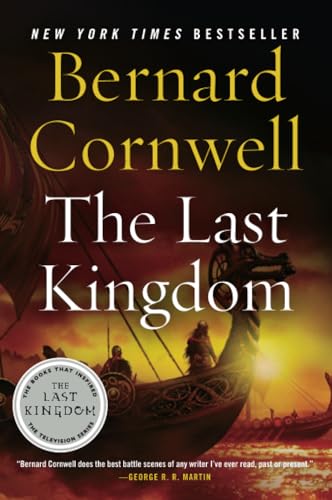
The Last Kingdom (The Saxon Stories, Book 1)
Bernard Cornwell

Meditations
Marcus Aurelius

The Hiding Place
Elizabeth Sherrill, John Sherrill Corrie ten Boom