Best Books About the Cold War: 10 That Reveal the Secret History of the 20th Century's Deadliest Standoff
Forty-five years of nuclear brinkmanship, proxy wars, and spy networks that reached into every government on Earth. The Cold War ended in 1991, but the documents kept surfacing for decades after. What we know now about how close it all came to catastrophe would have been unthinkable to publish while it was still happening.
These ten books are the best starting points. Some are rigorous history. Some are gripping narrative nonfiction. Two are fiction that understood the reality better than most official accounts. All of them tell you something about the 20th century that the textbooks get wrong or leave out entirely.
1. The Cold War: A New History -- John Lewis Gaddis
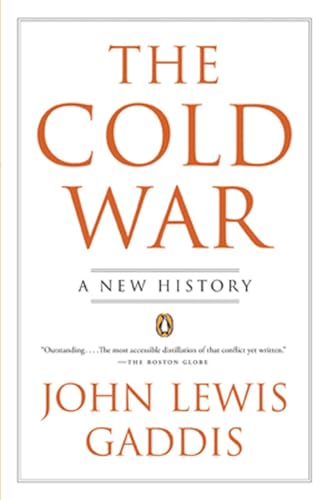
If you read one book on this list, make it this one. Gaddis spent thirty years teaching Cold War history at Yale and had access to Soviet and Chinese archives that opened only after 1991. This book is short (under 300 pages), writes clearly, and covers the full arc from 1945 to 1991 without turning into a reference text.
What makes it different from older Cold War histories is the Soviet side. Gaddis shows that Stalin's decisions in the late 1940s were often driven by paranoia and opportunism rather than any coherent ideological plan, and that American policymakers consistently overestimated Soviet strategic competence. The gap between what each side feared and what the other actually intended is one of the book's central themes, and it never stops being unsettling.
2. The Dead Hand -- David Hoffman
The Dead Hand is about nuclear weapons, and it is terrifying in the most specific way possible. Hoffman, a Pulitzer Prize-winning journalist, spent years gaining access to Soviet scientists and military officials who built and maintained the USSR's biological and nuclear programs. What he found was a system far larger, far more dangerous, and far less controlled than Western intelligence agencies had assumed.
The title refers to the Soviet automated nuclear launch system, a dead man's switch designed to fire missiles if command-and-control communications went silent during a US first strike. Hoffman reconstructs how this system worked, who knew about it, and what happened to the stockpiles after 1991. Several chapters deal with the scramble to secure Soviet bioweapons labs after the collapse, a story that has obvious resonance today.
3. Tinker Tailor Soldier Spy -- John le Carre
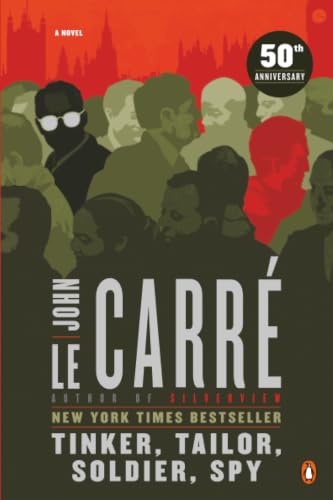
Fiction, yes. But le Carre worked for MI5 and MI6 in the 1950s and 1960s, and Tinker Tailor draws directly on real events, especially the Cambridge Five spy ring that compromised British intelligence for decades. The novel follows a retired spy brought back to find a Soviet mole at the top of British intelligence.
What le Carre captures that most histories miss is the institutional rot: the way a long-running penetration operation corrupts not just intelligence but careers, loyalties, and marriages. The Cold War, in his telling, was not a clean ideological contest but a decades-long exercise in institutional self-deception on both sides. Read this alongside the Gaddis for a different angle on the same period.
4. Prague Winter -- Madeleine Albright
Prague Winter is unusual in this list because it operates on two levels at once: part memoir, part history of Czechoslovakia between 1937 and 1948. Albright, who served as US Secretary of State under Clinton, grew up in a Czech family that fled the Nazis and then the Communist takeover. She wrote this book after discovering, late in life, that her family was Jewish and that dozens of relatives had died in the Holocaust.
The book covers a specific and often overlooked corner of Cold War prehistory: how the Soviets consolidated power in Eastern Europe in the late 1940s, using precisely the same playbook in country after country. Czechoslovakia was one of the last to fall, and the 1948 coup there became a template. Albright writes about it with a clarity that comes from personal stakes, and the result is more readable than most straight histories.
5. Khrushchev: The Man and His Era -- William Taubman
If you want the Soviet side from the inside, Taubman's biography of Nikita Khrushchev is the place to go. Taubman won the Pulitzer Prize for this book, and it earns it. He had access to Khrushchev's family, to KGB files, and to people who worked alongside him from the Stalin years through his ouster in 1964.
Khrushchev is one of the most consequential and least understood figures of the 20th century. He authorised the de-Stalinisation speech of 1956, which cracked the ideological foundation of Soviet communism, and he managed the Cuban Missile Crisis in 1962, which came closer to nuclear war than either side acknowledged at the time. Taubman shows him as neither hero nor buffoon but as someone shaped entirely by the system that produced him, trying to reform it without understanding how fully it had formed him.
6. The Spy and the Traitor -- Ben Macintyre
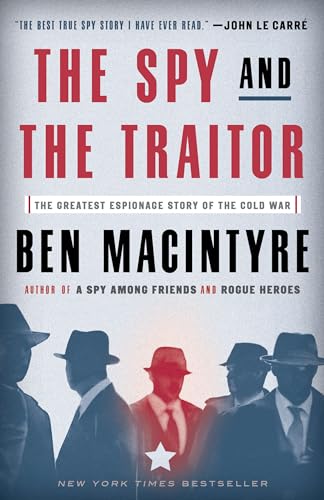
The best espionage story of the Cold War's final decade, told with the pacing of a thriller and the sourcing of a serious history. Oleg Gordievsky was a KGB colonel who had been working for British intelligence for over a decade when Moscow began to suspect him in 1985. His exfiltration from the Soviet Union, known as Operation PIMLICO, remains one of the most audacious operations MI6 ever ran.
Macintyre writes about it with access to Gordievsky himself and to the MI6 officers who ran him. What makes the book more than a spy story is the detail about what Gordievsky actually provided: he told the British, and through them the Americans, that Soviet leadership in 1983 genuinely believed the US was planning a nuclear first strike. Operation RYAN, the KGB's surveillance program for signs of a US attack, had produced a paranoid feedback loop that nearly triggered the very war it was designed to detect. Margaret Thatcher used Gordievsky's information to persuade Ronald Reagan to change his rhetoric toward the Soviet Union, and historians now credit this shift with opening the path to the agreements that ended the Cold War.
7. One Minute to Midnight -- Michael Dobbs
The Cuban Missile Crisis gets a full thirteen-day reconstruction in this book, sourced from both US and Soviet archives and from interviews with participants on both sides. Dobbs, a former Washington Post journalist, follows multiple simultaneous threads: the ExComm deliberations in Washington, the Soviet submarines running out of oxygen in the blockade zone, the U-2 pilots over Cuba, and the missile crews waiting for orders.
The most striking detail in the book is how many times the crisis nearly escalated through misunderstanding, mechanical failure, or individual initiative rather than political decision. A Soviet submarine commander, cut off from communication and under depth-charge attack from US destroyers who didn't know the submarine was carrying nuclear torpedoes, came within a single dissenting officer's objection of firing. That story alone justifies reading the book.
8. The Berlin Wall -- Frederick Taylor
The Wall is the Cold War's most recognisable symbol, but most people know very little about how it actually worked, who built it, how it was guarded, or what life was like for the people who lived next to it for 28 years. Taylor fills in all of it.
He covers the building of the Wall in August 1961 from both sides, the escape attempts, the shoot-to-kill orders, the 140 people who died trying to cross it, and the decision in 1989 that led to its fall. The fall itself is a case study in institutional communication breakdown: the announcement was made by accident, misunderstood by the crowd, and acted on before anyone in authority had decided to allow it. The Wall came down because a confused official read a poorly drafted press release at a live news conference.
9. Secondhand Time -- Svetlana Alexievich
Not a conventional history. Alexievich, who won the Nobel Prize in Literature in 2015, spent years collecting oral testimonies from ordinary Soviet citizens about what the end of the Soviet Union felt like from inside. The result is a polyphonic portrait of a society that had organized its entire existence around a single ideology and then had to continue living when that ideology collapsed.
The book is relevant to Cold War history because it shows what the conflict cost in human terms at the society level, not the policy level. People who had believed entirely in the Soviet project, people who had been persecuted by it, people who simply went to work every day and tried not to think about it: all of them surface here, and what they describe is more complex and more painful than any account that treats 1991 as a simple victory.
10. The Sword and the Shield -- Christopher Andrew and Vasili Mitrokhin
In 1992, a KGB archivist named Vasili Mitrokhin defected to Britain carrying handwritten notes he had secretly copied over years of working in the KGB's archives. Those notes formed the basis of this book, which is the most comprehensive account ever published of KGB foreign intelligence operations from the 1920s to 1991.
It reads like a reference work in places, which is its only weakness. But for anyone who wants to understand the full scope of Soviet intelligence operations, the recruitment networks, the disinformation campaigns, the penetration of Western institutions and media, there is nothing else that comes close. The Mitrokhin archive revealed dozens of previously unknown KGB assets and operations, and many of the revelations still haven't been fully absorbed by mainstream Cold War historiography.
Where to start: Begin with Gaddis for the overview, then Macintyre for the human scale, then Hoffman if you want to understand what nearly happened. Le Carre is best read after you have enough factual grounding to see exactly what he got right.
The Cold War is recent enough that some of the people in these books are still alive, and distant enough that the archives are now open. That combination makes this one of the best-documented periods in modern history, and these books represent the best of what that documentation has produced.
If the spycraft in these books left you curious about the codes underneath it, see the best books on cryptography and codebreaking for the Enigma machine, the Bletchley Park codebreakers, and how modern encryption actually works.
Your next good book, in your inbox
We only write when we find a book worth your time. Hand-picked recommendations across history, mythology, true crime and more.
Are you an author?
Get your book in front of readers like these, for free.
- Free book listing →Your own book page with an Amazon button
- Author page →Photo, bio and links to your site
- Featured placement →A spot in our best-of lists, from €29
Free tools we recommend
Get free honest reviewsReview exchange on iWrity, free to join
Books You Might Like

Sapiens: A Brief History of Humankind
Yuval Noah Harari
The Last Kingdom (The Saxon Stories, Book 1)
Bernard Cornwell

Meditations
Marcus Aurelius

The Hiding Place
Elizabeth Sherrill, John Sherrill Corrie ten Boom