Best Books About Cults and Manipulation in 2026: 10 That Reveal How People Get Trapped
Updated June 2026. This list covers a different slice of the manipulation literature than Skriuwer's existing best books about cults guide, which focuses on specific cult case studies. Here the angle is the mechanics: the psychology of influence, the academic research on thought reform, the historical record of mass compliance, and the personal accounts of people who studied high-control groups from the inside as researchers rather than survivors. These books answer the question the case-study accounts often skip: how, exactly, does it work?
That question turns out to be important in contexts well outside formal cults. The techniques described in Cialdini's influence research operate in advertising, in political campaigns, in abusive relationships, and in corporate culture. The books below make the mechanisms visible, which is the first and most important step toward being harder to manipulate.
Skriuwer ranks by reader reach and cross-disciplinary staying power. Several titles here are academic in origin but have found mass readerships; several are journalism that holds up better than most investigative reporting from the same period.
Start Here: The Science of Influence
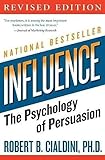 Influence: The Psychology of Persuasion by Robert Cialdini. Cialdini spent three years going undercover in sales organisations, advertising agencies, and fundraising operations to identify the six principles that make compliance requests irresistible: reciprocity, commitment and consistency, social proof, authority, liking, and scarcity. The 1984 book is the most cited work in the persuasion literature and has been on business school syllabuses continuously since publication. The expanded 2021 edition adds a seventh principle (unity) and updates the research base with three decades of replication studies. Every other book on this list can be read as a case study in one or more of Cialdini's principles operating at scale.
The Psychopathy Lens
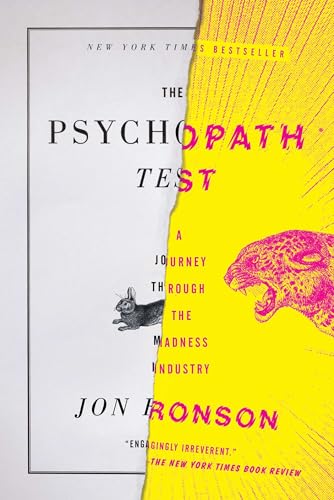 The Psychopath Test: A Journey Through the Madness Industry by Jon Ronson. Ronson is a journalist who follows a single question through an unusually wide range of territory: Is there a reliable test for psychopathy, who has the authority to administer it, and what happens to people who are diagnosed under it? The result is part true crime, part institutional critique, and part accidental self-examination. Robert Hare's PCL-R checklist, the standard forensic instrument, awards points for grandiosity, manipulativeness, pathological lying, and lack of remorse. Ronson notices that several of these traits also describe successful CEOs and starts applying the test to them. The book is lighter in tone than most on this list and the better for it; Ronson's humor does not dilute the argument, and the argument is serious.
The Historical Record of Mass Compliance
 Hitler's Willing Executioners: Ordinary Germans and the Holocaust by Daniel Jonah Goldhagen. Goldhagen's 1996 book generated one of the most sustained academic debates in postwar German historiography. The central argument is that the perpetrators of the Holocaust were not following orders under fear of punishment, as the Nuremberg defense and much of the subsequent scholarship claimed, but were motivated by an eliminationist antisemitism that was widespread in German society before the Nazi period. The evidence is drawn from the records of Reserve Police Battalion 101, the same unit Christopher Browning studied in Ordinary Men. The two books reach opposite conclusions from the same primary sources, and reading both together is the best introduction to the historiography of perpetrator motivation. Goldhagen's view is the more contested one; it is also the one that takes seriously the problem of ideological manipulation at a population level.
Hitler's Willing Executioners on Amazon
The Academic Account of Cult Psychology
 Terror, Love and Brainwashing: Attachment Theory and Cults by Alexandra Stein. Stein spent ten years inside a Marxist-Leninist cult in Minneapolis before she left, then earned a PhD in developmental psychology and returned to the question of why she had joined and what had kept her there. The framework she developed applies attachment theory, specifically the research on disorganised attachment, to cult dynamics. The argument is that high-control groups systematically exploit the human attachment system by simultaneously being the source of threat and the only available safe haven, creating the same disorganised attachment pattern observed in children with abusive parents. This is the most rigorous psychological account of cult membership currently in print and the one most grounded in clinical research rather than anecdote.
Terror, Love and Brainwashing on Amazon
The Jonestown Case Study
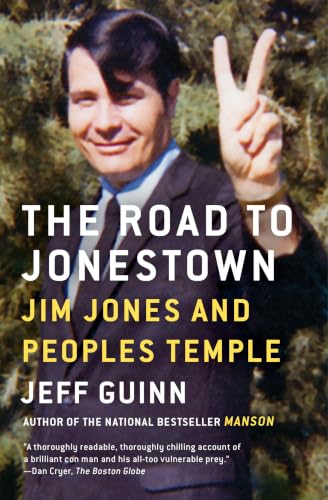 The Road to Jonestown: Jim Jones and Peoples Temple by Jeff Guinn. Guinn's 2017 biography of Jim Jones is the definitive account of the Peoples Temple because it does what most Jonestown coverage skips: it traces Jones from his Indiana childhood through his genuine civil rights work in the 1950s and 1960s to the slow deterioration in Guyana. By the time 918 people died on November 18, 1978, many of them had been with Jones for over a decade and had built their lives around an organisation that had, at an earlier stage, accomplished real things. Understanding Jonestown requires understanding why intelligent people joined in the first place, and Guinn answers that question more thoroughly than anyone else who has written about it.
The Road to Jonestown on Amazon
The Sociological Theory of Bounded Choice
 Bounded Choice: True Believers and Charismatic Cults by Janja Lalich. Lalich is a sociologist who spent ten years in a revolutionary socialist cult before leaving and spending the subsequent decades studying high-control groups academically. Bounded Choice is built around two detailed case studies: Heaven's Gate, the group whose 39 members died in a 1997 mass suicide timed to the Hale-Bopp comet, and the Democratic Workers Party, the Marxist-Leninist organisation Lalich herself was inside. The theoretical framework she develops, "bounded choice," describes the psychological and structural conditions under which a person's apparent free decisions are in fact constrained within a very narrow range by the group's authority structure and the member's own deeply held belief. It is the most precise analytical tool available for understanding why leaving a cult is not simply a matter of choosing to leave.
The Political Philosophy of Manipulation at Scale
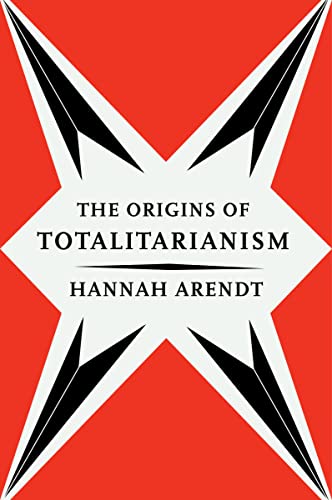 The Origins of Totalitarianism by Hannah Arendt. Arendt published this book in 1951, after fleeing Nazi Germany and spending years stateless in France and then the United States. The book traces the ideological and institutional conditions that made both Nazi Germany and Stalinist Russia possible, with particular attention to how totalitarian movements use propaganda, loneliness, and the destruction of the private sphere to make people available for manipulation. The chapters on ideology and terror are the most cited in the contemporary political science literature, and the observation that totalitarian movements require not just compliance but active participation in their fictions is more widely applicable than the specifically mid-century context suggests. Read alongside Goldhagen's account of perpetrator motivation, this book provides the structural analysis that individual psychology cannot.
The Origins of Totalitarianism on Amazon
What the Other Lists Miss
Lists on manipulation and cults tend to stop at the case study level and underrepresent two important areas. The first is the experimental social psychology: Stanley Milgram's Obedience to Authority is the direct experimental record of how ordinary people deliver what they believe to be lethal electric shocks to strangers under instruction from an authority figure. Philip Zimbardo's The Lucifer Effect applies the same framework to the Abu Ghraib abuse photographs, arguing that the situation rather than the individual explains most of what happened. Both are essential for anyone who wants to understand compliance rather than just observe it. The second is the survivor literature: Steven Hassan's Combating Cult Mind Control is the most practical handbook for someone trying to help a family member leave a high-control group, built on Hassan's own experience in the Unification Church and subsequent years of exit counseling.
The Reading Order
Cialdini first for the mechanism, then Stein for the psychological depth, then Lalich for the structural analysis, then Guinn for the case study that shows all three frameworks operating in the same organisation simultaneously. Goldhagen and Arendt work better as a pair than as individual reads; they cover the same historical catastrophe from the bottom up and the top down. Ronson can come in anywhere; it is the palate cleanser the rest of the list needs.
Where to Go After These Books
This list connects naturally to Skriuwer's dedicated best books about cults guide, which covers the survivor memoir and case-study literature that this list leaves aside. For the historical record of state-level manipulation, the best books on MK-Ultra and CIA mind control cover the government research into thought reform that ran in parallel with the academic work cited here. And for the philosophical defences against these techniques, the best books on stoicism are the practical counterpart.
Your next good book, in your inbox
We only write when we find a book worth your time. Hand-picked recommendations across history, mythology, true crime and more.
Are you an author?
Get your book in front of readers like these, for free.
- Free book listing →Your own book page with an Amazon button
- Author page →Photo, bio and links to your site
- Featured placement →A spot in our best-of lists, from €29
Free tools we recommend
Get free honest reviewsReview exchange on iWrity, free to join
Books You Might Like
The Psychology of Money
Morgan Housel

Thinking, Fast and Slow
Daniel Kahneman

Man's Search for Meaning
Viktor E. Frankl

The Body Keeps the Score
M.D. Bessel van der Kolk