Best Books About Middle East History: 10 That Explain the Region's Conflicts and Cultures
Most people who want to understand the Middle East reach for a news feed and get overwhelmed. The region produces daily headlines that only make sense if you know the hundred years of context behind them: the Ottoman collapse, the British and French carving up of the Arab world, the founding of Israel, the Lebanese civil war, the Gulf wars, the Arab Spring. The books below give you that context, in the order that actually makes sense to read them.
These are not academic texts. They are the books that educated, curious readers finish and recommend. Each one covers a distinct piece of the puzzle, and together they explain why the Middle East looks the way it does today.
Start Here: The Two Books That Cover the Most Ground
1. No God but God by Reza Aslan
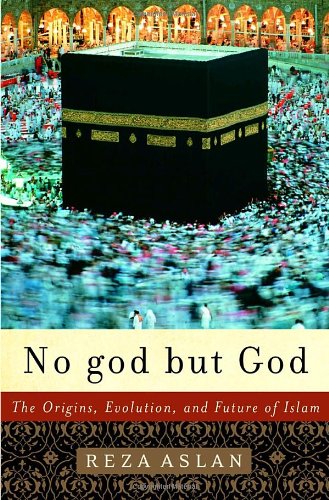
You cannot understand the modern Middle East without understanding Islam, and No God but God is the clearest single-volume account of how the religion began and how it fractured. Reza Aslan traces the Prophet Muhammad's life, the early caliphate, the Sunni-Shia split, and the tension between Islam as a spiritual tradition and Islam as a political system. He writes for a Western audience without condescending to his subject, which is harder than it sounds.
The section on Islamic reform movements is particularly useful for understanding contemporary politics. Every major conflict in the region has a theological dimension that outside observers miss. Aslan puts that dimension in plain language. This is the book to read before anything else on this list. Find No God but God on Amazon.
2. The Arabs: A History by Eugene Rogan
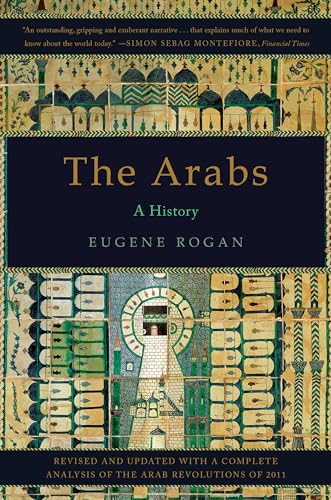
Eugene Rogan's The Arabs covers four hundred years of Arab history, from the Ottoman conquest to the Arab Spring. It is the most comprehensive single-volume account of the Arab world available in English, and Rogan writes it from an Arab perspective rather than a Western one. You see the Napoleonic invasion, the Ottoman collapse, British and French colonialism, the founding of Arab states, and the decades of autocracy and upheaval that followed, all told through Arab voices and Arab sources.
This is the book that most often converts casual interest into serious study. At around 600 pages it is not short, but Rogan moves quickly and the narrative never stalls. Find The Arabs on Amazon.
The Lines That Created the Modern Middle East
3. A Line in the Sand by James Barr
In 1916, British diplomat Mark Sykes and French diplomat Francois Georges-Picot drew a line across a map of the Middle East and divided the Arab world between their two empires. That line is still visible in today's borders, and its consequences are still visible in today's conflicts. James Barr's A Line in the Sand tells the story of how the Sykes-Picot agreement was made, how it was contested, and how the British-French rivalry over the region shaped everything from the Palestinian mandate to the creation of Lebanon and Syria.
Barr draws on declassified documents from both governments and tells the story with the pace of a thriller. If you have ever wondered why the borders of Iraq, Syria, Jordan, and Lebanon look like they were drawn by someone with a ruler (they were), this is the book that explains it.
4. From Beirut to Jerusalem by Thomas Friedman
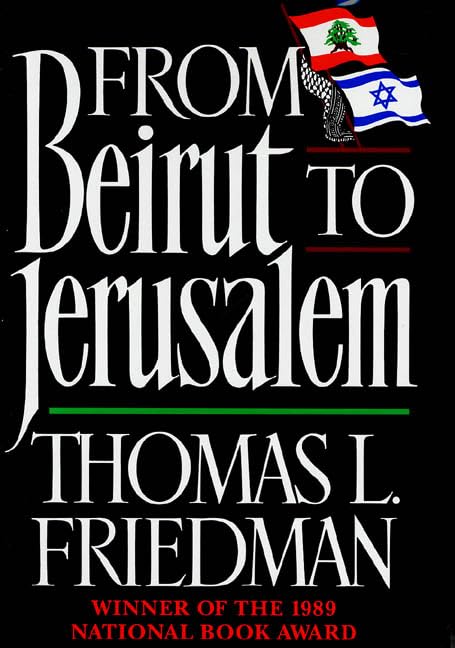
Thomas Friedman spent nearly a decade as a Middle East correspondent for the New York Times, first in Beirut during the Lebanese civil war and then in Jerusalem during the first intifada. From Beirut to Jerusalem is the book he wrote from those years, and it remains one of the best on-the-ground accounts of what the Arab-Israeli conflict looks like to the people actually living inside it.
The Beirut section is devastating. Friedman arrived in Lebanon as a young reporter and watched a functioning (if fractured) cosmopolitan city tear itself apart along sectarian lines. The Jerusalem section is more analytical, examining the contradictions in Israeli society and the Palestinian experience under occupation. Together they form a portrait of two societies in crisis, written by someone who was present for both. Find From Beirut to Jerusalem on Amazon.
War and Its Aftermath
5. Seven Pillars of Wisdom by T.E. Lawrence
T.E. Lawrence led the Arab revolt against the Ottoman Empire during World War One, and Seven Pillars of Wisdom is his account of those years. It is one of the great memoirs of the twentieth century: vivid, self-critical, and haunted by Lawrence's awareness that the British government was making promises to the Arabs that it had no intention of keeping.
Lawrence is a complicated figure, and he knows it. He was simultaneously fighting for Arab independence and serving an imperial power that planned to divide the Arab world after the war. The book does not resolve that tension, and that is what makes it honest. Read it after A Line in the Sand to see the same story from inside the British officer corps.
6. The Story of My Life by Moshe Dayan
Moshe Dayan was Israel's most recognizable military figure: defense minister during the Six-Day War, chief of staff during the Sinai campaign, and one of the architects of Israeli military doctrine. His memoir covers his childhood in the first kibbutz, his service in the Hagana, his years in the Israeli military, and his political career. It is a first-person account of the state of Israel from its founding through its most decisive military victories.
Dayan writes with a directness that is unusual in political memoirs. He is candid about his failures as well as his successes, and he writes about Arab leaders and commanders with more respect than most Israeli political figures of his generation. For understanding the Israeli side of the region's conflicts, this is the primary source.
Modern Reporting and Analysis
7. The Looming Tower by Lawrence Wright
Lawrence Wright's Pulitzer Prize-winning account of the road to 9/11 is primarily about the intelligence failures that preceded the attacks, but it is also one of the best books ever written about the ideology of jihadist movements. Wright traces the intellectual roots of Al-Qaeda through the Egyptian academic Sayyid Qutb, whose writings in a Colorado prison in the 1950s became the theological foundation for a generation of violent Islamist movements.
The scenes inside the FBI and CIA in the years before 9/11 are extraordinary, but the context Wright builds around the origins of modern jihadism is what makes the book essential for understanding the post-Cold War Middle East.
8. House of Bush, House of Saud by Craig Unger
Craig Unger's investigation into the relationship between the Bush family and the Saudi royal family covers the financial ties, the political calculations, and the strategic decisions that shaped American policy in the Gulf for two decades. It is reported rather than polemical, and the documentary record it assembles is detailed. For understanding the political economy of oil and its effect on Middle Eastern governance, this is a useful companion to the more narrative histories on this list.
The Longer View
9. A History of the Arab Peoples by Albert Hourani
Albert Hourani's A History of the Arab Peoples is the academic standard: a 600-year sweep through Arab civilization from the Ottoman period to the twentieth century. It covers religion, culture, commerce, and politics, and it is written with a clarity unusual for a book of its scholarly ambition. Rogan's The Arabs is more readable for general audiences; Hourani is more thorough on pre-twentieth-century history. Read Rogan first, then come back to Hourani when you want more depth.
10. Guests of the Ayatollah by Mark Bowden
Mark Bowden's account of the 1979-1981 Iran hostage crisis is one of the most gripping pieces of narrative journalism about the Middle East. The crisis was the first major confrontation between the United States and political Islam, and Bowden tells it from all sides: the hostages, the Iranian students, the Khomeini government, and the Carter administration trying to negotiate while planning a rescue. The failed rescue attempt at Desert One is covered in detail that reads like a thriller.
The hostage crisis set the template for American-Iranian relations for the next four decades. Understanding how it happened and why it ended the way it did is essential context for everything that came after.
Where to Start
If you are reading about the Middle East for the first time, the order that makes the most sense is: Aslan's No God but God for religious context, Barr's A Line in the Sand for the colonial foundations, and then Rogan's The Arabs for the full sweep. From there, Friedman's From Beirut to Jerusalem makes the conflicts feel immediate and human. Lawrence Wright and Mark Bowden are the best journalists on the list for anyone who prefers reported narrative to analytical history.
None of these books will give you a simple explanation for why the Middle East is the way it is. The honest ones do not try. What they give you is enough context to stop being surprised by the headlines, and enough understanding to form your own view of what happened and why.
Your next good book, in your inbox
We only write when we find a book worth your time. Hand-picked recommendations across history, mythology, true crime and more.
Are you an author?
Get your book in front of readers like these, for free.
- Free book listing →Your own book page with an Amazon button
- Author page →Photo, bio and links to your site
- Featured placement →A spot in our best-of lists, from €29
Free tools we recommend
Get free honest reviewsReview exchange on iWrity, free to join
Books You Might Like

Sapiens: A Brief History of Humankind
Yuval Noah Harari
The Last Kingdom (The Saxon Stories, Book 1)
Bernard Cornwell

Meditations
Marcus Aurelius

The Hiding Place
Elizabeth Sherrill, John Sherrill Corrie ten Boom