Best Books About Military History in 2026: 10 That Show War as It Really Was
The best military history books do not celebrate war. They explain it, with enough precision that you understand why intelligent, moral people keep producing it and why it keeps producing the same results. The books on this list cover the full range: the ancient Chinese strategic manual that has been in continuous use for 2,500 years, the British academic who sat in the mud at Passchendaele to understand what his interviewees actually saw, the combat journalist who spent a year embedded with an infantry platoon in Afghanistan, and the psychologist who discovered that most soldiers in World War Two never fired at the enemy. Together they answer the question most military history avoids: what does combat actually do to the people inside it?
See also our best books about the Vietnam War and best World War 2 books for genre-specific reading orders on those conflicts.
The Text That Hasn't Been Improved On
 The Art of War by Sun Tzu. Written in China around 500 BC by a military strategist in the service of the state of Wu, this 13-chapter text is the most widely read military manual in the world and almost certainly the oldest surviving one. Sun Tzu's central argument is that the highest form of generalship is winning without fighting, through intelligence, deception, and positioning rather than attrition. The text is short, around 10,000 words in most translations, and dense enough that it has been the subject of serious commentary for two and a half millennia. The Lionel Giles translation is the scholarly standard. The Thomas Cleary translation is more readable. Read them with a commentary if you want to understand what the terms meant in their original military context rather than the business-book gloss they usually receive.
The Book That Changed Military Historiography
 The Face of Battle by John Keegan. Published in 1976, this is the book that shifted military history away from the operational level (commanders, plans, movements of divisions) toward the experiential level (what it was actually like to be in the front rank at Agincourt, at Waterloo, at the Somme). Keegan was a military historian at Sandhurst who was not himself a combat veteran, and he is honest about that throughout. He builds his account of each battle from primary sources: participant accounts, medical records, weapons analysis. The chapter on the Somme, 60,000 British casualties on the first day of July 1, 1916, is the most honest account of industrialized slaughter in the language. Every military historian working since 1976 has had to reckon with this book.
What Combat Journalism Looks Like Done Properly
 War by Sebastian Junger. Junger spent 15 months embedded with a single American infantry platoon in the Korengal Valley of Afghanistan, the most contested piece of ground in the war. The resulting book is not political. It does not argue for or against the mission. It asks a different question: why do soldiers sometimes miss combat after they come home, and what does that tell us about how human beings are actually built? Junger's answer, drawing on neuroscience, anthropology, and the words of the men themselves, is that intense group bonding under threat is one of the most powerful experiences available to human beings, and that the civilian world offers almost nothing comparable. It is the most psychologically honest account of modern infantry combat in print.
War by Sebastian Junger on Amazon
The Definitive Account of D-Day
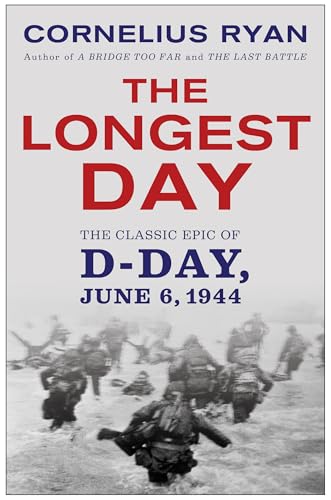 The Longest Day by Cornelius Ryan. Ryan interviewed over 1,000 survivors, German and Allied, civilian and military, to reconstruct June 6, 1944 in as close to real time as a book can achieve. Published in 1959, it remains the single most comprehensive account of the Normandy invasion available. Ryan organizes the narrative by following multiple people simultaneously, a German radar operator, a French farmer, an American paratrooper, an Allied naval officer, through the same hours of the same day. The structure makes it possible to understand not just what happened but why the Germans were so slow to respond and what the paratroopers found when they landed 20 miles from their drop zones. It is long at around 350 pages and reads faster than almost anything on this list.
The One That Made Easy Company Famous
 Band of Brothers by Stephen Ambrose. Ambrose spent years interviewing the surviving members of Easy Company, 506th Parachute Infantry Regiment, 101st Airborne Division, from their training at Toccoa, Georgia through D-Day, Market Garden, the Bulge, and the end of the war in Bavaria. The book was published in 1992 and became the basis for the HBO series. The book is better than the series because Ambrose can tell you what the men thought and felt rather than just what they did, and because the scale of the operation is harder to convey in television than on the page. The chapter on Bastogne, Easy Company holding a section of the perimeter during the Bulge in temperatures well below freezing without winter gear, winter uniforms, or adequate ammunition, is one of the best accounts of unit cohesion under extreme stress ever written.
The Psychological Question Nobody Wanted to Ask
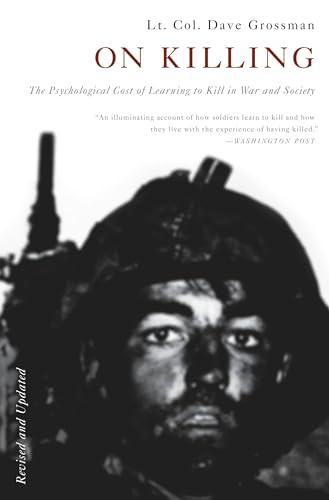 On Killing by Dave Grossman. Grossman, a former Army Ranger and West Point psychology professor, built this 1995 book around a troubling finding from S.L.A. Marshall's post-World War Two research: the majority of soldiers in combat either never fired their weapons or deliberately fired over the enemy's heads. The book asks why killing another human being is so psychologically difficult even for trained soldiers, and then examines what military training systems developed after 1945 to overcome that resistance. The answer involved desensitization techniques, and Grossman's argument about the transfer of those techniques to the civilian world through violent media has been more influential and more controversial than the underlying military history. Read it alongside Junger's War for the full picture of what combat psychology actually looks like.
The Best Campaign History in the Language
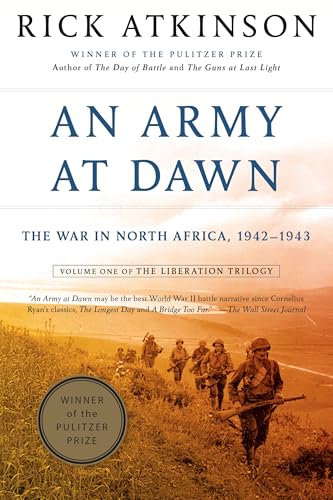 The Liberation Trilogy by Rick Atkinson. Three volumes covering the American Army in World War Two from the North Africa landings in November 1942 through the surrender in May 1945: An Army at Dawn, The Day of Battle, and The Guns at Last Light. Atkinson spent twelve years on the project and the research is the best available on the American ground war in Europe. The trilogy answers a question the popular history often skips: how did an army that was genuinely bad at fighting in 1942 become the most effective ground force in the world by 1945? The answer involves specific decisions by specific commanders, specific failures that produced learning, and a supply chain capacity that Germany simply could not match. An Army at Dawn won the Pulitzer Prize in 2003. All three volumes are worth reading in order.
What These Books Have in Common
Every book on this list puts human beings at the center of the account rather than abstract strategic or operational variables. That is what separates serious military history from campaign maps and order-of-battle tables. Sun Tzu understood it: he writes about the morale of armies, the perception of soldiers, the psychology of commanders, not just troop movements. Keegan made it the explicit methodology of the discipline. Junger and Grossman brought it forward to the present. The best military history tells you what the experience was like for the people inside it, and that information is the only thing that makes the tactical and strategic picture coherent.
Where to Go Next
If the World War Two thread pulled you in, our best World War 2 books list covers a broader range of the conflict than the American ground war focus of Ambrose and Atkinson. For the Vietnam War, which is the most psychologically rich conflict in American military literature, see our best Vietnam War books. For the wider dark-history context that military conflict sits inside, browse the dark history category for curated reading orders on related subjects.
Your next good book, in your inbox
We only write when we find a book worth your time. Hand-picked recommendations across history, mythology, true crime and more.
Are you an author?
Get your book in front of readers like these, for free.
- Free book listing →Your own book page with an Amazon button
- Author page →Photo, bio and links to your site
- Featured placement →A spot in our best-of lists, from €29
Free tools we recommend
Get free honest reviewsReview exchange on iWrity, free to join
Books You Might Like

Sapiens: A Brief History of Humankind
Yuval Noah Harari
The Last Kingdom (The Saxon Stories, Book 1)
Bernard Cornwell

Meditations
Marcus Aurelius

The Hiding Place
Elizabeth Sherrill, John Sherrill Corrie ten Boom