Best Books About the British Empire: Power, Colonialism and Global Legacy
The British Empire was not a monolith. It was a sprawling, contradictory force that reshaped the globe. It brought technology and disease, trade and exploitation, bureaucracy and resistance. It lasted four centuries and left scars that have not healed. To understand the modern world is to understand how the British Empire created it.
The books below are not celebrations or apologies. They are rigorous histories that show what the empire was: a system of power built on trade monopolies, military force, and the extraction of wealth from colonised peoples. They show how resistance movements pushed back against that system. They show how the legacies persist in governance, language, borders, and inequality. These books demand intellectual honesty. They are worth the effort.
Empire by Niall Ferguson
Ferguson argues that the British Empire was not a simple story of exploitation and evil. It brought the rule of law, free trade, and technological advancement. But Ferguson is not an apologist. He shows the brutal side too: slavery in the Caribbean, famine in Ireland, violence in India. His thesis is that the empire was complex and that both the benefits and harms were real. Readers across the political spectrum criticise him for not taking a side, but that is partly his point. The empire cannot be reduced to good or evil. It was a system with winners and losers, and understanding it requires holding both truths at once. Ferguson's writing is clear and narrative-driven. He moves from one colony to another, showing how the empire governed different places differently. By the end, you understand the machinery of imperial power in a way that simple narratives cannot provide.
Killers of the Flower Moon by David Grann
This book is nominally about Osage oil murder in 1920s Oklahoma, but it is really about the legacy of colonialism and how American expansionism echoed British imperial logic. White settlers moved in, discovered oil on Osage lands, and systematically murdered the Osage to take it. The U.S. government allowed it. Grann traces how this happened with meticulous research and vivid narrative. The book shows that empires do not end. They transform. The logic of extraction and dispossession continues under different names. Reading this alongside British Empire histories shows you the pattern repeating across time and geography. Grann is a masterful storyteller and his moral clarity is refreshing.
Get Killers of the Flower Moon on Amazon
The Raj Quartet by Paul Scott
If you want to understand India under British rule, read fiction that captures the texture of colonial life. Scott's Raj Quartet is a masterpiece of colonial literature. It follows British and Indian characters during the chaos of India's independence movement. Scott shows how ordinary people navigated the logic of empire: how Indians internalised British superiority, how British colonists justified exploitation, how independence challenged everyone's sense of identity. The novels are long and demanding, but they give you what history books cannot: the emotional and psychological reality of living under empire. You experience colonialism from the inside. You see how it damaged both the colonised and the colonisers.
Empires of the Atlantic World by David Eltis
Eltis compares the British and Spanish empires side by side. He shows how they built different systems of colonialism based on different labour regimes. Spain relied on enslaved indigenous populations and African slaves. Britain developed a plantation system in the Caribbean that required millions of enslaved Africans. Eltis shows that neither empire was more benevolent. They were simply different. His analysis reveals how empires adapted their exploitation to local circumstances. He also shows the trade networks that connected the Atlantic world: how goods, people, and ideas flowed between Europe, Africa, and the Americas. Understanding this Atlantic system is crucial for understanding how the British Empire functioned and why it was profitable.
The Rise and Fall of American Growth by Robert Gordon
This book is not directly about the British Empire, but it traces how the industrial technologies that powered British dominance eventually shifted advantage to America. Gordon argues that the period of 1870 to 1970 was a unique era of rapid technological and economic growth that will never repeat. The British Empire rode the wave of this growth. When the wave broke, the empire declined. Understanding this macro-historical context helps you see the British Empire not as an aberration but as a specific moment in global history. Britain had military and naval advantages that could not be sustained indefinitely. Once America industrialised, British dominance was mathematically impossible to maintain.
The Shock of the Global by Farish Noor
Noor explores how the British Empire globalised certain systems: English law, English language, English concepts of property and rights. These systems spread across the world and became naturalised. Today we think of democracy, individual rights, and property rights as universal ideals. They are partly the result of British imperial expansion. Noor argues that we cannot understand the modern world without recognising how thoroughly the British Empire shaped it. He also shows resistance movements that rejected British values or hybridised them with local traditions. The book is intellectually demanding but rewarding. It shows how empires do not just extract wealth. They reshape how people think.
A People's History of the British Empire by Chris Harman
Harman tells the history of the British Empire from the perspective of colonised peoples. What did Indians think about British rule? What did Africans think about the slave trade? How did resistance movements organise? Harman's approach inverts the usual narrative where empire is told from the perspective of the metropole. He centres the experiences of those who lived under imperial rule and fought against it. The book is explicitly left-wing in its critique, which some readers appreciate and others reject. But the value is that it corrects the blindness of narratives that treat empires as inevitable. Empire was actively contested.
Start Here
If you want a comprehensive overview, start with Ferguson's Empire. If you want to understand the moral weight of empire, read the Raj Quartet. If you want to see how imperial systems actually created the modern world, read Noor's Shock of the Global. If you want to see the perspective of the colonised, read Harman's People's History. Together, these books give you a full-spectrum understanding of the British Empire: its mechanisms, its justifications, its resistance, and its legacy. The empire is dead, but its ghost still moves. Understanding it is the first step to seeing beyond it.
Your next good book, in your inbox
We only write when we find a book worth your time. Hand-picked recommendations across history, mythology, true crime and more.
Books You Might Like

Sapiens: A Brief History of Humankind
Yuval Noah Harari
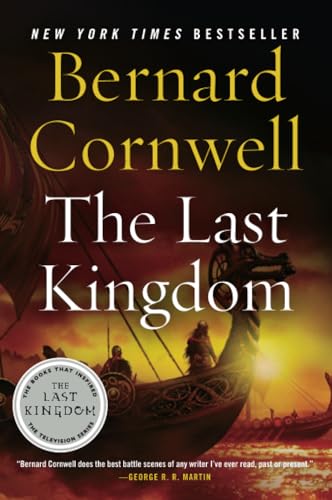
The Last Kingdom (The Saxon Stories, Book 1)
Bernard Cornwell

Meditations
Marcus Aurelius

The Hiding Place
Elizabeth Sherrill, John Sherrill Corrie ten Boom