Best Books About the Byzantine Empire: Survival, Intrigue and the Last Roman State
The Byzantine Empire stands as one of history's longest-lasting civilizations, ruling from Constantinople for over a thousand years. Yet it remains underexplored in popular history, overshadowed by Rome before it and the Ottoman Empire after it. The result is a vast, dramatic story left mostly untold: emperors who ruled through cunning and faith, religious schisms that split societies, military commanders who held back invasions against impossible odds, and a culture that preserved classical learning while the West descended into darkness.
If you want to understand the medieval world, the origins of Orthodox Christianity, the foundations of Islamic empires, or simply encounter some of history's most compelling narratives, Byzantine history delivers. This list covers the essential books that bring the empire alive, from accessible overviews to specialized deep dives into court intrigue, religious conflict, and military strategy.
1. Foundational Byzantine History
"The Byzantine Empire" by Lars Brownworth is the clearest entry point for readers new to the subject. Brownworth writes narrative history, not dense academic text. You follow emperors and generals through their triumphs and catastrophes, understanding the stakes as they unfold. He covers the empire's full span from its emergence out of Rome through the final fall to the Ottomans, making the vast arc coherent. The book excels at showing why decisions mattered and how personalities shaped events. If you read only one Byzantine book, this is it.
For a second perspective, "A History of the Byzantine State and Society" by Warren Treadgold provides deeper institutional context. Where Brownworth emphasizes drama, Treadgold explains how the bureaucracy functioned, how the military was organized, and how the economy sustained the empire. This is more challenging but rewards patient readers with a full understanding of how the empire actually worked.
2. Emperors, Empresses, and Court Intrigue
No empire produced more colorful rulers than Byzantium. "Justinian: The Novice Emperor" by Christopher Brooks focuses on Justinian I, arguably the most ambitious emperor, who reconquered much of the lost Roman West and commissioned the Hagia Sophia. This biography reads like a thriller. Justinian started as an outsider from the Balkans, rose to power through his uncle, and then spent his reign attempting to reverse the collapse of Rome itself. The narrative tension never lets up.
For the most dramatic court story in Byzantine history, read "The Immortal Emperor" by Douglas E. Niles, which covers Constantine V and the iconoclastic controversy. Imagine a religious schism so violent that it split families, motivated emperors to destroy religious art, and fundamentally altered Christian theology. Constantine stood at the center of this tempest. The personal stakes were staggering.
If you want to understand women's power in Byzantium, "Theodora: Actress, Empress, Saint" by Chris Dunkin tells the story of Justinian's wife. Theodora was born poor, worked as an actress and courtesan, and rose to become one of the most politically powerful women in the medieval world. When riots threatened to topple Justinian, Theodora's courage held him in place. Her influence shaped empire policy for decades.
3. Religion, Theology, and the Schism
The split between Eastern Orthodox and Roman Catholic Christianity defines much of medieval and modern history. "The Great Schism: 1054 and Its Aftermath" by Noel Maguire unpacks the theological disputes, political tensions, and cultural misunderstandings that drove the two branches apart. It was not a sudden rupture but a centuries-long drift that finally crystallized into formal separation. The book shows how religion and politics tangled together in ways that still matter today.
For a broader view of religious conflict under Byzantine rule, "Heresy and Orthodoxy in the Byzantine World" by Jennifer Davis examines how emperors used religious authority as a political tool. Orthodoxy was not simply a matter of faith but of imperial power. Emperors could command theology, and theology could topple emperors. Understanding this dynamic is essential to understanding Byzantine politics.
4. Military Strategy and Border Warfare
The Byzantine Empire survived invasions from Goths, Huns, Arabs, and Turks over its entire lifespan. "The Varangian Guard: The Norse Warriors of Constantinople" by Pavel Syviakowski tells the story of Viking mercenaries who became the emperor's elite bodyguard. This book bridges Scandinavian history and Byzantine history, showing how the empire recruited warriors from across the known world. The Varangian Guard became legendary fighters and loyal defenders of the throne.
"The Arab-Byzantine Wars" by Walter E. Kaegi covers the century-long struggle between the Byzantine Empire and the expanding Islamic caliphates. This was a war of attrition that slowly pushed Byzantine territory back, yet the empire endured. Kaegi explores the military tactics, the economic costs, and the way each side adapted to the other's strategies. It is a masterclass in how empires manage slow decline.
5. The Final Century and Fall of Constantinople
By the 15th century, the Byzantine Empire had shrunk to just Constantinople itself. "The Last Days of Constantinople" by Michael Angold is a gripping account of the final siege in 1453, when Ottoman forces broke through the walls and conquered the last imperial stronghold. Angold captures the heroism of the defenders and the sense of ending that permeated the city. This book reads like tragedy, because it is.
"1453: The Holy War for Constantinople and the Clash of Islam and the West" by Roger Crowley blends the Ottoman perspective with the Byzantine one, creating a fuller picture of that final confrontation. Crowley excels at military narrative and shows how technology, strategy, and will determined the outcome. He also explores how the fall of Constantinople reverberates through European consciousness even today.
Going Deeper into the Byzantine Record
The Byzantine Empire deserves to be better known. It preserved classical learning, developed sophisticated theology, created art and architecture that still astonishes, and survived more invasions than nearly any other civilization in history. The empire fell not because it was weak but because it exhausted its resources defending against enemies on every frontier.
These books bring that vast, intricate world to life. Start with Brownworth if you want narrative, Treadgold if you want institutional understanding, and Angold if you want to feel the tension of the final collapse. Each offers a different entry into one of history's most underrated civilizations. Browse the full history collection for more books that dig beyond the standard narrative.
Your next good book, in your inbox
We only write when we find a book worth your time. Hand-picked recommendations across history, mythology, true crime and more.
Books You Might Like

Sapiens: A Brief History of Humankind
Yuval Noah Harari
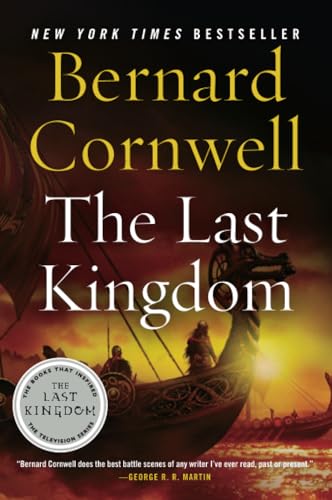
The Last Kingdom (The Saxon Stories, Book 1)
Bernard Cornwell

Meditations
Marcus Aurelius

The Hiding Place
Elizabeth Sherrill, John Sherrill Corrie ten Boom