Best Books About Cold War History in 2026: 10 That Reveal What Really Happened
The Cold War lasted nearly half a century and touched every corner of the world, yet most people's understanding of it fits on a single page: Berlin Wall, nuclear standoff, Communism vs capitalism, 1991. The actual history is far stranger, more violent, and more morally complicated than that. The archives that opened after the Soviet collapse, combined with decades of declassified American documents, have produced a generation of Cold War scholarship that reads nothing like the sanitised textbooks.
These ten books cover the history as it actually was. No espionage thrillers here. All of these are serious non-fiction rooted in primary sources, and each of them will change what you think you know about the 20th century's defining conflict.
1. The Cold War: A New History -- John Lewis Gaddis
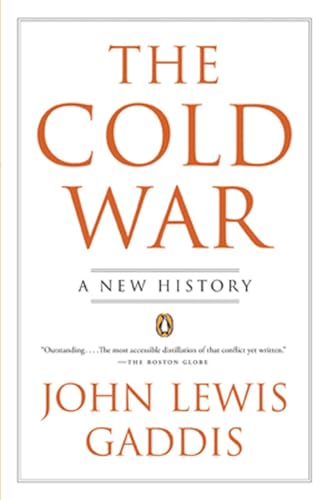
Gaddis is the dean of Cold War historians in the English-speaking world, and this 2005 book is his definitive single-volume synthesis. It runs under 300 pages, writes with unusual clarity for a scholarly historian, and covers the full arc from 1945 to 1991 drawing on Soviet, Chinese, and Eastern European archives that became accessible only after the Cold War ended.
The central argument is that Stalin's postwar behaviour was driven less by ideological conviction than by opportunism and deep personal paranoia, and that American policymakers consistently over-estimated Soviet strategic coherence. Both sides were responding to threats that were partly real and partly imagined, which is what made the whole thing so dangerous. This is the book to read first before going deeper into any specific corner of the period.
2. The Cold War: A World History -- Odd Arne Westad
Where Gaddis focuses on the superpower relationship, Westad widens the frame dramatically. His 2017 book traces how the Cold War played out across Asia, Africa, Latin America, and the Middle East, arguing that the most consequential Cold War battlegrounds were not Berlin or Cuba but Vietnam, Angola, Afghanistan, and dozens of other countries that became proxies for a conflict they had little say in starting.
Westad is Norwegian, which gives him a somewhat different perspective on American foreign policy than most US-based historians bring. He is critical of both superpowers but especially clear-eyed about how the US and USSR alike treated their Third World allies as expendable. If you want to understand why anti-Americanism is so entrenched in parts of the world that were theoretically on the Western side, this book explains it.
3. The Dead Hand -- David Hoffman
Hoffman won the Pulitzer Prize for this 2009 investigation into the Soviet Union's nuclear and biological weapons programs, and it remains one of the most alarming books about the Cold War ever written. He spent years interviewing Soviet scientists and military officials who built, maintained, and after 1991 tried to dismantle systems far larger and more dangerous than Western intelligence had assumed.
The Dead Hand is the name of the Soviet automated nuclear launch system, designed to fire missiles even if command-and-control communications were destroyed in a US first strike. Hoffman reconstructs exactly how this worked and who knew about it, including American officials who were kept in the dark. Several chapters deal with the frantic post-collapse scramble to secure Soviet bioweapons stockpiles, a program that ran in violation of international treaties while arms-control negotiations continued. The book makes the 1990s look a great deal more precarious than the triumphalist history of that period suggests.
4. Legacy of Ashes -- Tim Weiner
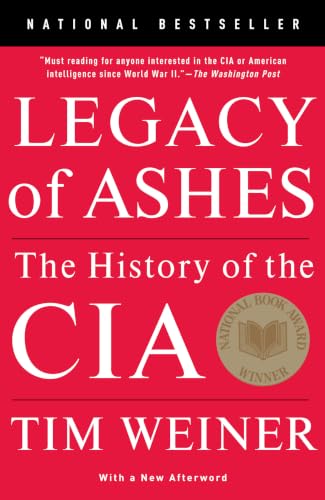
Tim Weiner spent two decades as the New York Times reporter covering the CIA before writing this history of the agency from its founding in 1947 through the early 2000s. The result is the most comprehensive, and most damning, account of American intelligence operations ever assembled from unclassified sources.
The core argument is that the CIA failed at its central mission almost every time it mattered: it did not predict the Soviet bomb, the Korean War, the Hungarian uprising, the Cuban Missile Crisis, the Yom Kippur War, or the fall of the Berlin Wall. Weiner documents how political pressure, institutional dysfunction, and the systematic inflation of threat assessments drove decision-making at every level. The book is uncomfortable reading for anyone who assumed the intelligence services were more competent than elected officials, because Weiner's evidence suggests the opposite.
5. For the Soul of Mankind -- Melvyn Leffler
Leffler's 2007 book focuses on five critical moments when the Cold War might have ended differently: the Truman-Stalin standoff of 1945-50, Eisenhower's opening months in 1953 after Stalin's death, the Kennedy-Khrushchev confrontations of 1961-63, the Brezhnev-Nixon detente of the early 1970s, and the Reagan-Gorbachev negotiations that actually ended the conflict in 1989-91.
What Leffler shows is that at several of these junctures, serious proposals for mutual de-escalation were on the table from both sides and were rejected, sometimes for strategic reasons and sometimes because neither government trusted its domestic political situation enough to take the risk. The Cold War was not inevitable once it began, and it did not have to last as long as it did. That argument, backed by decades of archival research, makes this one of the most important revisionist histories of the period.
6. Nikita Khrushchev and the Creation of a Superpower -- Sergei Khrushchev
This is a unique document: Nikita Khrushchev's son Sergei, a rocket engineer who worked on Soviet space and missile programs, wrote this account of the Soviet side of the early Cold War drawing on his father's papers and his own memory of events. It covers the period from roughly 1945 to Khrushchev's ouster in 1964 from a perspective no Western historian can replicate.
The book is most valuable on the internal Soviet decision-making that produced the nuclear and space programs, and on the domestic political constraints Khrushchev operated under at every stage. The portrait of a leader trying to reform a system while dependent on the loyalty of the people most threatened by reform helps explain decisions that look irrational from outside. Sergei Khrushchev remained a fair witness to his father's failures as well as his achievements, which makes the account considerably more credible than hagiography would be.
7. The Turn -- Don Oberdorfer
Don Oberdorfer was the Washington Post's diplomatic correspondent through the final decade of the Cold War, and this book chronicles how the conflict ended from the inside. Drawing on access to key participants on both sides, including Gorbachev's closest advisers and Reagan administration officials, Oberdorfer reconstructs the sequence of summits, negotiations, and misunderstandings that produced the agreements of 1987-91.
What the book captures particularly well is the role of personal relationships between leaders in a way that formal diplomatic history often misses. Reagan's meetings with Gorbachev at Reykjavik in 1986 accomplished almost nothing in terms of signed agreements but fundamentally changed both men's understanding of the other side's intentions. Oberdorfer was present for much of this and had the sources to fill in what happened behind closed doors.
8. The Twilight Struggle -- Odd Arne Westad
A shorter companion to Westad's world history, this book examines the ideological competition between the US and USSR more directly: the competing visions each side offered to the developing world, the propaganda apparatus each built, and why the Soviet model ultimately failed to hold the allegiance of the countries it had spent decades cultivating. It is a good entry point for readers who want the ideas history alongside the military and diplomatic record.
9. Red Plenty -- Francis Spufford
Technically fiction, but so densely researched and so closely based on documented economic and political history that it belongs in this list. Spufford's 2010 book recreates the Soviet Union of the late 1950s and early 1960s, when genuine belief in the communist economic model was still widespread among Soviet scientists and planners, through a series of interlocking fictional episodes grounded in real events and institutions.
The book's subject is why the Soviet economy failed: not because of sabotage or Western pressure but because of the mathematical impossibility of central planning at industrial scale, a problem that Soviet economists themselves identified and were not allowed to solve. Understanding that failure is essential to understanding how the Cold War ended, and no straight history tells that story as clearly as Spufford does.
10. The Bomb -- Fred Kaplan
Kaplan is the national security columnist for Slate and has covered nuclear policy for decades. This 2020 book traces the history of US nuclear strategy from the Manhattan Project to the present, focusing on the gap between official policy and what the war plans actually called for. The nuclear posture the US maintained through most of the Cold War was, Kaplan documents, built on strategic fictions that neither presidents nor their military advisers fully understood at any given moment.
The book's value is that it shows the Cold War from the inside of the planning apparatus rather than from diplomatic history, and it makes clear how much of the nuclear standoff was shaped by bureaucratic inertia and internal military politics rather than coherent deterrence theory.
These ten books together give you the Cold War from every angle that matters: superpower strategy, the global south, the intelligence failures, the economic contradictions, and the personal relationships that ultimately brought it to an end. Start with Gaddis for the framework, then go wherever your interest takes you.
Your next good book, in your inbox
We only write when we find a book worth your time. Hand-picked recommendations across history, mythology, true crime and more.
Are you an author?
Get your book in front of readers like these, for free.
- Free book listing →Your own book page with an Amazon button
- Author page →Photo, bio and links to your site
- Featured placement →A spot in our best-of lists, from €29
Free tools we recommend
Get free honest reviewsReview exchange on iWrity, free to join
Books You Might Like

Sapiens: A Brief History of Humankind
Yuval Noah Harari
The Last Kingdom (The Saxon Stories, Book 1)
Bernard Cornwell

Meditations
Marcus Aurelius

The Hiding Place
Elizabeth Sherrill, John Sherrill Corrie ten Boom