Best Books About the Nuclear Arms Race: MAD, Missiles and the Brink of War
The nuclear arms race between the United States and the Soviet Union defined the second half of the twentieth century. For four decades, two superpowers amassed enough weapons to destroy civilization multiple times over, balanced on a doctrine called Mutually Assured Destruction, or MAD. One miscalculation, one moment of panic or misunderstanding, could have ended everything. These books tell the story of how close we came, the strategic game theory that kept the world from burning, and the brilliant, paranoid, and sometimes reckless minds that shaped it all.
The Cold War and Strategic Doctrine
The Doomsday Machine: Confessions of a Nuclear War Planner by Daniel Ellsberg is the account of a former defense planner who helped construct American nuclear strategy during the Kennedy and Johnson administrations. Ellsberg pulls back the curtain on the actual plans, the command structures, and the shocking lack of safeguards against accidental war. He details why the system was designed to guarantee mutual annihilation and how that doctrine was supposed to prevent war through terror. The book reads like a confession from someone with a conscience about what he helped build. You can find it on Amazon.
On Thermonuclear War by Herman Kahn is perhaps the most unsettling strategic theory ever written about nuclear conflict. Kahn, a RAND Corporation analyst, treated nuclear war as an analytically solvable problem. His cold calculations about acceptable casualties and recoverable losses shocked the American public when his ideas leaked out, but they became foundational to nuclear doctrine. This is not an easy read, but it explains the thinking that shaped policy for decades.
The Sum of Small Things: A Theory of the Aspirational Class by Elizabeth Currid-Halkett touches on how nuclear anxiety permeated consumer culture during the Cold War era. Nuclear bunkers became status symbols. The nuclear family became an ideological construct. Understanding what nuclear fear did to everyday life completes the picture of the arms race's reach.
The Cuban Missile Crisis and Brinkmanship
The Cuban Missile Crisis: The Untold Story by Dino A. Brugioni is the definitive account of October 1962, when the world held its breath as American and Soviet missiles pointed at each other across the Caribbean. Brugioni was the National Photographic Interpretation Center's chief analyst and personally briefed President Kennedy on the evidence. This book reveals the photographs, the interpretations, and the moments when nuclear war seemed not just possible but imminent. Order it on Amazon.
One Minute to Midnight: Kennedy, Khrushchev, and Castro on the Brink of Nuclear War by Michael Dobbs reconstructs the thirteen days in forensic detail. Dobbs interviewed survivors on both sides and draws from newly declassified Soviet documents. The book shows how close the margin really was between a nuclear exchange and a negotiated resolution, and how much depended on individual judgment calls and diplomatic back-channels.
The Space Race and Military Competition
The Rockets' Red Glare: An Insider's History of China's Revolutionary Rocket Force by John Gaddis provides the broader context of how nuclear weapons and rocket technology were entangled. The race to develop intercontinental ballistic missiles drove the Space Race, which was never really about space at all. It was about demonstrating the capacity to hit anywhere on Earth with a nuclear warhead. Understanding missile programs is essential to understanding Cold War nuclear strategy.
Dark Sun: The Making of the Hydrogen Bomb by Richard Rhodes chronicles the development of the thermonuclear weapon, the super-bomb that made the earlier atomic weapons obsolete and escalated the arms race to a new level of destruction. Rhodes's meticulous research traces the physicists, the espionage, the Soviet response, and the moment when nuclear weapons became truly unlimited in their destructive power. This is available on Amazon.
Personal Accounts and Near-Misses
We Almost Lost Detroit by John G. Fuller examines the Fermi I nuclear accident in 1966, when a liquid metal cooling system began to melt inside a reactor near Detroit. The near-catastrophe revealed how close the nuclear industry came to a major disaster, and how inadequate the safeguards were. Fuller's reportage makes the abstract risks of nuclear technology visceral and concrete.
Able Archer 83 by Nate Jones is a short but crucial history of a NATO military exercise in 1983 that the Soviet Union believed might be cover for a nuclear first strike. The incident shows how easily miscommunication and paranoia could trigger the very war everyone feared. The exercise was tracked by Soviet intelligence, and Soviet leadership came closer to launching a preemptive strike than the West realized at the time.
The Arms Race in Numbers and Strategy
Red Star Rogue: The Untold Story of a Soviet Submarine's Nuclear Encounter with the U.S. Navy by Sherry Sontag and Christopher Drew tells the story of K-129, a Soviet submarine that sank in the Pacific under mysterious circumstances. The U.S. Navy mounted a secret operation to recover it, and the episode reveals the constant collision between Soviet and American nuclear forces, the accidents that never made the news, and the luck that kept civilization intact.
These books all paint a picture of the Cold War as a high-wire act performed over an abyss. The nuclear arms race was not inevitable. At any number of points, decisions could have gone differently, and the world as we know it would have ended. That it didn't end is partly strategy, partly diplomacy, and partly sheer luck. For more on this pivotal era, explore our collection of history books and dive into other dark history reads.
Your next good book, in your inbox
We only write when we find a book worth your time. Hand-picked recommendations across history, mythology, true crime and more.
Books You Might Like

Sapiens: A Brief History of Humankind
Yuval Noah Harari
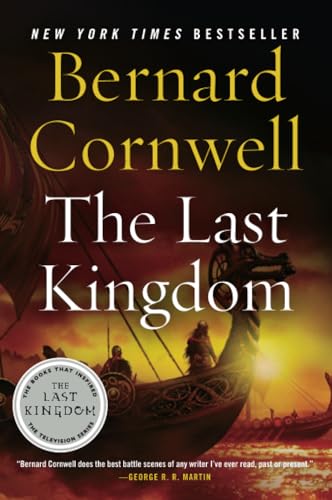
The Last Kingdom (The Saxon Stories, Book 1)
Bernard Cornwell

Meditations
Marcus Aurelius

The Hiding Place
Elizabeth Sherrill, John Sherrill Corrie ten Boom