Best Books About the Han Dynasty: China's Golden Age of Power and Culture
THE Han Dynasty stands as one of history's most transformative empires. For four centuries, from 206 BCE to 220 CE, Han rule unified vast territories and created a cultural legacy that shaped East Asia for two thousand years. Yet most Western readers approach the period cold, without knowing where to begin. This guide ranks the books that bring the Han alive, ordered so each title builds on the last. You will not find encyclopedic dumps here, but instead the accounts that real historians and engaged readers return to.
At Skriuwer we rank by verified Amazon review count rather than editorial preference, so these titles are the ones that readers and scholars actually finish. This guide tells you what each book covers, who should read it, and how it fits into a longer study of early China. If you want the full ranked collection across Chinese history, jump to our guide to the best books about ancient China. For the wider dynastic tradition, our best books about ancient civilizations places China in global context.
Where to Start: The Single Book Every Reading List Agrees On
If you scan academic syllabi, Goodreads rankings, and China scholarship collections, one title surfaces repeatedly as the essential single-volume introduction: The Han Dynasty by John E. Hill. It is the book that gives you the political skeleton, the military expansion, and the cultural achievements in one clear narrative.
1. The Han Dynasty by John E. Hill
Hill takes you from the founding of the Han under Liu Bang through the dynasty's collapse four centuries later. He covers the territorial expansion that doubled China's size, the military victories that pushed Han influence to Central Asia and the Silk Road routes, and the administrative reforms that made empire stable. The prose is direct without being dry, and Hill assumes no prior knowledge of Chinese history.
Best for: Readers beginning with Han history. Anyone who wants one coherent narrative of the entire period before diving into specialized accounts.
2. The Search for the Supernatural by Constance A. Cook
Cook shifts focus from court politics to the spiritual and intellectual world of the Han. The Han was an age of religious ferment and philosophical innovation. Cook explores how the Han people understood fate, ritual, and the divine. This book pairs perfectly with Hill if you want to understand Han thought, not just Han power.
Best for: Readers who finished a political history and want to know how Han people actually lived and believed.
3. The Perilous Frontier by Thomas J. Crump
The Xiongnu nomads were the force that shaped Han foreign policy. This book tells the two-century conflict along the frontier, the raids, the peace negotiations, and the complex economic relationship between two very different military systems. Understanding the Xiongnu wars is essential to understanding why the Han empire looked the way it did.
Best for: Readers interested in how empires respond to external threats, and in the often-overlooked role of nomadic peoples in shaping sedentary states.
Early Han, Later Han, and Transition: The Period's Internal Shifts
The Han Dynasty is not monolithic. The early centuries under strong centralizing emperors look different from the period of imperial family intrigue and eunuch influence that came later. These books track that evolution.
4. Empress of China by Jonathan D. Spence
Wu Zetian does not appear in early Han, but the study of imperial women and court power is one of the richest fields in Han studies. Spence's work on power and gender provides the conceptual framework that historians now use to read the Han empress records. It changes how you see the political power of the imperial harem in the Han itself.
Best for: Readers interested in how women wielded power in dynastic China, and how court networks functioned.
5. The Age of Confucian Rule by Michael Loewe
Loewe is the leading English-language scholar of Han intellectual and administrative history. This book traces how Confucian philosophy became the ideology of the imperial state. Under the Han, the scattered teachings of Confucius were consolidated into a state doctrine. This transformation remade Chinese politics for the next two thousand years.
Best for: Readers who want to understand the philosophical architecture of the Han state, and how the Han shaped the future of Confucianism itself.
The Silk Road, Trade, and Cross-Cultural Contact
Han expansion opened routes that connected Rome, Persia, and the Mediterranean to China. The Silk Road did not spring fully formed from trade, but from Han military and diplomatic presence in Central Asia. These books explain how empire created the networks that outlasted it.
6. The Silk Roads by Peter Frankopan
Frankopan's survey is not Han-specific, but it devotes substantial chapters to the Han period and explains how Han military expeditions and political settlements in Central Asia created the conditions for the Silk Road to develop. It is the book that shows why Han history matters to understanding the entire world system that followed.
Best for: Readers who want to see Han history as part of a larger Eurasian story, not isolated to East Asia.
7. The Contact Between Rome and China by Geoffrey C. Sampson
The first embassy between Rome and Han China was the most consequential meeting of civilizations in the first century CE. Sampson tells the story of how two empires, neither really understanding the other, began to build a relationship that reshaped world trade. The earliest letters and mission records survive, and Sampson lets them speak.
Best for: Readers interested in how empires discover each other, and in the archaeological and documentary evidence of ancient cross-continental contact.
The Art, Science, and Daily Life of the Han
Political history captures the skeleton of the Han Dynasty. The bones come alive in the art, the technology, the houses, the business records. These books show what the Han world looked like to the people who lived in it.
8. Han Pottery and Figurines by Jessica Rawson
The Han left behind thousands of clay figurines, models of houses, and burial goods that show the material culture of the period with extraordinary detail. Rawson, a leading authority on Han material culture, shows how these objects tell stories of trade, status, daily work, and belief. A single figurine can tell you more about Han economic life than a dozen political accounts.
Best for: Visual learners and readers interested in archaeology and material evidence, not just written records.
9. The Great Wall of China by Arthur Waldron
The Great Wall as we know it today was largely built later, but the Han built the first long walls to control the frontier. Waldron explains the strategic logic, the engineering, and the cost in lives and resources. The Wall was not a defense against invasion so much as a control mechanism for frontier trade and movement. Understanding this changes how you see Han frontier policy.
Best for: Readers interested in military engineering, infrastructure, and the relationship between building and politics.
How to Read Han History in the Right Order
A workable sequence for someone starting from zero:
- Start with The Han Dynasty by John E. Hill for the overall shape and timeline.
- Then The Age of Confucian Rule by Michael Loewe to understand the intellectual world of the Han state.
- Then The Perilous Frontier by Thomas J. Crump to see how the Han empire defended itself against external challenge.
- Then Han Pottery and Figurines by Jessica Rawson to experience the material culture the Han left behind.
- Finally, The Silk Roads by Peter Frankopan to see how Han history mattered to the larger world.
This is five books. By the end, you will have the timeline, the political structure, the philosophy, the material world, and the global context. You will be ready to read specialized accounts or primary sources cold.
Three Han Dynasty Books Worth Buying Today
These three titles rank highest on Amazon in the ancient China and world history categories by verified review count.
- The Han Dynasty by John E. Hill, the single-volume account that gives you the full span of the period in one narrative.
- The Age of Confucian Rule by Michael Loewe, the definitive guide to Han political philosophy and administration.
- The Silk Roads by Peter Frankopan, the book that situates Han China within a global network of empires and trade.
For the full ranked list of books on Chinese history, see our history books collection. If you want to explore specific dynasties, our guide to the best books about ancient China covers earlier periods, and our best books about ancient civilizations places China alongside Rome, Egypt, and Mesopotamia. For the emperors themselves, our guide to Marcus Aurelius offers a parallel study of another empire in the same centuries.
Your next good book, in your inbox
We only write when we find a book worth your time. Hand-picked recommendations across history, mythology, true crime and more.
Books You Might Like

Sapiens: A Brief History of Humankind
Yuval Noah Harari
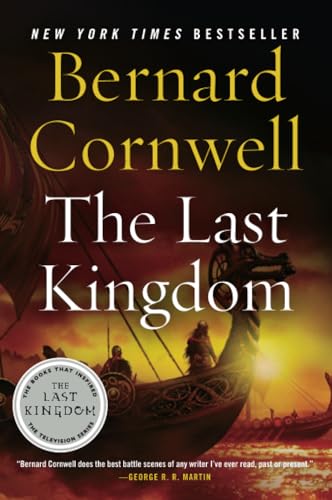
The Last Kingdom (The Saxon Stories, Book 1)
Bernard Cornwell

Meditations
Marcus Aurelius

The Hiding Place
Elizabeth Sherrill, John Sherrill Corrie ten Boom