Best Books About the Inca Empire: Mountains, Gold and a Civilization Lost
The Inca Empire was the largest pre-Columbian state in the Americas, controlling territory from modern Ecuador to central Chile. It lasted only about a hundred years before Spanish conquest, but in that century, the Incas built a road network, an administrative system, and a level of organizational sophistication that still puzzles modern scholars. The best books on this topic do more than describe the spectacular ruins. They explain how the Inca actually governed their territory, what they believed, how Spanish conquistadors managed to defeat them, and what happened to the survivors.
The Inca Empire Was Not What You Think
The image of Machu Picchu dominates Western understanding of the Inca, suggesting a civilization obsessed with stone temples and golden treasure. The reality was more complex. The Inca were master engineers and administrators who used writing, though it took forms (quipu, a knotted-string recording system) that Europeans did not recognize as writing. They had no draft animals other than llamas, yet built a 25,000-mile road network. They had no currency, yet organized a complex economy based on reciprocal obligation and labor taxation. Most of the Inca people left no written records, so the best histories have to reconstruct the empire from Spanish accounts, archaeological evidence, and the testimony of Andean peoples who survived the conquest.
Foundational Histories of the Inca
1. The Inca Empire: A Concise History by Craig Morris and Adriana von Hagen
Morris and von Hagen combine archaeology and ethnohistory to show how the Inca built and administered their empire. They focus on concrete systems: how roads were built, how labor taxation worked, how the empire moved goods and information across vast distances. Less attention to the Incas as romantic figures, more attention to the actual mechanisms of control. The clarity is unmatched for a general reader.
The Inca Empire: A Concise History on Amazon
2. The Last Days of the Incas by Kim MacQuarrie
A narrative history of the Spanish conquest and the fall of the Inca state. MacQuarrie uses eyewitness accounts from conquistadors and indigenous sources to tell the story of how a few hundred Spanish soldiers defeated an empire of millions. The answer involves internal Inca conflicts, disease, technology, and the Incas' inability to recognize the Spanish as a genuine threat until it was too late.
The Last Days of the Incas on Amazon
3. The Inca World: The Development of Pre-Columbian Peru, 1000 BC-AD 1532 by Maria Rostworowski
Rostworowski's book places the Inca in their longer historical context, showing what civilizations and societies preceded them and how the Inca inherited and transformed those traditions. Essential for understanding that the Inca did not invent Andean civilization from scratch, but rather perfected and expanded systems that had been developing for millennia.
The Inca Road System and Administration
4. Roads of the Inca by John Hyslop
A specialized book focused entirely on the Inca road network, how it was built, how it was maintained, and what it reveals about Inca priorities. Over 25,000 miles of roads, built and maintained without wheeled vehicles or draft animals, still mostly walkable today. Hyslop shows this was not a luxury but a necessity for holding together a geographically fragmented empire.
5. The Quipu: A Study in Incan Records Keeping by Gary Urton
The Incas did not use an alphabetic writing system, but they recorded numbers and possibly narrative on knotted strings called quipu. Urton is the leading researcher on quipu and his book shows what this system could do and why the Spanish dismissed it as a mere accounting tool rather than a true writing system. The reading shifts your entire understanding of what counts as literacy.
The Conquest and After
6. The Spanish Conquest of Peru and the Andes by David Ownby
Focuses on the conquest not just as a military event but as a process of cultural, religious, and institutional transformation. The Incas were not simply wiped out, but instead absorbed into colonial structures where they continued to exist, though under Spanish rule. This book follows that transition and explains why the conquest was so consequential.
7. The World of the Incas by Bertrand Flornoy
A more literary account that uses travel, archaeology, and Flornoy's own fieldwork to reconstruct Inca life and society. The book sacrifices some scholarly apparatus for readability and a stronger sense of place. Particularly good if you want to understand the geography and ecology that shaped Inca choices.
Why the Inca Fell So Quickly
The popular answer is that the Spanish had superior technology, especially horses and gunpowder. That was part of it, but only part. The Inca had just emerged from a civil war between rival claimants to the throne when the Spanish arrived. The Spanish conquest coincided with a massive smallpox epidemic that killed the reigning Sapa Inca and created chaos in the succession. The conquistadors had no intention or means to conquer the entire empire alone. Instead, they allied with local groups who were either unhappy with Inca rule or wanted to use Spanish military power to advance their own agenda. The Inca fell because they faced internal division, disease, and enemies who could turn other Andean peoples against them. That makes the conquest look less like Spanish military genius and more like a convergence of favorable conditions.
The most important factor may have been that the Inca simply did not recognize the Spanish as a threat. Early Spanish sightings in Inca territory were recorded, but Inca informants apparently did not convey a sense of urgency about who these men were or what they wanted. By the time the Inca understood that the Spanish were trying to conquer the empire, the Spanish had already secured alliances with enough indigenous groups to make the conquest inevitable.
Where Should You Start?
If you want a single comprehensive overview, Morris and von Hagen provide the clearest path through the administrative systems and daily realities of Inca life. If you prefer narrative momentum, MacQuarrie's Last Days of the Incas is engaging and readable. If you want the fuller historical context from earlier Andean civilizations, start with Rostworowski. If you want to understand specific systems like roads or recording, the specialized books by Hyslop and Urton come second. Flornoy is best read after you have a basic framework from one of the main histories.
Your next good book, in your inbox
We only write when we find a book worth your time. Hand-picked recommendations across history, mythology, true crime and more.
Books You Might Like

Sapiens: A Brief History of Humankind
Yuval Noah Harari
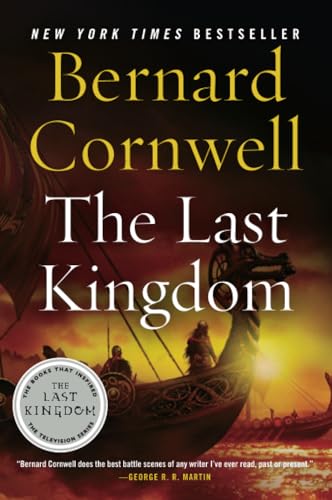
The Last Kingdom (The Saxon Stories, Book 1)
Bernard Cornwell

Meditations
Marcus Aurelius

The Hiding Place
Elizabeth Sherrill, John Sherrill Corrie ten Boom