Best Books About the Portuguese Empire: Explorers, Spice Routes and Colonial Legacies
Portugal built the first truly global empire, and its story is one of daring navigation, commercial ruthlessness, and consequences that still echo across Africa, Asia, and South America. For four centuries, Portuguese traders and soldiers stretched from Brazil to Timor, claiming routes and territories that fundamentally shaped the modern world. Yet Portuguese colonial history is often overlooked compared to the empires of Spain, Britain, or France, leaving a gap in understanding how smaller nations can wield enormous power through the sea.
The books below explore the rise and complexity of Portuguese imperialism: the visionary navigators, the brutal extraction of spices and enslaved people, the long resistance to decolonization, and what lasting impact these centuries left behind.
The Age of Exploration and Maritime Innovation
The Portuguese didn't discover distant lands by accident. They systematized exploration, invested in navigation, and built a navy that dominated seas before any European rival could compete. This section covers the architects of Portugal's early empire and the real machinery of exploration.
- The Portuguese Empire in Asia, 1500-1700 by Charles R. Boxer. Boxer's classic is the most authoritative account of how Portugal dominated Asian seas after Vasco da Gama rounded the Cape of Good Hope. Detailed, well-researched, and shows the tactical brilliance that let a small nation control the spice trade for generations.
Prince Henry the Navigator is the figure most people learn first, though he never voyaged himself. What makes him remarkable is his patience with failure and loss. The Portuguese sponsored expedition after expedition down the African coast, each one returning with less than hoped. Most kingdoms would have given up. Henry kept funding them because he understood that once one route worked, others would follow.
The Spice Routes and Trade Empires
Portugal's empire was built on spices, not territory. Control of pepper, cloves, nutmeg, and cinnamon meant enormous wealth. The Portuguese established fortified trading posts, monopolized routes, and used violence to keep competitors out. The human cost of keeping spice routes profitable is often glossed over in histories, so these books matter for what they show, not just for what they celebrate.
- The Spice Trade by Giles Milton. Milton brings the spice routes to life with vivid characters and the economic competition that turned exploration into empire. Shows why Portugal's grip on spice monopolies made some merchants and traders wealthy beyond imagination while fueling brutal conflicts across the Indian Ocean.
These weren't peaceful trading posts. Portuguese forts defended against local kingdoms, rival European traders, and the constant threat that any port could be reclaimed. The profits justified the cost, at least for those collecting them.
Slavery, Enslavement and Human Cost
Portugal was the first European nation to trade in enslaved Africans, and the last to abolish slavery, holding on until the 1860s. Portuguese merchants brought enslaved people back to Europe and established the Atlantic slave trade decades before Columbus sailed west. This happened not as a side effect of colonialism but as a central part of Portuguese commerce from the 1440s onward.
- The Portuguese Slave Trade in Africa and the Indian Ocean by Miguel Bandeira Jerónimo. A rigorous accounting of how Portugal's maritime dominance directly enabled forced labor networks. This is not an easy read, but it is essential for understanding why Portuguese colonialism lasted so long and damaged so deeply.
The scale was staggering. Between the 1440s and the 1860s, Portuguese merchants were involved in the forced displacement of millions of people. And unlike other European slave traders who eventually closed the trade, Portugal defended enslavement as integral to its colonies until liberation movements forced the issue.
Late Colonialism and the Resistance to Decolonization
While other European powers decolonized in the 1950s and 1960s, Portugal clung to its African colonies with a ferocity that drew international condemnation. The Portuguese government didn't see decolonization as inevitable; it saw it as a betrayal of national destiny.
- Portugal and the End of Ultracolonialism by Norrie MacQueen. A critical history of why Portugal refused to grant independence to Angola, Mozambique, Guinea-Bissau, and Cape Verde, and the independence wars that finally broke the deadlock. Explains the ideology that kept Portugal fighting into the 1970s after every other colonial power had stepped back.
Those wars killed hundreds of thousands and displaced millions. Portugal's refusal to acknowledge the inevitability of independence cost lives for years that other nations had already accepted as over. The Carnation Revolution in 1974 finally ended it, but the damage in African nations lasted far longer.
Colonial Legacies and Modern Portugal
What does an empire leave behind, centuries after its formal end? Borders drawn without regard to local peoples, languages and educational systems inherited from colonizers, economic structures designed to extract wealth rather than build local prosperity, and complicated relationships between Portugal and its former colonies that persist today.
- Postcolonial Portugal: Culture and Identity in Lusophone Europe by Fred M. Halliday and edited by collection. Examines what the Portuguese Empire meant for Portugal itself, how immigrants from former colonies reshaped Portuguese cities, and how Portuguese culture and identity still carry the weight of empire.
Portugal presents itself as a more benign empire than other European powers, and there are historians who make that case. But the evidence from Angola, Mozambique, and other former colonies tells a different story about violence, extraction, and the human cost of an empire that refused to end.
Where to Start With Portuguese Empire History
If you want the big picture of Portuguese maritime dominance, start with Charles Boxer's The Portuguese Empire in Asia. For the spice trade specifically, Giles Milton's The Spice Trade is engaging and accessible. If you want to understand the human cost, Miguel Bandeira Jerónimo's work on slavery is unflinching. And for why Portugal's colonialism lasted longer than anyone else's, Norrie MacQueen's Portugal and the End of Ultracolonialism is indispensable.
Together, these books show that empire is not something that happened in the distant past. For millions of people across Africa and Asia, Portuguese colonialism shaped the world they inherited, and its traces remain visible in language, governance, and ongoing economic relationships.
Your next good book, in your inbox
We only write when we find a book worth your time. Hand-picked recommendations across history, mythology, true crime and more.
Books You Might Like

Sapiens: A Brief History of Humankind
Yuval Noah Harari
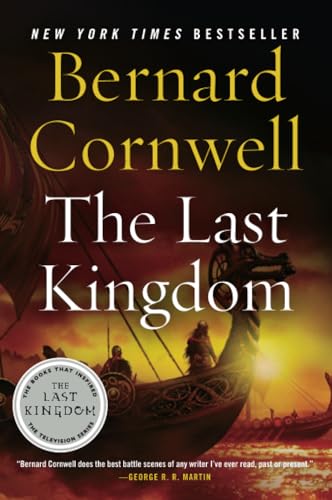
The Last Kingdom (The Saxon Stories, Book 1)
Bernard Cornwell

Meditations
Marcus Aurelius

The Hiding Place
Elizabeth Sherrill, John Sherrill Corrie ten Boom