Best Books About the Roman Empire: Rise, Decline and Enduring Legacy
Published 2026-06-14·7 min read
The Roman Empire is history's most consequential political experiment. At its height, it encompassed 70 million people across three continents. It lasted nearly 1,500 years. Its law codes shaped modern legal systems. Its language evolved into the Romance languages. Its architecture and engineering set standards that would not be matched for a thousand years.
Yet Rome was not inevitable. It was built by ambitious men who made specific choices. It was held together by infrastructure, ideology, and force. When those systems fractured, the empire crumbled. The story of Rome is not the story of a natural order. It is the story of human ambition and human failure, scaled to continental proportions.
The books below offer different interpretations of Rome's rise and fall. Some focus on military power. Some examine culture. Some analyze economic systems. All of them grapple with the essential question: how did a small city-state on a peninsula become the master of the known world, and why could it not sustain that dominion?
## **Gibbons - The Decline and Fall of the Roman Empire**
This is the classic, written over fifteen years in the late eighteenth century. Gibbon's prose is dense and opinionated, but his research is formidable. He covers a thousand years in six volumes. The work is not merely narrative history. It is a philosophical examination of how great civilizations decay.
Gibbon believed Christianity contributed to Rome's fall by promoting otherworldliness and reducing civic virtue. This thesis is controversial and largely rejected by modern scholars, but it does not diminish the book's value. Gibbon's attention to detail is extraordinary. His discussions of military tactics, political intrigue, and cultural change remain standard references.
The great strength of Gibbon is his refusal to simplify. He shows Rome not as a monolithic entity but as a system of competing powers, ideologies, and economic forces. The fall was not sudden or single-cause. It was the slow dissolution of the machinery that held the system together.
## **Mary Beard - SPQR: A History of Ancient Rome (2015)**
Beard brings modern historical methodology to Rome. She is not interested in great-man narratives or moralizing about virtue and decay. Instead, she explores how ordinary Romans lived, how power actually worked, how the empire reproduced itself across generations.
SPQR is organized thematically rather than chronologically. She examines religion, politics, slavery, warfare, urban life. This approach is disorienting at first but reveals patterns that a strictly chronological account would miss. You see how Rome solved the problem of governing millions through innovation in law, bureaucracy, and ideology.
Beard is also excellent on the transition from Republic to Empire. This was not a collapse but a gradual reorganization. The Republic's institutions persisted under Augustus. The language of democracy and consent persisted even as power concentrated. Rome was successful at convincing people they had freedom even as that freedom was systematically restricted.
**[Read on Amazon](https://amazon.com/SPQR-History-Ancient-Mary-Beard/dp/0871404060?tag=31813-20)**
## **The Machine of Empire**
Rome's genius was organizational. They built infrastructure. Roads connected the empire, enabling military movement and trade. Aqueducts brought fresh water to cities. Latin became the common language, replacing local dialects and allowing communication across diverse populations. Law codes were applied consistently. The military was professional and hierarchical.
This machinery could be oppressive. Local elites who cooperated were incorporated into the Roman system. Those who resisted were crushed. But the machinery also enabled unprecedented stability. Trade flourished. Cities grew. The Mediterranean became economically integrated in ways it would not be again until the modern era.
The most interesting question is not why Rome fell but why it lasted so long. It survived civil wars that should have destroyed it. It survived plagues. It survived economic crises. The machinery proved remarkably resilient. When it finally did fail, it was not because the system was intrinsically unstable but because the stresses accumulated faster than they could be managed.
## **Thomas Middendorf - The Roman Empire (2018)**
For a comprehensive but accessible overview, Middendorf's book is excellent. It covers the entire span from the Republic through the fall of the Western Empire. Middendorf balances military history with social and economic analysis. He explains not just what happened but why it mattered.
Middendorf is particularly good on the later empire. This period is often glossed over in favor of the Republic or the early Empire, but it is crucial for understanding Rome's evolution. The third-century crisis nearly destroyed the empire. The reorganization under Diocletian and Constantine created a new structure. The rise of Christianity transformed the state's relationship to religion.
The book ends with the fall of the Western Empire in 476. But Middendorf makes clear this was not the end of Rome. The Eastern Empire continued for nearly a thousand more years. Roman law, language, and culture persisted in medieval Europe. Rome did not end. It transformed.
## **Rome's Inheritance**
Every modern legal system owes debts to Rome. The concept of citizenship. The distinction between public and private law. The right to trial and defense. These are Roman inventions. They were not universal in ancient Rome. Slaves had no rights. Women had limited rights. But the framework existed, and it could be expanded.
The Romance languages derive from Latin. English absorbed thousands of Latin words through Norman French and through scientific and legal terminology. Roman architecture influenced European building for centuries. The engineering principles Romans developed shaped bridge and aqueduct construction well into the modern period.
Most profoundly, Rome demonstrated that you could organize millions of people under a single governmental system. This is obvious now. It was not obvious then. Rome proved it was possible. That proof changed human civilization.
**[Read on Amazon](https://amazon.com/Roman-Empire-Thomas-Middendorf/dp/0890969957?tag=31813-20)**
## **Toward a New Understanding**
Modern scholarship has moved past the "rise and fall" narrative. Rome did not rise. It emerged from centuries of gradual expansion and consolidation. It did not fall. It transformed. The Western Empire fragmented, but Roman culture, law, and Christianity persisted in the successor kingdoms. The Eastern Empire continued explicitly as the Roman Empire until Constantinople fell to Ottoman forces in 1453.
Understanding Rome requires holding these complexities. It was a military power and a cultural force. It was oppressive and innovative. It lasted for 1,500 years and fell in less than a century. It changed everything and was itself changed by what it conquered. The books above offer different angles on this impossible civilization.
**[Read on Amazon](https://amazon.com/SPQR-History-Ancient-Mary-Beard/dp/0871404060?tag=31813-20)**
Your next good book, in your inbox
We only write when we find a book worth your time. Hand-picked recommendations across history, mythology, true crime and more.
Books You Might Like

Sapiens: A Brief History of Humankind
Yuval Noah Harari
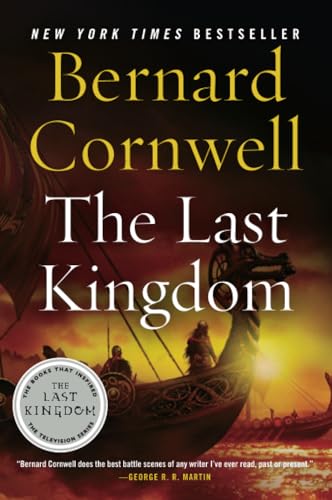
The Last Kingdom (The Saxon Stories, Book 1)
Bernard Cornwell

Meditations
Marcus Aurelius

The Hiding Place
Elizabeth Sherrill, John Sherrill Corrie ten Boom