Best Books About the Vikings: Raiders, Settlers and Explorers
The Vikings have become a cultural phenomenon. Television shows, movies, and video games have introduced millions of people to Norse warriors, longships, and the age of exploration and conquest. But popular culture and historical reality often diverge. The real Vikings were traders, farmers, and explorers as much as raiders. They built settlements across the North Atlantic. They navigated to the Mediterranean, the Middle East, and North America. They were shipbuilders, merchants, and craftspeople. These books offer a more complete picture of who the Vikings actually were and why their era mattered so much to the history of Europe and the world.
Comprehensive Histories of the Viking Age
The Normans: From Raiding Seafarers to Kings by James Muldoon (Basic Books) traces the Vikings as they transformed from raiders into settled rulers. Muldoon shows how Vikings who settled in what became Normandy eventually became the Norman dynasty that would conquer England in 1066. The book shows the continuity between Viking culture and medieval civilization.
The Norse Explorers by John Haywood (Thames and Hudson) is a comprehensive account of Viking expansion across Europe, Asia, and beyond. Haywood includes maps and archaeological evidence to show the extent of Viking travel and trade. The book demonstrates that Vikings were not confined to the Atlantic coast but reached as far as Baghdad and possibly North America centuries before Columbus.
The Vikings by Robert Ferguson (Penguin) is one of the most readable single-volume histories of the Viking age. Ferguson covers the raids, the settlements, the trade routes, the shipbuilding technology, and the cultural context that made Viking expansion possible. The book is well-researched but accessible, making it ideal for readers new to the subject.
Viking Warfare and Raids
The Last of the Vikings by Norman F. Cantor (Yale University Press) focuses on the later Viking age, particularly the famous Norwegian king Harald Hardrada, who died in 1066. The book shows how Viking culture persisted even as the age of dominance was ending. Harald's life is told alongside the broader history of medieval warfare and politics.
The Raven and the Blood Eagle: A History of the Vikings by Robert Nisbet (Doubleday) explores Viking warfare, weapons, and tactics. Nisbet examines how Vikings built their fearsome reputation and why they were so effective in combat. The book separates legend from reality, showing what Vikings actually used in battle versus what was exaggerated.
Shock of the Arrow by William E. McNeill (Oxford University Press) includes chapters on Viking weapons technology and warfare. While not exclusively about Vikings, the book places them in the context of medieval military history.
Viking Settlement and Society
The Greenland Saga by Magnus Magnusson (Penguin Classics) is a translation of medieval texts that describe the Norse settlement of Greenland and the expedition to North America. These sagas are both historical documents and literary works. Magnusson's translation preserves the language and flavor of the originals while making them accessible to modern readers.
The Northmen by John Haywood (Thames and Hudson) offers a detailed look at Viking settlement patterns. Haywood examines how Vikings established trade posts, colonies, and permanent settlements across Europe. He shows how Vikings adapted to different environments, from the frozen north to warmer Mediterranean climates.
The Vikings: A Very Short Introduction by Julian D. Richards (Oxford University Press) is a concise overview of Viking society, religion, and culture. Richards covers everything from the runes Vikings used for writing to the role of women in Viking society. The book shows that Vikings had a complex, sophisticated culture beyond their reputation as violent raiders.
Viking Exploration and Trade
The Varangians by several scholars (edited volume) explores the Vikings who traveled southeast down Russian rivers to Baghdad and Constantinople. These Vikings became traders and mercenaries, serving as elite guards for Byzantine emperors. The book shows that Viking ambitions extended far beyond the Atlantic.
Westviking: The Viking Voyage to North America by Gwyn Jones (W.W. Norton) is the definitive account of Norse exploration of North America. Jones examines the evidence for Norse settlement in what they called Vinland, centuries before Columbus. The book carefully separates what we know from archaeological evidence, what we can infer from sagas, and what remains speculation.
The Norse Discovery of America by William Fitzhugh and Elisabeth Ward (Smithsonian Press) combines archaeological evidence with historical sources to explore Viking contact with North America. The book is richly illustrated with artifacts and maps that show the extent of Norse exploration.
Viking Religion and Mythology
The Prose Edda by Snorri Sturluson (various translations) is a collection of old Norse mythology and poetry written down in medieval Iceland. Snorri was preserving an earlier oral tradition. The text gives us the closest thing we have to the religious beliefs of pagan Vikings. Different translations vary in how literally they render the Old Norse, so reading a good modern translation is important.
The Poetic Edda (also in various translations) is an even older collection of mythological poems. These poems are harder to understand than Snorri's Prose Edda because the language is older and more poetic, but they offer a more direct window into Viking beliefs.
Gods and Goddesses of the Viking Age by John Lindow (W.W. Norton) is a scholarly but accessible guide to Norse mythology and religion. Lindow explains the pantheon of Norse gods, the religious practices of Vikings, and how Norse religion eventually gave way to Christianity. The book is well-organized and clear.
Biography and Personal Stories
Ivar the Boneless by Katherine Schellman (Sourcebooks) is a fictionalized biography based on what we know about one of the most famous Viking leaders. Schellman blends historical fact with narrative fiction to bring Ivar's world to life. While not purely historical, the book conveys a sense of what Viking leadership and ambition looked like.
Erik the Red (various biographical accounts) traces the life of the Viking who discovered and colonized Greenland. His son, Leif Erikson, went on to explore North America. The story of Erik illustrates the Viking spirit of exploration and the challenges of settling inhospitable lands.
Why the Vikings Still Matter
The Viking age shaped the medieval world. The Normans conquered England and changed its language, law, and culture. Vikings established trade routes that connected northern Europe to the Middle East and Asia. They explored the North Atlantic centuries before the age of exploration. They brought new technologies and new ideas to the places they settled. Understanding the Vikings means understanding the roots of European civilization and recognizing that medieval Europe was far more connected to the wider world than is often assumed.
Skriuwer curates collections of history books including a selection of the best history books across all periods. The Viking age is just one chapter in the long story of human civilization, but it remains one of the most fascinating.
Your next good book, in your inbox
We only write when we find a book worth your time. Hand-picked recommendations across history, mythology, true crime and more.
Books You Might Like

Sapiens: A Brief History of Humankind
Yuval Noah Harari
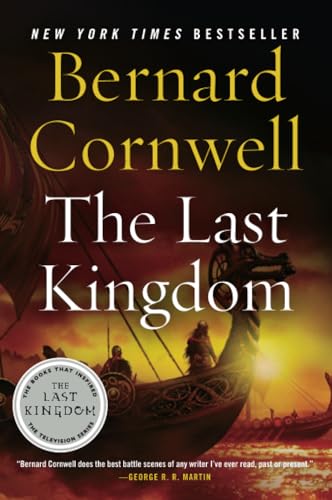
The Last Kingdom (The Saxon Stories, Book 1)
Bernard Cornwell

Meditations
Marcus Aurelius

The Hiding Place
Elizabeth Sherrill, John Sherrill Corrie ten Boom