12 Best Books About Unsolved Mysteries: Cold Cases, Disappearances and the Unidentified (2026)
"Unsolved" is a category most true-crime lists treat as a single thing. It is not. There are at least three distinct families: cold cases, where a known crime happened to a known victim and the perpetrator was never identified; disappearances, where a person vanished and no body or confession was ever recovered; and the unidentified, where remains exist but the victim has never been named. The best books about unsolved mysteries are written from inside one of those three frames, and the books that flatten them all together rarely repay a careful reading. The 12 titles below are organised by which family they belong to, with the cleanest starting point in each.
Where to Start in Each Family
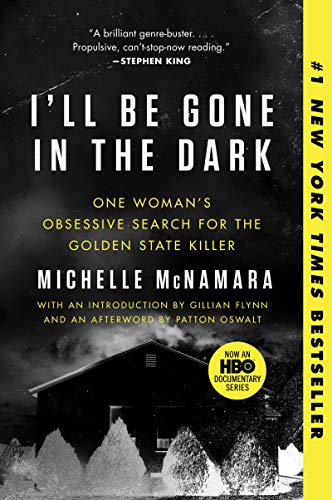
For cold cases, start with I'll Be Gone in the Dark by Michelle McNamara, the model for how a modern obsessive cold-case book reads. For disappearances, start with Lost Girls by Robert Kolker. For the unidentified, start with The Skeleton Crew by Deborah Halber. If you only read one book in the entire genre, McNamara is the safest first pick: the case was solved after publication, which gives the reader the rare experience of watching an investigative method actually work.
Cold Cases: Crime Known, Perpetrator Never Caught
- I'll Be Gone in the Dark by Michelle McNamara. The Golden State Killer case, written by the journalist who pushed the genealogical-DNA technique into the mainstream. McNamara died before the case broke. The book is still the gold standard for modern cold-case writing. 35,000+ Amazon reviews.
- The Devil in the White City by Erik Larson. The 1893 Chicago World's Fair and the serial killer who used it as cover. Most of the murders are technically solved but most victim identities never were, which puts the book on this list rather than the standard true-crime shelf.
- The Suspicions of Mr Whicher by Kate Summerscale. The 1860 murder at Road Hill House and the detective whose career it broke. The book that defined modern Victorian true crime as a genre.
- Killers of the Flower Moon by David Grann. The Osage murders of the 1920s. Some were eventually solved by the early FBI; many were not. The book that re-opened the case in public memory and led to a film adaptation.
Disappearances: No Body, No Confession
- Lost Girls by Robert Kolker. The Long Island serial killer case, told through the lives of the missing women. The book that taught the modern genre to lead with the victims, not the killer.
- The Lost City of Z by David Grann. Percy Fawcett's 1925 disappearance in the Amazon. Half explorer biography, half Grann's own attempt to find the same trail. The cleanest single-disappearance book in print.
- Into Thin Air by Jon Krakauer. The 1996 Everest disaster. Some of the dead were found, several never were. Krakauer's first-person account is the model for the high-stakes disappearance book.
- Midnight in the Garden of Good and Evil by John Berendt. A Savannah society killing that the courts could not finally resolve. Less a whodunit than a study of how a small city closes ranks around its unanswered questions.
The Unidentified: Remains Without a Name
- The Skeleton Crew by Deborah Halber. The amateur internet sleuths who name the long-dead. The single best introduction to the Doe Network world.
- We Keep the Dead Close by Becky Cooper. The 1969 unsolved murder of a Harvard graduate student and the long institutional silence around it. The case was eventually solved while Cooper was writing. The book stays better than the resolution.
- Mindhunter by John Douglas and Mark Olshaker. Not strictly unsolved-mystery writing but the playbook many investigators read before working any cold case. The FBI behavioural-profile method explained by the agent who built it.
- In Cold Blood by Truman Capote. The original modern true-crime book. The Clutter case was solved fast, but Capote's central question, why these two men, is the one no investigation could answer. Still the genre's reference text.
How Forensic Genealogy Changed the Genre in 2025-2026
The technique that solved the Golden State Killer case in 2018, forensic genealogy using publicly submitted DNA databases, has continued to reshape cold-case investigation at scale. As of early 2026, Parabon Nanolabs and similar genealogical DNA services have contributed to solving over 700 cases that had gone cold for years or decades. The success rate has made genealogical DNA the most significant development in cold-case investigation since the introduction of AFIS fingerprint databases in the 1980s.
What this means for the books on this list: several of the cases covered in titles written before 2018, particularly in the cold-case category, have since been closed or significantly advanced using this method. The genre itself is also changing. Books published after 2022 increasingly treat genealogical DNA as a standard tool rather than a narrative twist. The gap between what investigators can do and what courts will allow these techniques to produce is now the central legal tension in new writing about cold cases.
What These Books Cannot Tell You
Almost every book in the genre is written from the side of the people trying to solve the case. Even McNamara, who explicitly tries to centre victims, is structured around her own pursuit. That is a real limit. The cases that hit the mainstream are also the ones with enough surviving paperwork, family willingness, or media coverage to sustain a 400-page treatment. The biggest categories of unsolved violence in the United States, indigenous women and unhoused victims, almost never produce these books. If a reading list is going to be honest about the genre, it has to say so.
Where to Go Next on Skriuwer
For the broader genre, the ranked guide to the best serial killer books is the natural next stop. For the cold-case-by-cult angle, see the best books about cults. For the conspiracy crossover, the books on MK-Ultra and CIA mind control overlap with several cold-case investigations from the 1960s and 70s. The full true crime category covers the rest of the catalogue.
Your next good book, in your inbox
We only write when we find a book worth your time. Hand-picked recommendations across history, mythology, true crime and more.
Books You Might Like

The Hiding Place
Elizabeth Sherrill, John Sherrill Corrie ten Boom


Mindhunter: Inside the FBI's Elite Serial Crime Unit
Mark Olshaker John E. Douglas