Best Books on Behavioral Economics: Why We Make Irrational Choices
Classical economics assumes people are rational actors who weigh costs and benefits and make optimal decisions. That is not what people do. People fear losing ten dollars more than they enjoy gaining ten dollars. They follow the crowd even when it leads into obvious disaster. They overestimate their own abilities and underestimate how much other people overestimate theirs. Behavioral economics is the study of why we are not the creatures the economics textbooks imagine.
At Skriuwer we rank books by verified Amazon review count, so the titles below are the ones readers actually finish and recommend to others. Some focus on the psychology of individual decision-making, some on the madness of crowds, and some on how to design systems that help people make better choices even when their impulses push them the wrong way. These books will change how you think about your own financial decisions and how you understand markets.
The Foundation: How We Actually Think and Decide
Behavioral economics began when researchers started asking why people did not behave the way economic models predicted. The answer was that the human mind has structural biases that no amount of education can erase.
1. Thinking, Fast and Slow by Daniel Kahneman
Kahneman, a Nobel Prize winner, spent fifty years studying how people think. The book divides the mind into two systems: fast thinking (intuitive, emotional, quick) and slow thinking (deliberate, logical, careful). Most of our mistakes come from fast thinking, but slow thinking is exhausting so we use fast thinking by default. Kahneman documents the specific mistakes we make and why we make them repeatedly even after we know what they are.
Best for: Readers who want the foundation of behavioral economics from one of its creators.
2. Predictably Irrational by Dan Ariely
Ariely runs experiments showing that people make irrational decisions in predictable ways. If you frame a choice as loss versus gain, people decide differently even though the outcome is identical. Ariely's experiments demonstrate that our irrationality is not random but follows patterns. Once you see the patterns, you notice them everywhere.
Best for: Readers who prefer concrete experiments to theory, and who want to understand their own biases as they unfold.
3. Stumbling on Happiness by Daniel Gilbert
Gilbert focuses on one specific bias: we are terrible at predicting what will make us happy. We believe that more money will make us happier than it actually does. We believe a disaster will ruin our lives longer than it really will. We overestimate how unique our experiences are. Gilbert's book explains why these predictions fail and what happiness research has actually discovered.
Markets and Crowds: How Irrationality Spreads
Individual biases are one thing. But when millions of people make biased decisions at the same time, markets crash. Bubble economies form and collapse. These books explain how individual psychology scales up to destroy entire economies.
4. A Short History of Financial Euphoria by John Kenneth Galbraith
Galbraith traces the pattern of every major financial crisis in history. The pattern is always the same: prices rise beyond what any reasonable valuation justifies, people convince themselves this time is different, and then the market crashes. Galbraith shows that the crash is not the anomaly. The euphoria is. Markets that do not go crazy are the exception.
5. The Madness of Crowds by Douglas Murray
Murray's book is not exclusively about financial markets. It is about why groups of people lose the ability to think clearly. The mechanisms are the same whether the crowd is trading stocks or forming political movements. Once you see the pattern, you cannot help noticing when it happens in your own community.
6. Extraordinary Popular Delusions and the Madness of Crowds by Charles Mackay
Mackay's book is from 1841 but it is still the classic account of how crowds go insane. He covers the Dutch tulip mania, the Alchemists, the Crusades, and other examples of mass madness. The financial crazes are the most famous sections, but the book's real insight is that the mechanisms are the same whether people are trading tulips or fighting religious wars.
Behavioral Finance: How Investors Lose Money
Once you understand the psychology, you see how investors repeat the same mistakes. They panic-sell in crashes, they chase returns on hot stocks, they convince themselves that past performance predicts future results even though it famously does not.
7. The Intelligent Investor by Benjamin Graham
Graham's book is old (originally 1949) but his insight is timeless: your greatest enemy in investing is your own psychology. Graham distinguishes between the investor and the speculator and explains why most people think they are investing when they are actually speculating. If you want to understand why markets are so inefficient, this is the clearest explanation.
8. Devil Take the Hindmost by Edward Chancellor
Chancellor traces the history of financial speculation through centuries. The book shows that the mechanisms of bubble and crash have not changed since the 1600s. We have better information technology now, but the psychology of crowds is still the same. The book is both history and psychology of why people gamble their fortunes on financial fantasies.
9. When Genius Failed by Roger Lowenstein
Lowenstein tells the story of Long-Term Capital Management, a hedge fund staffed with Nobel Prize winners that collapsed spectacularly in 1998. The fund failed not because the brilliant people were not smart enough but because they did not understand that markets care about psychology as much as mathematics. The book is a case study in how arrogance blinds even the most accomplished people.
Nudges and Better Design: How to Help People Choose Better
The last section is about using behavioral insights to design systems that help people make better choices. Rather than hoping people will become rational, these books ask how to make the better choice the easier choice.
10. Nudge by Richard Thaler and Cass Sunstein
Thaler and Sunstein argue that small changes in how choices are presented can lead to much better decisions. They call these design changes "nudges." A nudge is not a ban and it is not a law. It is a way of arranging information that helps people act in their own interest. The book is full of concrete examples from retirement savings to healthcare to environmental protection.
How to Read Behavioral Economics in Order
A sequence that builds understanding:
- Start with Thinking, Fast and Slow by Kahneman for the foundation of how the mind works.
- Then Predictably Irrational by Ariely to see the experiments that demonstrate the biases.
- Then Stumbling on Happiness by Gilbert to understand how we get happiness wrong.
- Then A Short History of Financial Euphoria by Galbraith to see how individual biases scale up to market crashes.
- Then Nudge by Thaler and Sunstein to understand how to design systems that help people choose better.
You will finish understanding both your own irrationality and how to work with it rather than against it.
Three Behavioral Economics Books Worth Buying Today
The three titles below appear at the top of Amazon's behavioral economics category by verified review count. These are the books that real readers keep buying and recommending.
- Thinking, Fast and Slow by Daniel Kahneman, the comprehensive account of how the mind makes decisions from one of the field's pioneers.
- Predictably Irrational by Dan Ariely, experiments that show our irrationality follows predictable patterns.
- Nudge by Richard Thaler and Cass Sunstein, how to design systems that help people make better choices.
For more on economics and how people make decisions, see our guides to the best books about ancient Rome, our collection on best books about manipulation, and our exploration of ancient civilizations.
Your next good book, in your inbox
We only write when we find a book worth your time. Hand-picked recommendations across history, mythology, true crime and more.
Books You Might Like
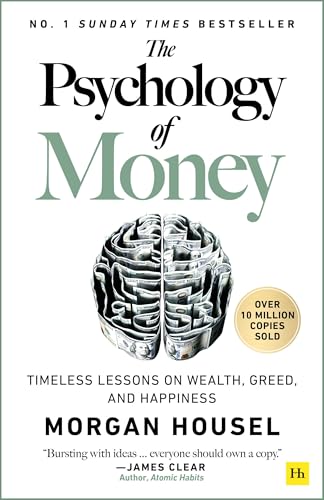
The Psychology of Money
Morgan Housel

Thinking, Fast and Slow
Daniel Kahneman

Man's Search for Meaning
Viktor E. Frankl

The Body Keeps the Score
M.D. Bessel van der Kolk