Best Books on Economic History: How Markets, Trade and Money Shaped Civilisation
Most people learn history by dates and rulers, but the real forces that shaped civilizations are often economic. Why did Rome expand? Why did the medieval feudal system emerge? Why did the Industrial Revolution happen first in Britain? Why did some nations get rich and others remain poor? These questions require economic history, not just political narrative. The books below show how money, trade, and economic organization have been the hidden drivers of historical change, often more consequential than the wars and dynasties that dominate the history textbooks.
The Broad Survey: The Shape of Economic History
The Rise and Fall of American Growth by Robert J. Gordon
Gordon is an economic historian who asks a simple question: how did humanity go from subsistence living to the modern material abundance we take for granted? The book traces the technological and economic changes that drove this transformation, from the Industrial Revolution through the twentieth century. Gordon also argues that growth rates are slowing and that the era of rapid economic expansion may be behind us. The book combines economic data with narrative history to show how specific inventions and business innovations cascaded through society to transform living standards.
The Rise and Fall of American Growth on Amazon
A History of Money by David Orrell
Money is the medium of all modern economic activity, yet most people have no idea how it evolved or why it works the way it does. Orrell traces money from its earliest forms (tally sticks, shells, metals) through to modern fiat currency and digital payments. Understanding how different monetary systems worked and what problems they created helps you understand why economic systems change. The book shows that money is not a natural thing but an invention, and like any invention it can be redesigned when it stops working well.
Capitalism and Slavery by Eric Williams
Williams argues that British industrial capitalism was built on profits from the slave trade and that slavery was abolished only when it became economically less valuable than free labor. The book is controversial (modern scholarship has refined and partly challenged Williams' thesis), but it opens the question that most economic histories avoid: how closely connected are the accumulation of capital and the exploitation of labor? Reading Williams forces you to ask difficult questions about what was actually paying for the innovations that drove growth.
Trade and Commerce Across Civilizations
The Silk Road: A New History by Peter Frankopan
Frankopan moves the center of historical attention away from Europe and toward Central Asia, where the Silk Road connected China, the Middle East, and Europe. He argues that this trade network was far more important to historical development than the traditional European focus would suggest. Empires rose and fell partly because they controlled or lost access to these trade routes. Understanding medieval history, the Crusades, and the development of Islamic and Chinese civilizations requires understanding the economics of the Silk Road.
The Silk Road: A New History on Amazon
Venice: A New History by Thomas F. Madden
Venice became the wealthiest city in medieval Europe not through military conquest but through trade. Madden traces how Venetian merchants organized themselves, what trade routes they controlled, and how they turned commercial advantage into political power. Venice is a vivid example of how economic systems can shape political outcomes. The city's oligarchic structure, its reliance on overseas trade, and its naval power were all directly tied to its position as a trading hub.
The Great Arab Conquests by Hugh Kennedy
Kennedy frames the Islamic conquests of the seventh century not just as military expansion but as an economic reorganization of the Mediterranean world. The Islamic world unified previously fragmented regions and opened trade routes. The control of trade in spices, silks, and other goods shifted power dynamics in the Mediterranean. Economic incentives drove expansion as much as religious fervor did.
Money, Finance, and Economic Systems
The Ascent of Money by Niall Ferguson
Ferguson traces the history of finance from ancient banking through modern stock markets, asking how different financial innovations shaped history. Bonds created the modern state. Stock companies created global trade. Credit systems allowed empire-building. Financial innovation often preceded and enabled political and military changes. Ferguson argues that understanding finance is key to understanding why empires rise and fall, and why wars happen when they do.
The Great Leveler by Walter Scheidel
Scheidel examines how economic inequality has changed across history. When did it increase? What reduced it? He finds that major reductions in inequality almost always came from catastrophes: wars, plagues, revolutions, or state collapse. Inequality is the natural state of human societies because capital accumulates. It only shrinks when something destroys accumulated wealth. Understanding this pattern helps explain why modern societies have been so focused on managing inequality through taxation and redistribution.
Industrial Revolution and Modern Economic Growth
The Entrepreneurial Economist by Joel Mokyr
Mokyr examines the Industrial Revolution not as a sudden transition but as the result of centuries of technological accumulation, intellectual exchange, and institutional change. The book emphasizes the role of the Enlightenment in creating a culture where technological innovation was valued and pursued. The Industrial Revolution happened where it did because the institutions, the knowledge base, and the market incentives aligned. Mokyr shows how economic history is also intellectual history.
Civilization: The West and the Rest by Niall Ferguson
Ferguson argues that Western dominance in the nineteenth and twentieth centuries came not from inherent superiority but from specific institutional and economic advantages that developed in Europe. The book traces how capitalism, competition, and the creation of capital markets gave Western powers leverage. Ferguson also argues that as these advantages spread globally, Western dominance will naturally decline. The book helps you see that economic systems are geographical and temporary, not universal and eternal.
Where Should You Start?
If you want a broad overview of how humanity moved from subsistence to abundance, start with Gordon's "The Rise and Fall of American Growth." It combines data with narrative and gives you the economic spine to understand modern history. If you want to understand how trade and commerce shaped specific regions, read Frankopan's "The Silk Road" or Madden's "Venice." If you want to understand finance and money itself, read Ferguson's "The Ascent of Money" or Orrell's "A History of Money." The key insight all these books share is that economic factors are often more decisive than military or political ones in shaping the course of civilizations. History is not just about battles and rulers. It is about how people organized production, exchange, and accumulation.
Your next good book, in your inbox
We only write when we find a book worth your time. Hand-picked recommendations across history, mythology, true crime and more.
Books You Might Like

Sapiens: A Brief History of Humankind
Yuval Noah Harari
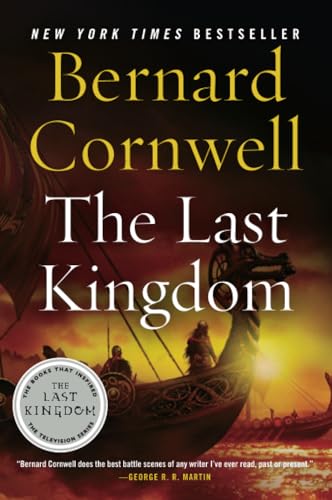
The Last Kingdom (The Saxon Stories, Book 1)
Bernard Cornwell

Meditations
Marcus Aurelius

The Hiding Place
Elizabeth Sherrill, John Sherrill Corrie ten Boom