Best Crime and Noir Fiction Books in 2026: 10 That Will Keep You Up Until 3am
Updated June 2026. Crime fiction and noir are not the same thing, though they overlap. Crime fiction is about the puzzle: who did it, how, why, and will justice arrive. Noir is about the world where justice is not guaranteed and the investigator is as damaged as the criminal. In noir, solving the case does not clean anything up. The rot goes deeper than the crime. The detective goes home alone, or does not go home at all.
The ten books below cover both modes, ordered to show the tradition as it developed. Start with Hammett and you are at the beginning of hard-boiled American crime fiction. Follow it through Chandler, Cain, and Highsmith and you trace the mode's development across forty years. Add Ellroy and Derek Raymond and you are at the genre's darkest corners. The list works as a reading order or a grab-one-at-random depending on how you want to use it.
The Book That Created the Hard-Boiled Detective
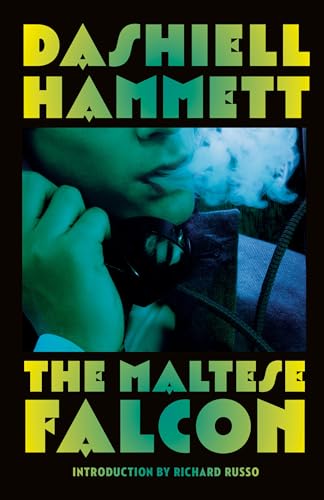 The Maltese Falcon by Dashiell Hammett. Sam Spade is hired by a woman calling herself Miss Wonderly to find her missing sister. The sister does not exist. What does exist is a jewel-encrusted black bird that several very dangerous people want badly enough to kill for. Hammett published the novel in 1930, six years after he stopped working as a Pinkerton operative, and he put his actual knowledge of criminal investigation and institutional corruption into every page. Spade is not a hero in any traditional sense. He turns over the woman he loves to the police at the end because she murdered his partner, and he is not sure he loved his partner either. The moral geometry is clean but cold. Humphrey Bogart played Spade in the 1941 film adaptation and the performance fixed the archetype permanently in popular imagination. The book is better.
Los Angeles as a Character
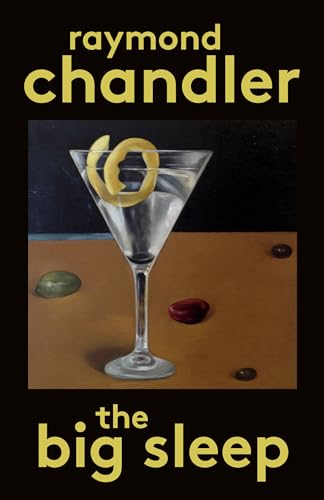 The Big Sleep by Raymond Chandler. Philip Marlowe is hired by the aging General Sternwood to deal with a blackmail situation involving his younger daughter. By the end of the novel there have been four murders, two of which Marlowe cannot fully account for, and the blackmail is the least interesting thing that happened. Chandler published The Big Sleep in 1939 and it is the first full appearance of Marlowe, who would become the template for the literary private detective for the next eighty years. Chandler understood that Los Angeles in the 1930s was a city where the wealthy could purchase impunity and the poor could not purchase anything at all. His prose is the most quotable in crime fiction because he was using hard-boiled conventions to write what he actually thought about the city, the money, and the arrangement between them. Start here if you have never read Chandler.
Desire as the Real Criminal
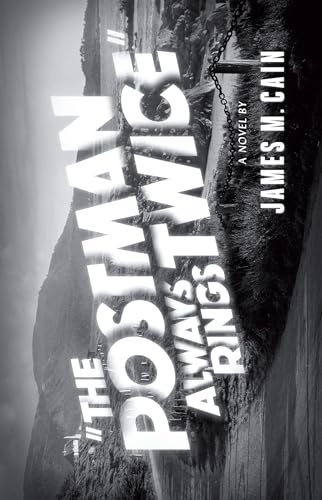 The Postman Always Rings Twice by James M. Cain. Frank Chambers stops at a roadside diner and cannot leave because of the owner's wife, Cora. They plan the owner's murder together. Everything after the plan goes wrong in ways that are both entirely inevitable and entirely surprising. Cain published it in 1934 and it is the leanest book on this list: 128 pages that contain a complete tragedy. Where Hammett and Chandler are about the professional observer of crime, Cain is about the people who commit it, and his interest is in the specific mechanism by which desire overrides self-preservation. There is no detective. There is no moral commentary from outside. The reader is inside Frank's head as he walks into his own destruction and cannot stop.
The Postman Always Rings Twice on Amazon
The Predator Who Looks Like Us
 The Talented Mr. Ripley by Patricia Highsmith. Tom Ripley is sent to Italy to persuade a young American named Dickie Greenleaf to return home. Instead he kills Dickie and assumes his identity. The novel is told entirely from Ripley's perspective and Highsmith never wavers into moral judgment. Tom is charming, careful, and completely without conscience, and because the narrative stays inside his head, the reader finds themselves rooting for his escape rather than his capture. Highsmith published it in 1955 and it remains the most unsettling psychological portrait in crime fiction because the discomfort is structural: you are not watching the predator from outside, you are thinking his thoughts. Four sequels followed. Start with this one.
The Talented Mr. Ripley on Amazon
Los Angeles Reconstructed as Nightmare
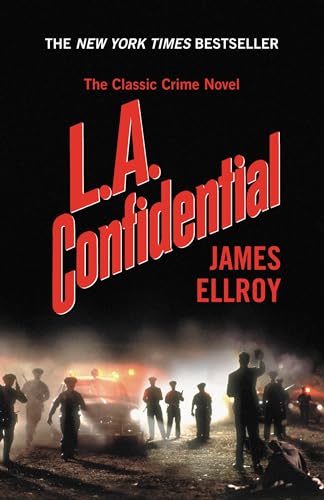 L.A. Confidential by James Ellroy. Three LAPD detectives with conflicting methods and motivations investigate the Nite Owl massacre, a multiple homicide at a downtown diner in 1953. The investigation expands to cover police corruption, a pornography ring, a celebrity impersonator network, and the District Attorney's office. Ellroy published the novel in 1990 as the third book in his L.A. Quartet and it is the one that broke into the mainstream, partly via the 1997 film. The prose is deliberately brutal: short declarative sentences, police jargon, and a refusal to soften anything. Ellroy grew up in 1950s Los Angeles, his mother was murdered when he was ten, and L.A. Confidential is what you get when someone spends decades processing both the city and that childhood through crime fiction.
Crime as Comedy
Get Shorty by Elmore Leonard. Chili Palmer, a Miami loan shark, travels to Los Angeles to collect a debt from a dry-cleaning operator named Leo Devoe, who faked his own death and fled. In Los Angeles, Chili discovers that the movie business and the criminal business operate by the same logic. Leonard published it in 1990 and it is the funniest book on this list, which is not the same as saying it is not serious. Leonard spent three decades writing Westerns before he moved to crime fiction and his sense of pacing, his ear for dialogue, and his instinct for putting the right character in the wrong room are unmatched. Get Shorty is also the best entry point into his work because the satirical target, Hollywood, is familiar enough that the comedy lands without requiring genre knowledge.
British Noir at Its Darkest
He Died With His Eyes Open by Derek Raymond. An unidentified man is found beaten to death in West London. The detective assigned to the case, identified only as the Factory's unnamed sergeant, reconstructs the dead man's life through a series of cassette tapes the victim left behind. Raymond published the novel in 1984 under a pseudonym (he was born Robert William Arthur Cook) and it is the first of his Factory series, which is the darkest sustained body of crime fiction written in English. The unnamed detective is not investigating to restore order or achieve justice. He is investigating because the dead man deserves to be known. That shift in motive changes everything about how the novels feel. Raymond is considerably less well known than he deserves to be.
He Died With His Eyes Open on Amazon
Three More Worth Reading
Red Harvest by Dashiell Hammett. Hammett's first novel, published in 1929. The Continental Op arrives in a Montana mining town called Personville (nickname: Poisonville) to meet a client who is murdered before they can talk. To clean up the town he plays the corrupt factions against each other. The most overtly political book on this list and the one that most clearly shows the tradition's roots in the labor wars of the early 20th century.
Double Indemnity by James M. Cain. Shorter even than The Postman Always Rings Twice and arguably more perfectly constructed. An insurance salesman helps a client's wife kill her husband for the double indemnity payout. The mechanism by which he catches himself is one of the best plot constructions in American fiction.
The Long Goodbye by Raymond Chandler. Chandler's longest and most personal novel, published in 1953. Marlowe befriends a man named Terry Lennox and pays for it heavily. The book is widely considered Chandler's best and is the one in which his critique of Los Angeles money becomes most explicit. Read it after The Big Sleep.
Where to Go After Noir
The crime fiction tradition overlaps with several other Skriuwer categories. For the real crimes that shaped the genre's obsessions, the best serial killer books cover the nonfiction parallel. For the organized crime that appears in the background of several novels on this list, the best books about the Mafia are the direct companion. And for the psychological portrait of criminal motivation that Highsmith developed more than anyone else, the best books about manipulation cover the same territory from a nonfiction angle. The Scandinavian branch of the tradition gets its own full treatment in our guide to the best Nordic Noir books. When the crime moves out of the streets and into a courtroom, our guide to the best legal thriller books covers that half of the genre, from Grisham's The Firm to Turow's Presumed Innocent.
Your next good book, in your inbox
We only write when we find a book worth your time. Hand-picked recommendations across history, mythology, true crime and more.
Are you an author?
Get your book in front of readers like these, for free.
- Free book listing →Your own book page with an Amazon button
- Author page →Photo, bio and links to your site
- Featured placement →A spot in our best-of lists, from €29
Free tools we recommend
Get free honest reviewsReview exchange on iWrity, free to join
Books You Might Like

It Ends with Us: A Novel
Colleen Hoover

The Seven Husbands of Evelyn Hugo: A Novel
Taylor Jenkins Reid

The Song of Achilles
Madeline Miller
