Best Feminist Nonfiction in 2026: 12 Books That Changed What It Means to Be a Woman in the World
The question feminist nonfiction asks is not whether women should have equal rights. That question is settled. The question it actually asks is harder: why do the structures that prevent equality persist, and how do they survive without appearing to exist? The best feminist nonfiction books are the ones that make those invisible structures visible, which is a different project than advocacy and a more difficult one. This list covers the twelve books that have done that most effectively, from Simone de Beauvoir's philosophical foundation through the contemporary essays that show what theory looks like when you try to live by it.
The books below span seventy years of feminist thought. Reading them in chronological order tracks how the questions shifted: from "what is a woman" to "what structures shape women's lives" to "what happens when feminist values collide with lived imperfection." That arc is the most honest account of how the field developed.
The Philosophical Foundations
Two books, written fourteen years apart, defined the terms of the feminist debate for most of the twentieth century. Both are still read because the conditions they described have not fully changed.
1. The Second Sex by Simone de Beauvoir (1949)
De Beauvoir's opening argument is the most quoted sentence in feminist philosophy: "One is not born, but rather becomes, a woman." The point is that femininity is not a biological fact but a social construction, imposed on female humans by a culture that treats the male as the default human and the female as the deviation, the "Other." The Second Sex is a dense philosophical work, influenced by existentialism, and parts of it have been revised or challenged in the decades since, but it remains the foundational text because it asked the foundational question: what is it that defines women as a category, and who benefits from that definition?
Best for: Readers who want the philosophical root of modern feminist theory before reading anything that builds on it.
2. The Feminine Mystique by Betty Friedan (1963)
Friedan named "the problem that has no name": the dissatisfaction of educated American women confined to domestic roles in the postwar suburb, a dissatisfaction that had no socially acceptable language because the culture insisted those women had everything they could want. The book launched second-wave feminism in the United States. Its limitations (it spoke almost exclusively about white, middle-class women) were the central critique that the next generation of feminist writers built their work around. Read it to understand both what second-wave feminism was and why it needed to expand.
3. The Female Eunuch by Germaine Greer (1970)
Greer's book remains the most provocative text of second-wave feminism. Where Friedan documented suburban dissatisfaction, Greer argued that women had been conditioned to accept a mutilated, passive version of themselves, and that liberation required not just legal equality but a psychological and sexual transformation. It is still startling in places and still contested. Read it as the most radical statement of where second-wave feminism was willing to go.
The Expansion of the Canon: Intersectionality and Access
The second-wave critique that emerged in the 1980s and 1990s was driven by writers who pointed out that "women" is not a single category and that feminism which spoke only to white, Western, heterosexual, middle-class experience was not universal feminism. These books are the most important part of that expansion.
4. Sister Outsider by Audre Lorde
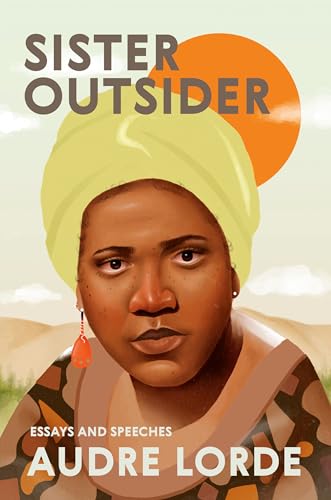
Lorde's essays and speeches are the foundational texts of Black feminist thought. Her argument that race, gender, and sexuality are not separate systems of oppression but interlocking ones, and that any feminism which did not account for all of them would reproduce the same hierarchies it claimed to oppose, became the intellectual basis for what later writers called intersectionality. Her most famous essay, "The Master's Tools Will Never Dismantle the Master's House," is the most compact and precise statement of that argument ever written.
Sister Outsider by Audre Lorde established Black feminist thought as a distinct and essential tradition within feminism, and remains the foundational text for intersectional analysis.
5. Feminism Is for Everybody by bell hooks
Bell hooks wrote this as an explicit attempt to make feminist theory accessible to people who had never read academic feminism, which meant stripping away the jargon and making the political stakes clear. It covers the history of the movement, the failures of mainstream feminism to include women of color, the relationship between feminism and class, and the question of what feminist politics would actually look like in practice. It is the most useful introduction to intersectional feminism in print.
Best for: Anyone who wants a grounded, accessible overview of feminist theory that does not assume prior reading.
6. We Should All Be Feminists by Chimamanda Ngozi Adichie
Adichie's essay (adapted from her TEDx talk) is the most widely read feminist text of the last decade, partly because of its directness and partly because it approaches feminist arguments from the position of someone explaining them to a genuinely curious audience rather than defending them against a hostile one. It is short, specific, and built entirely from personal observation and argument rather than academic citation. Read it alongside Lorde and hooks for context on where it sits in the longer tradition.
Contemporary Feminist Essays: Theory and the Limits of Living It
The most interesting feminist writing of the last twenty years has been less interested in establishing principles than in examining what happens when those principles meet the actual conditions of lived experience.
7. Bad Feminist by Roxane Gay (2014)
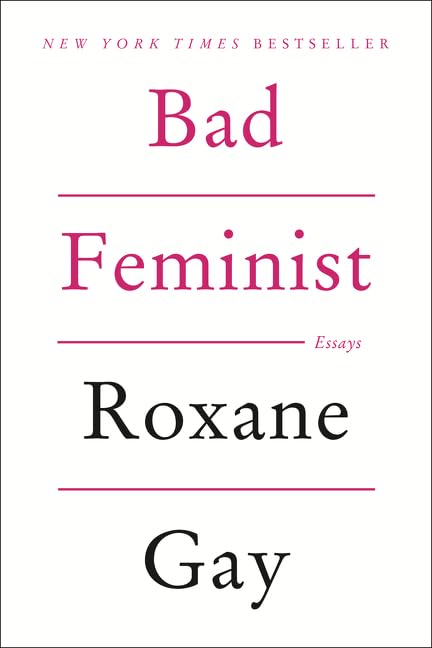
Gay's essay collection is built around a productive contradiction: she holds feminist values and fails to live up to them consistently, and she refuses to pretend otherwise. She watches reality television, prefers pink, has complicated feelings about music that degrades women, and she writes about all of it without resolving the tension into a cleaner position. The book's argument is that feminism should be able to accommodate imperfection and contradiction, that demanding purity from feminist practitioners is a way of making the movement smaller rather than larger.
Bad Feminist by Roxane Gay argues that feminist values and imperfect feminist practice can coexist, and that demanding otherwise is its own form of policing.
8. Men Explain Things to Me by Rebecca Solnit
Solnit's essay collection gave the language "mansplaining" to the culture, though she never used the word herself. The title essay describes a dinner party encounter in which a man spent twenty minutes explaining a book to Solnit that Solnit had written. The essay became the most shared feminist text of the 2010s because it named a specific form of gendered condescension that most women recognized immediately and most men had not noticed they were doing. The remaining essays cover violence against women, silence, and the systems that make complaints invisible.
Best for: Readers who want a precise, controlled essay style applied to contemporary feminist observation.
The Cultural and Classical Angles
Two books approach the question of women's public standing from angles that most feminist reading lists miss: classical antiquity and the history of beauty standards as a control system.
9. Women and Power: A Manifesto by Mary Beard
Beard traces the classical roots of the silencing of women in public discourse, starting with the first scene in the Odyssey in which a son tells his mother to go back to her room because speech is for men. She shows that the template for excluding women from political speech was set in the ancient world and has never been fully replaced, that the forms of the exclusion simply update their language every generation. It is a short book and the most historically grounded argument for why women's relationship to public speech is structurally different from men's.
Women and Power by Mary Beard traces the silencing of women in public discourse from Homer to the present, showing how ancient templates persist in new forms.
10. The Beauty Myth by Naomi Wolf (1990)
Wolf's central argument is that beauty standards are not about beauty. They are a control system, a mechanism that expanded in direct proportion to women's legal and economic gains in the twentieth century because it provided a new axis of inadequacy to replace the old ones. As women entered the workforce and gained political rights, the standards for female appearance became more demanding, more expensive, and more medically intensive. The specifics Wolf uses have aged, but the structural argument has not.
The Memoir and the Activist Record
11. My Life on the Road by Gloria Steinem
Steinem's memoir is organized around the decades she spent traveling as a journalist and activist, the conversations those travels produced, and the way that sustained contact with people whose lives are structurally different from yours changes how you understand political questions. It is the most accessible account of second-wave feminist activism from someone who was at the center of it, and it reads as a memoir rather than a political argument, which makes the political arguments land differently.
12. The Second Wave and What Comes After
The eleven books above trace a seventy-year arc from de Beauvoir's philosophical question (what is it to be made into a woman?) through the second wave's legal and political campaigns, through the intersectional critique that forced the mainstream to expand, and into the contemporary essays that live with the contradictions rather than resolving them. That arc is the honest shape of the field: each generation found the prior generation's answers insufficient not because they were wrong but because they were partial.
The structural condition all twelve books describe (that equality as a legal fact and equality as a lived experience are not the same thing, and that the gap between them is maintained by systems that do not need to be explicit to be effective) is the reason feminist nonfiction is still being written and still being read.
Three Feminist Nonfiction Books Worth Reading This Year
- Sister Outsider by Audre Lorde, the foundational text of Black feminist thought and the most precise statement of why intersectionality matters.
- Bad Feminist by Roxane Gay, the essay collection that argues for a feminism that accommodates imperfection rather than demanding purity.
- Women and Power by Mary Beard, the shortest and most historically grounded account of why women's relationship to public speech is structurally constrained.
For the full ranked nonfiction collection by verified reader count, see the history books category at Skriuwer.
Your next good book, in your inbox
We only write when we find a book worth your time. Hand-picked recommendations across history, mythology, true crime and more.
Are you an author?
Get your book in front of readers like these, for free.
- Free book listing →Your own book page with an Amazon button
- Author page →Photo, bio and links to your site
- Featured placement →A spot in our best-of lists, from €29
Free tools we recommend
Get free honest reviewsReview exchange on iWrity, free to join
Books You Might Like

Sapiens: A Brief History of Humankind
Yuval Noah Harari

The Last Kingdom (The Saxon Stories, Book 1)
Bernard Cornwell

Meditations
Marcus Aurelius

The Hiding Place
Elizabeth Sherrill, John Sherrill Corrie ten Boom