Best Health and Wellness Books in 2026: 10 That Will Actually Change Your Habits
Most health books are not really about health. They are about selling a framework, a supplement line, or a lifestyle brand. The books on this list are different. Each one changed how a meaningful number of people actually live, and each one is grounded in either rigorous research or direct lived expertise. Some are older titles that have only grown more relevant. None of them are fads.
This list covers sleep, breathing, longevity, cold exposure, and the mind-body connection. Ten books, all worth your time, with a direct reading recommendation for each one.
Why We Sleep by Matthew Walker

Matthew Walker's Why We Sleep (2017) is the single most important book on this list if you are picking just one. Walker, a sleep neuroscientist at UC Berkeley, builds a systematic case for why chronic sleep deprivation is not a badge of productivity but a cause of cognitive decline, metabolic disease, weakened immunity, and shortened life. The evidence he presents is uncomfortable in the best way: most of us are running at a serious deficit and have normalized it completely.
Critics have noted that some of Walker's cited statistics are stronger than the underlying papers support, but the core argument holds up and the behavioral changes it motivates are well supported by broader research. Read it, then decide how many of your evening habits are worth keeping.
Why We Sleep by Matthew Walker is one of the few health books that routinely gets cited in medical school curricula.
Breath by James Nestor
James Nestor spent a decade researching how humans breathe and found that most of us are doing it wrong in ways that affect everything from sleep quality to anxiety to athletic performance. Breath (2020) combines reportage, personal experimentation (including deliberately breathing only through his mouth for ten days, which he describes as a genuine ordeal), and a deep dive into research from physiology, dentistry, and anthropology.
The central argument is that modern humans breathe too fast, through the mouth rather than the nose, and too shallowly. The fixes Nestor proposes are almost absurdly simple. Tape your mouth shut at night. Slow your breath rate. Extend the exhale. Many readers report meaningful changes in sleep and stress within days of applying the techniques.
Nestor's writing avoids jargon without dumbing down the science, and the historical sections on skull morphology and ancient breathing practices are genuinely surprising.
Outlive by Peter Attia
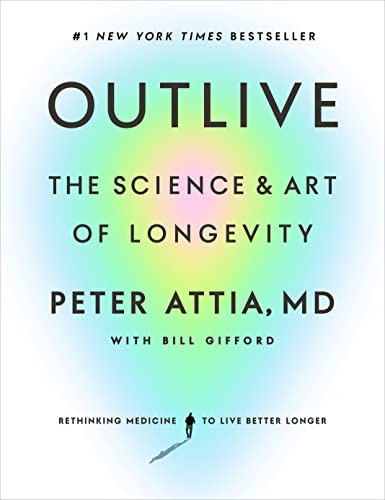
Peter Attia is a physician and former surgical oncologist who became obsessed with what he calls "Medicine 3.0," a proactive approach to longevity that treats chronic disease as something to prevent decades before it appears, not manage after diagnosis. Outlive (2023) is the full framework: four pillars of exercise (zone 2 cardio, strength, stability, VO2 max training), nutrition principles, sleep, and emotional health.
What sets Outlive apart from most longevity books is Attia's willingness to be honest about uncertainty. He tells you what the evidence supports, where he is extrapolating, and where he has changed his own mind. He also writes candidly about his own emotional history and mental health struggles, which makes the final section on psychological wellbeing land harder than it would from a more clinical author.
Outlive by Peter Attia is the most practically actionable longevity book written by a working clinician.
Andrew Huberman and the Science-Based Wellness Approach
Andrew Huberman, a neuroscientist at Stanford, does not have a single flagship book yet, but his podcast, Huberman Lab, functions as one of the most rigorously cited free resources in health and wellness. Episodes on morning sunlight exposure, cold exposure protocols, dopamine regulation, sleep optimization, and focus techniques have directly influenced how millions of people structure their days. If you prefer books, the protocols Huberman discusses are drawn from existing research, much of which is covered in the other books on this list. His work is worth mentioning here because it represents the same evidence-first philosophy and because several listeners report applying his morning light and temperature-based protocols as their highest-leverage single habit change.
The Wim Hof Method by Wim Hof
Wim Hof is a Dutch extreme athlete who has held multiple cold-endurance world records and whose breathing and cold-exposure techniques have been studied in peer-reviewed research, including a 2014 PNAS paper showing that trained practitioners can voluntarily influence their immune response to injected endotoxins. The Wim Hof Method is his instructional book, covering the three pillars of his practice: cold exposure, breathing exercises, and mindset.
The book is more personal memoir than clinical manual, which makes it easier to read than a physiology textbook but less precise than you might want. The breathing technique itself (hyperventilation cycles followed by breath holds) is well described and reproducible. Start with the breathing exercises before the cold exposure, and do not practice the breathing near water or while driving.
Lifespan by David Sinclair
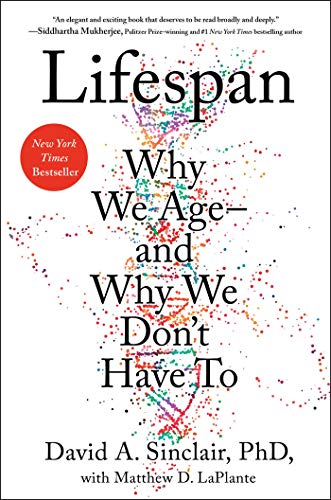
David Sinclair is a Harvard geneticist and one of the leading researchers in the science of aging. Lifespan (2019) presents his "information theory of aging," the idea that aging is a disease caused by the loss of epigenetic information in cells, and that it may be treatable or even reversible. The book covers sirtuins, NAD+ metabolism, caloric restriction mimetics, and specific interventions Sinclair himself uses, including metformin and NMN supplementation.
Lifespan is the most speculative book on this list: Sinclair is reporting on cutting-edge research, some of which is his own, and the gap between mouse studies and human clinical outcomes is real. Read it for the framework and the direction of travel, not as a protocol manual. The sections on fasting and low-protein cycling are the most actionable for most readers.
Lifespan by David Sinclair is the best current introduction to the biology of aging written for a general audience.
When the Body Says No by Gabor Mate
Gabor Mate is a Canadian physician who spent two decades in palliative care and addiction medicine. When the Body Says No (2003) makes the case, through detailed case histories and a review of the research literature, that chronic stress and suppressed emotion are direct contributors to a range of serious diseases, including multiple sclerosis, rheumatoid arthritis, and certain cancers. The mechanism he points to is the psychoneuroimmunological link between psychological states, the nervous system, and the immune system.
This is not a self-help book and it does not promise easy answers. Mate writes with clinical directness about how people learn to ignore their own emotional signals, often as an adaptive response to childhood conditions, and how that pattern plays out in the body over decades. The case studies are vivid and the argument is unsettling in productive ways. It is the most emotionally demanding book on this list and, for many readers, the one that changes the most.
The Circadian Code by Satchin Panda
Satchin Panda is a researcher at the Salk Institute whose work on time-restricted eating has generated some of the strongest human trial data in the metabolic health field. The Circadian Code (2019) explains how the body's internal clock governs not just sleep but metabolism, digestion, immune function, and mood, and how modern eating, light, and sleep schedules systematically disrupt it. The practical recommendation is simple: compress your eating window to 8-10 hours per day, aligned with daylight hours, and protect your sleep timing with the same consistency you protect your sleep duration.
The book is accessible, well organized, and grounded in Panda's own published research. The circadian biology sections are the most technically dense but also the most illuminating for understanding why the timing of habits matters, not just the habits themselves.
The 4-Hour Body by Tim Ferriss

Tim Ferriss's The 4-Hour Body (2010) is older than most books on this list, and it is less scientific than several of them, but it earns its place because it introduced millions of readers to the idea that health outcomes can be achieved with radically less time and effort than conventional wisdom suggests, if you focus on the right interventions. Ferriss is a self-experimenter, not a clinician, and the book is explicitly a catalogue of his own biohacking rather than a peer-reviewed protocol. Take it as a menu, not a prescription.
The sections on minimum effective dose resistance training, the slow-carb diet, and cold thermogenesis remain the most cited by readers who actually changed their bodies using the book's methods. The sleep chapter has not aged as well as Matthew Walker's treatment of the same subject.
How Not to Die by Michael Greger
Michael Greger is a physician and public health researcher who reviews the nutrition science literature systematically and translates it into dietary recommendations. How Not to Die (2015) is organized around the fifteen leading causes of death in the United States and presents the dietary evidence relevant to each one. Greger's conclusions are strongly plant-based, which reflects the preponderance of the evidence he cites, and the book is densely referenced throughout.
Readers with a different prior view of dietary fat and animal protein will find Greger's framing selectively curated, and there is a fair criticism that the book presents observational associations as more causally certain than they are. It is still the most comprehensive single-volume review of the dietary epidemiology literature written for a general audience, and the specific foods and nutrients it highlights are well worth understanding regardless of where you land on the broader dietary debate.
Three Health and Wellness Books to Buy First
- Why We Sleep by Matthew Walker. Start here if you only read one book. Sleep is the single highest-leverage health variable for most people and Walker's case for taking it seriously is hard to dismiss.
- Outlive by Peter Attia. The most complete longevity framework written by a practicing physician. Read after Why We Sleep.
- Lifespan by David Sinclair. The biology of aging, written accessibly, with a clear direction of travel for interventions. Best read alongside Outlive for context on where the science is heading.
How to Choose Between Them
If you are primarily motivated by performance and longevity, start with Outlive and follow it with Why We Sleep. If stress and the mind-body connection are more relevant to your current situation, start with When the Body Says No and Breath. If you want to understand the science of aging at a deeper level, Lifespan and The Circadian Code are the pair. The Wim Hof Method is the best entry point if you want a practice with an immediate physical sensation that produces fast feedback.
None of these books require you to buy anything beyond the book itself. The most effective interventions they describe, consistent sleep timing, nasal breathing, compressed eating windows, morning light exposure, and cold showers, are free.
Your next good book, in your inbox
We only write when we find a book worth your time. Hand-picked recommendations across history, mythology, true crime and more.
Are you an author?
Get your book in front of readers like these, for free.
- Free book listing →Your own book page with an Amazon button
- Author page →Photo, bio and links to your site
- Featured placement →A spot in our best-of lists, from €29
Free tools we recommend
Get free honest reviewsReview exchange on iWrity, free to join