Best Investigative Nonfiction Books in 2026: 10 That Exposed the Truth
The best investigative nonfiction books share a common structure: a reporter goes somewhere they were not supposed to go, talks to people who were not supposed to talk, and produces a record that the institutions involved would have preferred not to exist. The gap between what powerful institutions say about themselves and what actually happens inside them is the territory these books cover. Some of them changed laws. Some ended careers. Several of the reporters who wrote them received death threats. What they have in common is documented, sourced precision. None of the books on this list are speculation. They are records of what actually happened, built from primary sources, and they are harder to dismiss than any opinion piece could be.
For related reading on institutional cover-ups and the mechanisms of power, see our best books on secret societies and best books on MK-Ultra and CIA mind control.
Where the Genre Starts
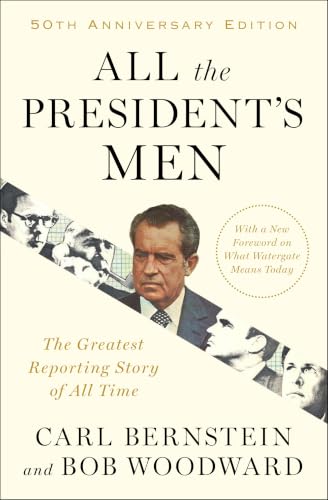 All the President's Men by Bob Woodward and Carl Bernstein. Published in 1974, six months before Richard Nixon resigned, this is the book that defined modern investigative journalism. Woodward and Bernstein were two junior reporters at the Washington Post who followed a break-in at the Watergate complex through a chain of contacts, financial records, and anonymous sources until the trail ran directly into the White House. The book is a precise account of how the reporting was done: the dead ends, the sources who lied, the editors who pushed back, the late-night calls to people who had every reason not to talk. It is useful not just as history but as a method manual, showing how you build a documented case from a starting point with almost no evidence. Read it alongside the transcripts of Nixon's actual White House recordings, which are now public, and the story becomes even stranger than the book describes.
All the President's Men on Amazon
The Best Poverty Reporting in Print
 Behind the Beautiful Forevers by Katherine Boo. Boo spent three years living in and reporting from Annawadi, a slum adjacent to the international hotels near Mumbai's airport. The book follows several families through a single year and a criminal case that demonstrates how completely the legal system fails people with no resources when it decides they are convenient to convict. It won the Pulitzer Prize and the National Book Award in 2012. Boo is scrupulous about sourcing: the endnotes cite specific documents, government records, and named sources for every factual claim in the narrative. What makes it exceptional is that Boo never imposes an external political framework on what she observed. She shows you the system as the people inside it experience it, and the result is more damning than any argument could be.
Behind the Beautiful Forevers on Amazon
Naval History as Investigative Nonfiction
 Dead Wake by Erik Larson. Larson's account of the sinking of the Lusitania on May 7, 1915 is investigative nonfiction working at the level of historical reconstruction rather than contemporary reporting. Using newly available British intelligence intercepts, German naval records, and survivor accounts that had not been publicly available when earlier accounts were written, Larson builds a minute-by-minute account of the final crossing and asks the question the official story never answered: what did the British Admiralty actually know, when did they know it, and why was no protective escort sent? The answer, which Larson documents rather than speculates about, involves decrypted German codes, a strategic calculation about the United States, and a decision not to warn the Lusitania in a way that might reveal the British had broken German signals intelligence. It is a book about institutional decision-making and cover, told through the best narrative structure Larson has ever used.
How the Financial System Blew Up in 2008
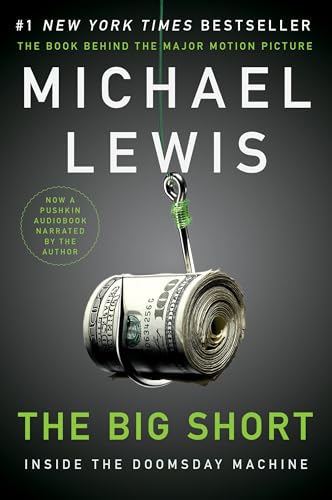 The Big Short by Michael Lewis. Lewis embedded himself with the small group of investors who saw the 2008 financial crisis coming and bet against the mortgage market. The book uses their story to explain, in concrete terms, how Wall Street built instruments that disguised the risk of subprime mortgages, how ratings agencies gave those instruments triple-A credit ratings they did not deserve, and why the people running the largest financial institutions in the world either did not know or did not care what was in their own portfolios. Lewis is the best explainer of financial complexity in print, and The Big Short is his clearest book. It was adapted into a film, but the book is more specific about the mechanics: how a CDO-squared actually works, what a credit default swap actually is, why the correlation assumptions in the rating models were wrong in a way that was obvious once you looked.
The Political Economy Nobody Wanted to Explain
Griftopia by Matt Taibbi. Published in 2010, Taibbi's book is the most specific account available of the financial and political decisions that produced the 2008 crash and the bailout that followed. Where Lewis's The Big Short follows the few people who saw the collapse coming, Taibbi traces the political decisions, deregulation choices, and regulatory failures that made the collapse possible and then traces the lobbying effort that shaped the bailout terms. The chapter on Goldman Sachs's role in the commodities speculation spike of 2008, when oil went from $60 to $147 a barrel without a corresponding change in supply or demand, is the most documented account of that episode in print. Taibbi is angrier than Lewis and his anger occasionally outruns his evidence, but the documented sections are worth the effort.
The Most Consequential American Investigation of the Last Decade
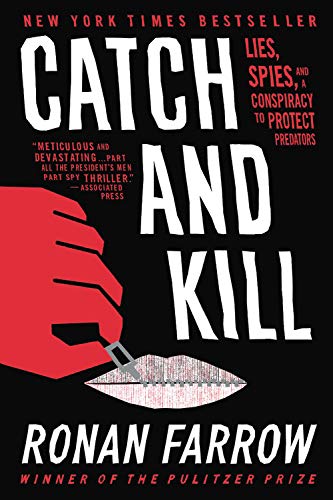 Catch and Kill by Ronan Farrow. Farrow spent two years reporting what became the Harvey Weinstein investigation and this book is the account of how the reporting was done and who tried to stop it. NBC killed the story. AMI, the parent company of the National Enquirer, was running a "catch and kill" operation for Weinstein: buying the rights to damaging stories from sources and then suppressing them. Weinstein had hired former Israeli intelligence operatives to surveil Farrow and his sources. The book is both a detailed record of what Weinstein did and an investigation of how institutions enable powerful people to avoid accountability for years or decades. Farrow's methodology, the way he documented each claim, each denial, each threat, is the closest thing to a textbook on contemporary investigative reporting in print.
The Pattern Across All Six Books
Every book on this list documents a gap between the official account and what actually happened. In Watergate, the official account was that Nixon had no knowledge of the break-in. In Annawadi, the official account was that the legal system applies equally regardless of resources. With the Lusitania, the official account was that the Royal Navy did everything possible to warn and protect the ship. With the financial crisis, the official account was that the collapse was unforeseeable. The investigative reporters on this list disagreed with each official account, and they did not disagree from opinion. They disagreed from documents, sources, and the accumulated weight of specific, checkable facts. That is the method, and it is the reason these books exist in permanent tension with the institutions they cover.
Where to Go After These Six
If the political corruption thread interests you, Gary Webb's Dark Alliance is the most significant suppressed investigation of the 1990s: Webb's 1996 series linking the CIA to crack cocaine distribution in Los Angeles was attacked by every major newspaper in the country and vindicated by a CIA Inspector General report two years later. For the corporate accountability angle, John Carreyrou's Bad Blood (about Theranos) is the best recent addition to the canon. Browse the true-crime category and dark-history category for more curated lists in adjacent territory.
Your next good book, in your inbox
We only write when we find a book worth your time. Hand-picked recommendations across history, mythology, true crime and more.
Are you an author?
Get your book in front of readers like these, for free.
- Free book listing →Your own book page with an Amazon button
- Author page →Photo, bio and links to your site
- Featured placement →A spot in our best-of lists, from €29
Free tools we recommend
Get free honest reviewsReview exchange on iWrity, free to join
Books You Might Like

The Hiding Place
Elizabeth Sherrill, John Sherrill Corrie ten Boom


Mindhunter: Inside the FBI's Elite Serial Crime Unit
Mark Olshaker John E. Douglas