Best Italian Literature in 2026: 12 Books From the Country That Invented the Novel, the Sonnet, and the Essay
ITALY DID NOT EXIST as a unified country until 1861. Before that date, the peninsula was a patchwork of city-states, kingdoms, papal territories, and foreign occupations, ruled at various points by Normans, Spanish Habsburgs, French armies, and Austrian emperors. What unified the peninsula was not a state but a language and a literature. Dante, writing in Florentine vernacular in the early fourteenth century, effectively created literary Italian. The country followed seven centuries later.
This history shapes everything about Italian literature. Where French writers could take the nation as a stable background, Italian writers had to invent it, or mourn its absence, or describe the specific place, this Neapolitan neighborhood, this Sicilian village, this Ferrara under Fascism, because no larger entity felt real enough to write about. The result is a literature that is intensely local and intensely political, always aware that the beautiful country it describes has been occupied, divided, and misruled for most of its history.
Here are twelve books from that tradition, running from the fourteenth century to the present.
The Divine Comedy by Dante Alighieri
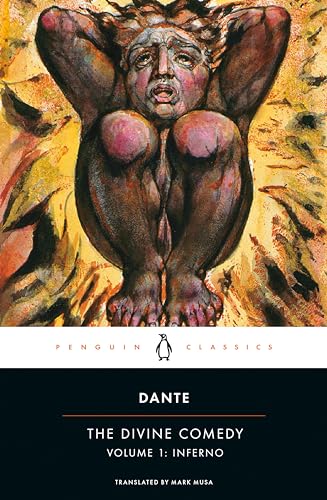
Written between roughly 1308 and 1320, this is the greatest poem in the Italian language and an argument for the greatest poem in any language. Dante travels through Hell, Purgatory, and Heaven, guided first by Virgil and then by Beatrice, the woman he loved and who died young. The Comedy is simultaneously a theological treatise, a political polemic, a love poem, and a portrait of medieval Italy: Dante populates his afterlife with real people, his contemporaries and historical figures, placing his enemies in Hell with a specificity that reads as both brilliant and vindictive. The translation matters. Mark Musa's Penguin Classics version and Ciaran Carson's more recent translation both do justice to the poem's range.
Find The Divine Comedy (Musa translation) on Amazon
The Decameron by Giovanni Boccaccio
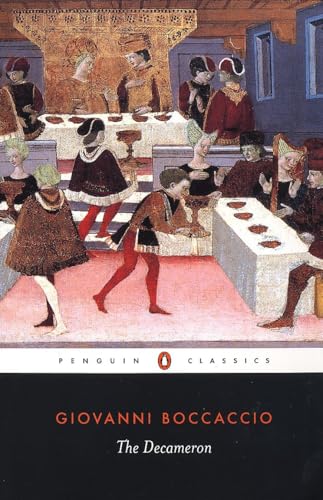
Written in the years immediately following the Black Death of 1348, The Decameron is ten young people, seven women and three men, sheltering from the plague in a villa outside Florence and passing the time by telling each other stories. One hundred stories over ten days, ranging from pious religious tales to broad sexual comedy to tragic romance. Boccaccio's prose, the first great prose narrative in Italian, is supple and precise. The framing device, telling stories to pass the time while catastrophe unfolds outside, gives the collection a dark undertone that the comedy does not quite dispel. This is the original Italian fiction, and it is still funnier and more alive than most contemporary novels.
The Prince by Niccolò Machiavelli
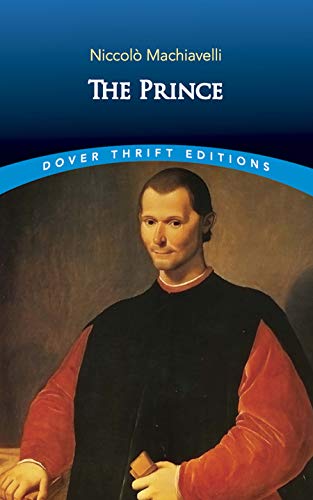
1513, written after Machiavelli was tortured and removed from office following the fall of the Florentine republic. A job application to the Medici that they never acted on. The Prince argues that a ruler who wants to maintain power must be willing to act against conventional morality when circumstances require: to be cruel, deceptive, and ruthless when mercy, honesty, and scruple would lead to defeat. The book scandalized Europe for centuries. It was read as a guide to tyranny and as a satire of tyranny and as a cold-eyed description of how power actually works. It is short enough to read in an afternoon and uncomfortable enough to stay with you afterward.
Canti by Giacomo Leopardi
Leopardi is the greatest Italian Romantic poet and one of the most pessimistic writers in the European tradition. He was born in 1798 in a small provincial town in the Marche, educated obsessively by his father, and spent most of his short life in poor health, convinced that happiness was impossible and that the natural world was indifferent to human suffering. The Canti collects his major poetry, including the great odes "L'infinito" and "La ginestra." What saves the work from pure despair is the quality of attention: Leopardi looks at the world as it is with extraordinary precision, and the clarity of that looking has its own kind of beauty. This is poetry for adults who no longer expect the universe to be kind.
The Betrothed by Alessandro Manzoni
Published in its final form in 1840, I Promessi Sposi is the Italian national novel in the same way that War and Peace is the Russian national novel or Don Quixote is the Spanish national novel: the book that defined what the language could do at the level of prose fiction. Set in seventeenth-century Lombardy under Spanish rule, it follows two peasants, Renzo and Lucia, trying to get married while a local lord tries to prevent them. The novel covers plague, famine, war, religious corruption, and the mechanics of tyranny, all while maintaining a tone of humane irony that Manzoni handles with extraordinary skill. Manzoni also, in revising the novel for its final edition, systematically chose Florentine vocabulary over Milanese, in a deliberate act of language-unification that helped standardize literary Italian.
If on a winter's night a traveler by Italo Calvino
You are about to begin reading Italo Calvino's new novel, If on a winter's night a traveler. That is the first sentence, addressed directly to you. The novel that follows is about a reader (you) trying to read a novel that keeps being interrupted, replaced by a different novel, lost. It is a novel about reading novels, about translation, about the relationship between reader and text and writer, executed with such wit and formal invention that the metafictional game never feels like mere trick. Calvino was working at the intersection of French structuralism and Italian literary tradition, and this is his most accessible and most radical book simultaneously.
Find If on a winter's night a traveler on Amazon
If This Is a Man by Primo Levi
Written immediately after the war and published in 1947, this is Levi's account of his year in Auschwitz. Levi was a chemist by training, and he brought to the memoir a chemist's precision: he is interested in how the camp worked, what mechanisms of psychology and social organization allowed it to function, how people maintained or lost their humanity under conditions designed to destroy it. The result is the most intellectually rigorous Holocaust testimony in the literature, and in some ways the most devastating. Levi does not ask for pity. He asks for understanding of what human beings are capable of doing to each other, and what they are capable of maintaining in themselves even under extreme conditions.
Find If This Is a Man on Amazon
The Day of the Owl by Leonardo Sciascia
Published in 1961, this is the best novel ever written about the Sicilian Mafia and one of the sharpest political novels in Italian literature. Captain Bellodi, a carabiniere from the north, investigates a murder in a Sicilian town and runs into a wall: nobody saw anything, nobody knows anything, and the local political and business establishment closes ranks against him. Sciascia is interested not in the Mafia as a criminal organization but as a system of power that has colonized the state from within, making the distinction between organized crime and organized politics impossible to maintain. The novel is short, cold, and still entirely accurate about how parts of Italy work.
My Brilliant Friend by Elena Ferrante
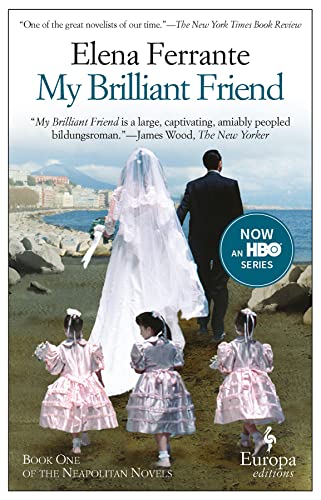
The first volume of the Neapolitan Quartet, published in Italian in 2011 and in English translation in 2012. Elena Greco narrates her childhood friendship with Lila Cerullo in a poor neighborhood of Naples in the 1950s. Lila is brilliant, volatile, and destined to remain trapped by the conditions of her class and gender. Elena is also brilliant, and escapes partly because of Lila's push. The novel is about female friendship as a force as powerful as any romance, about the violence that structures working-class Italian life, and about the specific texture of Naples, the beauty and poverty and danger of the city, rendered with such particularity that it becomes universal. Ferrante's identity remains anonymous. The work is entirely sufficient.
Find My Brilliant Friend on Amazon
The Name of the Rose by Umberto Eco
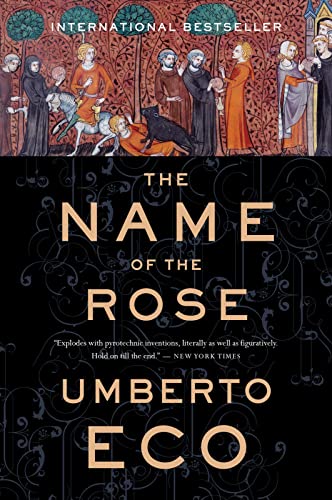
A medieval monastery, a series of mysterious deaths, a Franciscan friar and his novice investigating, and underneath the detective plot, a meditation on the nature of knowledge, the politics of heresy, and the relationship between laughter and power. Eco was a semiotician and medieval scholar before he was a novelist, and the learning in this book is real: the theological debates, the monastic culture, the manuscript tradition are all accurately rendered. The novel works as a detective story, as an academic comedy, and as a philosophical argument about whether truth is something that can be arrived at by reason or whether all interpretation is provisional. First published in 1980, it is still the most ambitious Italian bestseller ever written.
Find The Name of the Rose on Amazon
The Garden of the Finzi-Continis by Giorgio Bassani
Published in 1962, set in Ferrara in the late 1930s. The narrator, a young Jewish man from a middle-class family, is befriended by the Finzi-Continis, a wealthy Jewish family who have retreated into their beautiful walled garden as the Fascist racial laws close in around them. The garden is both literal and symbolic: a space of privilege and denial, beauty and refusal to see what is coming. The novel is elegiac and precise, and its central subject is the specific tragedy of Italian Jews, many of whom were thoroughly integrated into Italian society and culture until 1938, when the state that had been their home turned on them.
The Thread That Connects Them
From Dante placing his political enemies in Hell to Levi documenting the Lager with a chemist's precision to Ferrante rendering the violence of working-class Naples, what these books share is an insistence on the specific, the local, the particular. Italian literature does not write about Italy in the abstract. It writes about Florence, Naples, Sicily, Ferrara, each one distinct, each one inflected by its own history of occupation and resistance and compromise.
That specificity is not a limitation. It is the source of the work's power. The literature that comes from a country that spent seven centuries waiting to exist as a country has to build its world from smaller pieces, from the street, the family, the neighborhood, the dialect word that does not translate. The result is a tradition that is as cosmopolitan as any in Europe, precisely because it never had the luxury of taking nationhood for granted.
Your next good book, in your inbox
We only write when we find a book worth your time. Hand-picked recommendations across history, mythology, true crime and more.
Are you an author?
Get your book in front of readers like these, for free.
- Free book listing →Your own book page with an Amazon button
- Author page →Photo, bio and links to your site
- Featured placement →A spot in our best-of lists, from €29
Free tools we recommend
Get free honest reviewsReview exchange on iWrity, free to join
Books You Might Like

Sapiens: A Brief History of Humankind
Yuval Noah Harari
The Last Kingdom (The Saxon Stories, Book 1)
Bernard Cornwell

Meditations
Marcus Aurelius

The Hiding Place
Elizabeth Sherrill, John Sherrill Corrie ten Boom