Best Leadership Books of All Time: 10 That Have Shaped How People Lead
Most leadership books are the same book. Someone who ran a company or a sports team tells you to communicate clearly, build trust, and lead by example. The advice is correct and forgettable. The books that actually change behavior are rarer: they give you a framework so specific and so well-argued that you cannot read them without seeing your own situation differently.
These are the best leadership books of all time by that standard. They have shaped how managers, executives, and team leads actually work, not in theory, but in practice. Every title here has influenced enough people to call itself foundational to the field.
Start Here: The Books Every Leader Reads
1. Start With Why by Simon Sinek
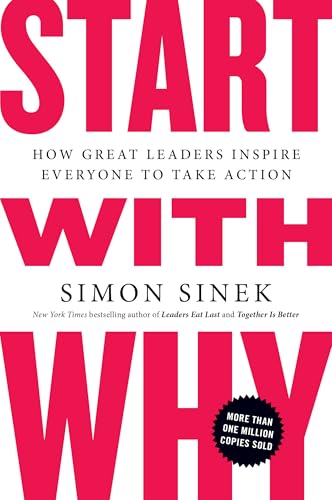
Sinek's central argument is this: great leaders and great organizations communicate from the inside out, starting with why they exist before explaining what they do. Most organizations do the opposite. They lead with the product, the feature, the specification, and assume the customer or employee will figure out why it matters.
The Golden Circle, why, how, what, is the framework that makes this book memorable and applicable. You can put it into use the day after you read it. Sinek uses Apple as his primary example, which has aged slightly given everything that happened after the book was published in 2009, but the underlying argument holds across every organization size and type. The TED Talk has 60 million views. The book is better.
Best for: Leaders who feel like their team doesn't understand what they are building or why. Anyone who wants a single framework for communication and motivation.
2. The 7 Habits of Highly Effective People by Stephen Covey

Published in 1989, this is the book that defined the personal-effectiveness genre and has remained in print for thirty-five years. Covey's seven habits move from private victory (taking responsibility, beginning with the end in mind, prioritizing what matters) to public victory (thinking win-win, listening to understand, combining strengths) and finish with the habit of continuous renewal.
What separates Covey from most self-help books is the philosophical grounding. He is not offering productivity tricks. He is arguing for a character-based approach to effectiveness, the idea that sustainable leadership comes from who you are rather than what techniques you apply. The section on the difference between urgent and important, the four-quadrant time-management matrix, has changed how more people work than almost any other single idea in the business book genre.
Best for: Leaders at any stage who want a principled framework rather than a list of tactics. Essential reading for anyone who manages people.
The Research-Based Frameworks
3. Good to Great by Jim Collins

Collins and his team spent five years studying companies that made the leap from good performance to great performance and sustained it for at least fifteen years. They identified eleven companies that met this criteria, then studied what those companies had in common that their industry peers did not.
The findings are counterintuitive. The leaders of great companies are not charismatic visionaries. They are what Collins calls Level 5 leaders: humble, ferociously determined, and more focused on the work than on their own profile. Great companies get the right people on the bus before deciding where to drive. They confront brutal facts without losing faith. These ideas have entered the permanent vocabulary of management, and most people using them do not know where they came from. They came from this book.
Best for: Leaders responsible for long-term organizational performance. Anyone who wants evidence-based leadership frameworks rather than anecdote-based advice.
4. The Five Dysfunctions of a Team by Patrick Lencioni
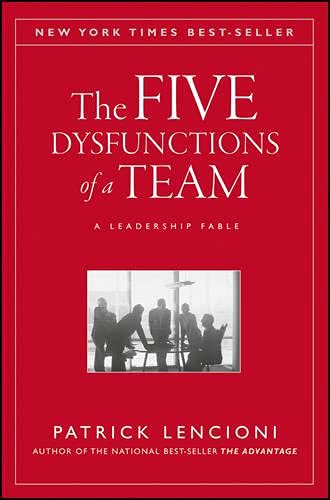
Lencioni writes leadership books as business fables, which sounds like a gimmick but works. The Five Dysfunctions follows a new CEO who takes over a struggling tech company and discovers that the problem is not strategy or product. It is the team at the top.
The pyramid model at the heart of the book, absence of trust, fear of conflict, lack of commitment, avoidance of accountability, inattention to results, is the most practical diagnostic tool for team dysfunction available. It tells you not just what is wrong but why, and in what order the problems need to be addressed. If you have ever sat in a leadership team meeting where everyone agrees in the room and nothing changes outside it, this book will explain exactly what is happening and why.
Best for: Leaders managing senior teams. Anyone trying to diagnose why a capable group of people keeps underperforming.
The Leadership Philosophies
5. The 21 Irrefutable Laws of Leadership by John C. Maxwell
Maxwell has spent fifty years studying leadership and this is the distillation of his framework. Each law, the Law of the Lid, the Law of Influence, the Law of Process, and the rest, defines a principle that Maxwell argues holds across every context where leadership matters.
The book has sold more than two million copies and is used in business schools, military officer training, and church leadership programs because the laws translate across sectors. Some readers find the aphoristic style too compressed. Others find it exactly what they need: a dense reference that rewards re-reading at different career stages. The Law of the Lid, which states that leadership ability determines a person's level of effectiveness, is the opening argument and it is a strong one.
Best for: Leaders who want a comprehensive map of the field. Anyone who learns well from principle-based frameworks.
6. Dare to Lead by Brene Brown

Brown spent years researching vulnerability, shame, and courage, and Dare to Lead applies those findings to leadership. The central argument is that the leaders who can sit with vulnerability, who can have hard conversations without armor, who can fail without making the failure about their identity, are the ones whose teams trust them enough to take real risks.
This sounds soft until you realize that most organizational failure comes from exactly the dynamics Brown describes: people who cannot admit uncertainty, teams where honest dissent is too costly, leaders who mistake confidence for clarity. Brown writes with the authority of a researcher who has also led organizations. She knows what she is asking is hard and she does not pretend otherwise.
Best for: Leaders who feel like something is missing in their team's honesty or courage. Anyone who wants a research-grounded framework for psychological safety.
7. Servant Leadership by Robert Greenleaf
Greenleaf coined the phrase "servant leadership" in a 1970 essay and expanded it into this book. The idea is precise: the servant-leader leads because they want to serve, not because they want to lead. This distinction sounds simple and turns out to be one of the more difficult questions a leader can answer honestly about themselves.
Greenleaf writes from a Quaker tradition of consensus and discernment, and the book has a philosophical weight that most leadership books lack. It has influenced more organizational cultures than its sales rank suggests, partly because it is the foundation on which dozens of more popular books have been built. Leaders who want to understand where the emphasis on purpose-driven and people-first leadership came from should read Greenleaf before they read anyone else.
Best for: Leaders interested in the philosophical roots of people-first leadership. Anyone in a nonprofit, educational, or mission-driven organization.
What These Books Agree On
Read across all seven titles and a consistent argument emerges, even though the books span six decades and come from very different traditions.
Leadership is not about the leader. That is the core finding of Collins's research on Level 5 leadership. It is the argument underneath Greenleaf's servant model. It is what Brown is pointing at when she writes about armor and ego as barriers to trust. The leaders who have the most impact are the ones most focused on the people around them and least focused on their own image or legacy.
This is also the hardest thing to do. Every leadership development industry exists because this basic insight is not the default. The default is to manage from self-interest dressed as organizational interest. These books are useful because they are detailed about what that default costs and specific about how to override it.
Reading Order
If you are new to leadership books, start with The 7 Habits for the personal foundation, then move to Good to Great for the organizational research, then Lencioni for the team-level diagnostics. Start With Why fits anywhere in that sequence and will sharpen your thinking about communication at each stage. Dare to Lead and Servant Leadership are best read when you have enough experience to recognize what Brown and Greenleaf are describing in your own teams and organizations.
Any of these titles is worth your time. The ones that change how you work are the ones that give you a specific enough framework that you apply it the next day.
Your next good book, in your inbox
We only write when we find a book worth your time. Hand-picked recommendations across history, mythology, true crime and more.
Are you an author?
Get your book in front of readers like these, for free.
- Free book listing →Your own book page with an Amazon button
- Author page →Photo, bio and links to your site
- Featured placement →A spot in our best-of lists, from €29
Free tools we recommend
Get free honest reviewsReview exchange on iWrity, free to join
Books You Might Like

It Ends with Us: A Novel
Colleen Hoover

The Seven Husbands of Evelyn Hugo: A Novel
Taylor Jenkins Reid

The Song of Achilles
Madeline Miller

Educated: A Memoir
Tara Westover