Best Science Fiction Books of All Time: 10 That Defined the Genre
Science fiction is the only genre that has been consistently right about the future. The books on this list did not predict specific inventions, they did something harder: they mapped the shape of the problems that technology and power would eventually force on real societies. Herbert saw planetary resource politics before anyone used the word ecology in a policy document. Gibson named cyberspace before the internet existed as a consumer product. Le Guin asked what gender would look like after biology stopped determining it. These are not entertainment decisions. They are intellectual ones, and the books hold up not because they guessed correctly but because the questions they asked were the right ones to ask.
This list covers the seven titles that appear most often in the serious critical literature on science fiction and have stayed in print with strong verified review counts for decades. If you want a broader genre list, our history and culture category covers related reading orders.
The One Everyone Names First
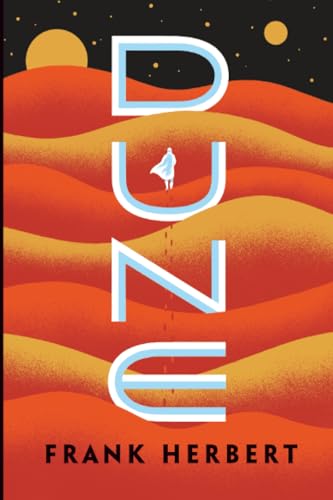 Dune by Frank Herbert. Published in 1965 and still the best-selling science fiction novel ever written, Dune builds a political ecology on a desert planet that is the only source of the most valuable substance in the universe. The substance drives interstellar travel. Whoever controls the planet controls galactic politics. Herbert spent six years researching the ecology of sand dunes in Oregon before writing the novel, and the depth of the world-building is the reason the book has not aged. It is about resource dependency, religious manipulation, and the danger of charismatic leadership, and every one of those themes is more relevant now than in 1965. Read the first book. The sequels are for people who want more of the world; the first book is complete on its own.
The Scope of Civilizational Time
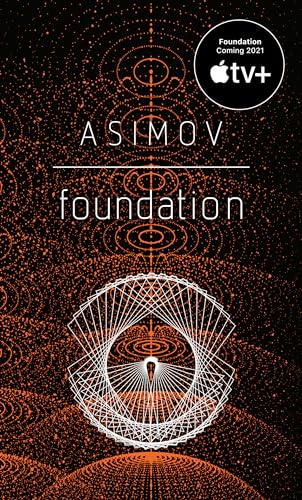 Foundation by Isaac Asimov. Asimov's premise is one of the boldest in fiction: a mathematician named Hari Seldon develops a science called psychohistory that can predict the behavior of civilizations over thousands of years, not individual people, but populations. He predicts the fall of the Galactic Empire and sets in motion a plan to shorten the subsequent dark age from thirty thousand years to one thousand. The novel is really three connected stories spanning centuries, and the tension between Seldon's plan and the unpredictable individual who throws it off course carries all three. The prose is plain compared to Herbert, but the ideas are dense. Read it for the architecture of the argument, not the sentences.
First Contact Done at Full Length
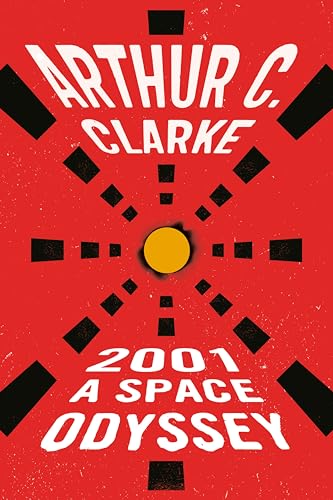 2001: A Space Odyssey by Arthur C. Clarke. Clarke wrote the novel simultaneously with Stanley Kubrick's film in 1968, working from the same screenplay treatment. The book fills in what the film leaves deliberately ambiguous. The section aboard the Discovery with HAL 9000 is still the definitive treatment of what happens when you build a machine that can lie, and the ending, the transition from Dave Bowman the astronaut to the Star Child, is the most ambitious attempt in science fiction to describe a form of consciousness that is not human. Clarke's prose is scientific and spare. This is not warm reading, but it earns every cold sentence.
2001: A Space Odyssey on Amazon
What It Means to Be Human
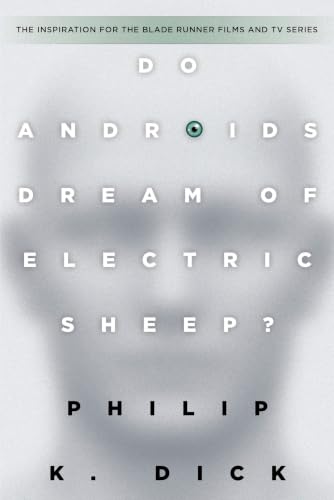 Do Androids Dream of Electric Sheep? by Philip K. Dick. Dick published this in 1968, six years after writing the short story that would eventually become the basis for Blade Runner. The novel is not the film. The film is operatic. The novel is anxious and strange and concerned with a single question: if an artificial being has genuine emotional responses, what makes it different from a real one, and what does your answer say about how you treat the real ones already around you? Rick Deckard hunts androids for a living. He is also keeping an artificial sheep because the real one died, and he cares about it in a way that makes the boundary between simulation and reality increasingly uncomfortable. It is 210 pages and you can read it in a day, but you will think about it for longer.
Do Androids Dream of Electric Sheep? on Amazon
The Best Book About Gender Science Fiction Has Produced
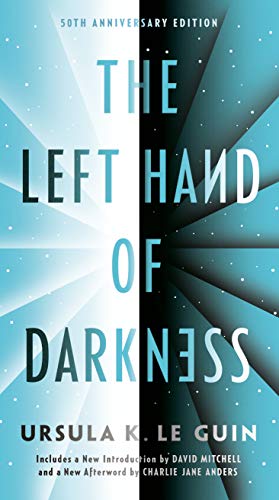 The Left Hand of Darkness by Ursula K. Le Guin. Le Guin sends a human envoy to a planet called Winter whose inhabitants are neither male nor female except for brief periods of sexual activity called kemmer. The envoy, Genly Ai, spends most of the novel failing to understand what he sees because his assumptions about gender are so deeply embedded he cannot see them. Le Guin wrote the book in 1969 and it anticipated debates about gender, biology, and social construction that would not become mainstream for decades. It also has one of the best fictional landscapes ever built, a planet locked in permanent winter with a political culture to match. The Hainish Cycle contains several other excellent novels, but this one is where to start.
The Left Hand of Darkness on Amazon
Where Cyberpunk Came From
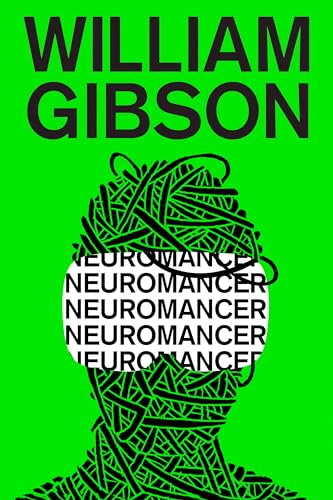 Neuromancer by William Gibson. Gibson published this in 1984 and invented the word cyberspace in the same paragraph where he defined it. A washed-up hacker named Case is hired to pull off the most ambitious data heist in history for reasons he does not understand, working alongside a street samurai named Molly whose mirrored eye implants and retractable finger-blades established the aesthetic of every cyberpunk story that followed. The prose is dense and the plot is deliberately disorienting. Gibson wanted the reader to feel as lost as Case does. Push through the first fifty pages and the novel opens up into something genuinely strange. The ideas about corporate sovereignty, the body as modifiable hardware, and artificial intelligence as something that wants things but cannot explain what all turned out to be roughly accurate.
The Most Fun Book on This List
 The Martian by Andy Weir. Mark Watney is stranded alone on Mars with limited supplies, a partially destroyed habitat, and the problem-solving instincts of a botanist and engineer. The novel is the account of how he survives. Weir spent years checking the science, and the result is a book that is technically accurate and compulsively readable, mostly because Watney's voice in the mission logs is the voice of someone who refuses to treat near-certain death as anything other than an engineering problem. It is lighter than everything else on this list and deliberately so. Weir wanted to show that science is the most exciting thing humans do, and he made the argument more convincingly than any STEM education program has managed.
What the List Is Missing (Intentionally)
Several books appear on almost every science fiction list that are not here. George Orwell's 1984 and Aldous Huxley's Brave New World are important, but they are better described as dystopian political fiction than science fiction in the sense the genre uses the term. Ray Bradbury's Fahrenheit 451 belongs in that same category. Stanislaw Lem's Solaris deserves a place on any serious list but requires a level of tolerance for philosophical abstraction that makes it a poor beginner recommendation. Isaac Asimov's I, Robot is the obvious companion to Foundation and the short-story form is worth your time, but it is a collection rather than a novel and works differently. All of these are worth reading. None of them belong at the top of a list designed to explain what the genre can do at its best.
A Reading Order That Builds Correctly
Start with The Martian if you want the lightest entry. Move to Do Androids Dream of Electric Sheep? for the philosophical depth. Read Dune once you are ready for a longer investment, because the world takes fifty pages to assemble and the payoff requires patience. Foundation and The Left Hand of Darkness work in any order after that. Neuromancer is most rewarding when you have read some of the others and can see what Gibson was building against. 2001 is best saved for last because its ending requires the context of everything else science fiction had tried to do before Clarke attempted it.
Your next good book, in your inbox
We only write when we find a book worth your time. Hand-picked recommendations across history, mythology, true crime and more.
Are you an author?
Get your book in front of readers like these, for free.
- Free book listing →Your own book page with an Amazon button
- Author page →Photo, bio and links to your site
- Featured placement →A spot in our best-of lists, from €29
Free tools we recommend
Get free honest reviewsReview exchange on iWrity, free to join
Books You Might Like

Sapiens: A Brief History of Humankind
Yuval Noah Harari

The Last Kingdom (The Saxon Stories, Book 1)
Bernard Cornwell

Meditations
Marcus Aurelius

The Hiding Place
Elizabeth Sherrill, John Sherrill Corrie ten Boom