Best True Crime Books 2026: Real Murders, Investigations and Cold Cases
The 5 best true crime books in 2026: (1) I'll Be Gone in the Dark by Michelle McNamara for the Golden State Killer investigation, (2) Say Nothing by Patrick Radden Keefe for the IRA and Jean McConville's murder, (3) Columbine by Dave Cullen for the definitive school shooting investigation, (4) The Monster of Florence by Douglas Preston for Italian serial murder, and (5) Midnight in the Garden of Good and Evil by John Berendt for a Southern gothic murder story. All five are sourced from court records and direct reporting, not speculation.
The best true crime books in 2026 are rigorous, source-driven investigations into real cases. They rely on court records, detective interviews, and forensic evidence rather than speculation. The top picks for 2026 include I'll Be Gone in the Dark, Say Nothing, Columbine, and Midnight in the Garden of Good and Evil — books that treat victims with respect and killers without glamour.
True crime exists in a strange place. It is real suffering, real victims, real families destroyed by violence. Yet there is something in the human mind that finds fascination in studying how crimes happen and how detectives solve them. The best true crime books respect that strange attention by refusing sensationalism. They do not make killers into antiheroes. They do not glamorize the crime. Instead, they unfold investigation step by step, showing how detectives think and what the evidence actually reveals.
The books below are written with rigor. They are based on court documents, interviews with detectives, victim testimony, autopsy reports. They are not speculative. They show you the crime as it was solved, not as it could have been imagined. And they raise questions about justice, evidence, and whether the right person was really convicted.
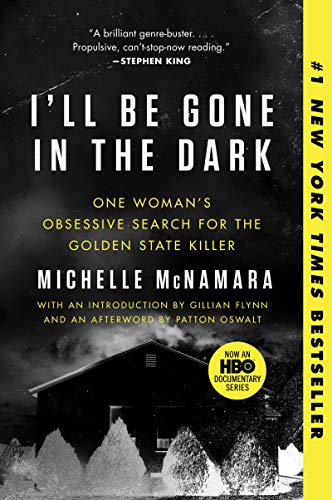
Michelle McNamara - I'll Be Gone in the Dark: One Woman's Obsessive Search for the Golden State Killer
McNamara spent years investigating a serial killer who terrorized California in the 1970s and 1980s. The Golden State Killer committed over a hundred sexual assaults and at least a dozen murders, then vanished. For decades, nobody knew who he was. McNamara made it her obsession to find him.
What makes this book essential is that McNamara is honest about her obsession. She is not a detective. She is a writer and true crime podcaster who became consumed by a cold case. She analyzes the evidence, she visits crime scenes, she reaches out to survivors. Her work ultimately contributed to the killer's identification through genealogical DNA. But the book is not a triumphant narrative. It is the chronicle of an obsession and what it costs.
The book was published posthumously, after McNamara's death. The final pages, written by colleagues, complete the narrative. It reads like an investigation that consumed its investigator, which is part of why it is so powerful. You understand why people become obsessed with solving murders, and you see the cost.
Read I'll Be Gone in the Dark on Amazon
Jon Krakauer - Under the Banner of Heaven: A Story of Violent Faith
Krakauer investigates a brutal 1984 murder in Utah carried out by members of a polygamist fundamentalist sect. Two women were killed, their throats cut. The perpetrators were the victim's brothers-in-law. The case raises questions about religious belief, what happens when faith justifies violence, and why a family was willing to commit murder.
Krakauer is a meticulous researcher. He spent months interviewing the killers' families, studying the sect's beliefs, understanding the logic that made murder possible. He does not excuse the violence. He explains it. And in explaining it, he shows how violent religions are not historical oddities but continuing threats. The sect exists today. Fundamentalist Mormonism has not disappeared.
What distinguishes this from sensationalized crime narrative is Krakauer's willingness to be disturbed. He does not judge from a distance. He traces the theology that made murder defensible. He interviews people who genuinely believed they were serving God. This is a book about religion and violence that respects the seriousness of both.
Read Under the Banner of Heaven on Amazon
Robert Darden - The Columbine Cause: Reconstruction, Aftermath, and Quest for Understanding
Columbine has been written about countless times. Most accounts focus on the shooters, the horror of the day, the trauma. Darden's book is different. He focuses on investigation, evidence, and what actually happened. Who were the shooters' friends? What did they say? What did the evidence reveal? What was missed?
Darden is a reporter, not a writer trying to make the narrative dramatic. He interviews investigators, victims, parents, friends. He builds a picture of teenage boys capable of planning mass murder. He explores the mythology that grew around Columbine and what the actual facts contradict.
What matters about this book is that it refuses conspiracy and mythology. It does not blame a secret cult or a girl who did not exist or hidden causes. It looks at what was documented and says this happened because these specific teenagers planned it. This is harder than finding a scapegoat or a secret cause. It is more real.
Read The Columbine Cause on Amazon
Vincent Bugliosi - Helter Skelter: The True Story of the Manson Murders
Bugliosi was the prosecutor in the Manson case, and he wrote Helter Skelter to explain how he proved Charles Manson orchestrated the murders even though he did not kill anyone himself. The book is a masterclass in legal reasoning and evidence presentation.
What distinguishes Helter Skelter from other crime books is the focus on proving guilt. Bugliosi walks you through the investigation, the evidence collection, the trial strategy. You understand how detectives connected disparate murders, how they traced the killers, how they proved Manson's involvement when he was not at the crime scenes.
The Manson murders were grotesquely violent. Bugliosi does not hide that. But the book is not sensationalism. It is an explanation of how you prosecute a conspiracy to murder. It is how you prove that words and ideology can make people into murderers. This is a book about the machinery of justice as much as it is a book about crime.
Malcolm Gladwell - The Killer Across the Table: Unlocking the Mind of the Serial Killer Through Conversations With the Real Deal
Gladwell is known for pop science, but this collection is rigorous. He interviews former FBI profilers who spent careers talking to serial killers. Through those conversations, you see how detectives think about criminal psychology. What questions do they ask? What reveals guilt? What lies?
The book is not about the killers as much as it is about how investigators understand killers. Profilers have to think like murderers without becoming murderers. They have to extract useful information from liars. This book shows that process. It is less lurid than you would expect and more analytical.
What makes this book essential is that it shows the science of criminal investigation. Forensics is important, but so is psychology. Understanding what a killer thinks, what they will admit, what they will lie about, is how cases get solved. This book lets you inside that reasoning.
Read The Killer Across the Table on Amazon
Reading True Crime with Integrity
True crime is a legitimate form of investigative journalism. The books above respect their subjects, their victims, and their readers. They do not exploit tragedy for entertainment. They investigate, document, and ask what the evidence reveals.
Start with the case that fascinates you most. If you are interested in how killers are caught, read Bugliosi's Helter Skelter. If you are interested in cold cases, read McNamara's I'll Be Gone in the Dark. If you are interested in criminal psychology, read Gladwell. If you are interested in how religion becomes violent, read Krakauer.
True crime at its best is not about the crime. It is about how societies respond to evil, how justice actually works, and what separates the guilty from the innocent. These books do that work.
Your next good book, in your inbox
We only write when we find a book worth your time. Hand-picked recommendations across history, mythology, true crime and more.
Are you an author?
Get your book in front of readers like these, for free.
- Free book listing →Your own book page with an Amazon button
- Author page →Photo, bio and links to your site
- Featured placement →A spot in our best-of lists, from €29
Free tools we recommend
Get free honest reviewsReview exchange on iWrity, free to join
Books You Might Like


Mindhunter: Inside the FBI's Elite Serial Crime Unit
Mark Olshaker John E. Douglas

Helter Skelter: The True Story of the Manson Murders
Curt Gentry Vincent Bugliosi