Best War Literature in 2026: 12 Novels and Memoirs That Tell the Truth About Combat
The best war literature does not glamorize combat or condemn it from a distance. It testifies, which is harder, because testimony requires specificity about the moment when a human being is placed in conditions designed to destroy everything that makes them human. The books that accomplish this do not agree about the war itself. They do not agree about whether the war was necessary or righteous or futile. What they share is a refusal to simplify the experience of people caught inside historical forces larger than themselves.
War literature is not a single thing. It includes novels written during wartime by people still embedded in it, like Remarque's All Quiet on the Western Front, which was published during the Weimar Republic while its author was still processing what he had seen. It includes novels written decades later by people attempting to make sense of what had receded into history, like Sebastian Faulks on the First World War or Karl Marlantes on Vietnam. It includes journalism that reads like fiction, like Michael Herr's Dispatches, and poetry by people who survived the trenches and felt obligated to name what most people preferred to forget.
The reading list below follows verified Amazon review counts and reading patterns, which means it tracks what actual readers keep returning to rather than what critics decided was important. Some of these books appear on every canonical list of war fiction. Others have been overshadowed and are worth rescuing. All of them share the quality that once you have read them, you cannot read history the same way again.
The Foundation: Remarque and the Anti-War Canon
All Quiet on the Western Front by Erich Maria Remarque defined anti-war literature for a century. Published in 1929, it follows Paul Baumer and his friends from school enlistment through the trenches of the First World War. Remarque served in the German army and was wounded in the fighting, and the novel carries the authority of direct testimony. What separates it from other WWI fiction is the specificity: not just that war is terrible, but the exact texture of that terror, the mud and the rats and the impossible choices that turn ordinary young men into people who cannot feel anymore. The novel was banned by the Nazis, burned, and its author was hounded across Europe. That reception tells you something about the book's power.
The Vietnam Testament: O'Brien and Marlantes
 The Things They Carried by Tim O'Brien is structured as a collection of linked stories, each one prefaced by a list of what the soldiers carried: physical weight (ammunition, letters, fear) and emotional weight (shame, memory, love). O'Brien's genius is to blur the line between what actually happened and what the narrator imagines happened, arguing that the invented truth sometimes tells you more about the war than literal fact. He served in Vietnam and the book is drawn from his experience, but it refuses the authority of autobiography. Instead, it claims something bolder: that the war cannot be told true without fiction.
 Matterhorn by Karl Marlantes took 35 years to write and it shows. Published in 2010, it is the most detailed fictional account of combat ever rendered: not just what happened during a particular battle on a hill in Vietnam, but the sensory precision of it, the way exhaustion and fear and boredom and sudden violence layer together. Marlantes was a Marine officer and the novel has been praised by military historians for its accuracy about tactics and equipment. But it is not a military manual. It is the interior experience of a young man trying to survive something his training did not prepare him for.
The British Tradition: Faulks and Barker
 Birdsong by Sebastian Faulks published in 1993, is still the most widely read novel about the First World War written in English in recent decades. Stephen Wraysford, the protagonist, is an engineer who travels to France before the war and falls into an affair with Isabelle, a woman in a provincial bourgeois family. Then the war comes and he becomes an officer in the trenches. Faulks's innovation is to hold those two timeframes in tension: the tenderness of the affair illuminates the darkness of the trenches, and the trenches recast the affair as something lost forever. The novel does not preach about war. It shows you what peace looks like, then shows you what happens when it ends.
Regeneration by Pat Barker, the first book of Barker's WWI trilogy, is set in a psychiatric hospital where shell-shocked officers are treated. The historical figure Siegfried Sassoon, the poet who refused to fight and denounced the war publicly, is a central character. Barker's insight is that the war does not end in the trenches. It continues in the minds of the people who survived it, and the attempt to cure them of their trauma is sometimes indistinguishable from forcing them back into combat. The novel is about both the war and what we do to people in the name of healing them.
Journalism and Direct Testimony
Dispatches by Michael Herr is sometimes called a memoir and sometimes called journalism. What it actually is, is the closest thing we have to what the Vietnam War felt like to the people living inside it. Herr was a correspondent and he covered the war from the perspective of someone sleeping in the same bunkers as the soldiers, taking the same risks. The prose is hallucinatory, filled with rock and roll references and dark comedy. Hunter S. Thompson drew from it. Stanley Kubrick used it as the basis for much of Full Metal Jacket. What it does is capture the texture of consciousness during wartime: the surreal juxtaposition of violence and ordinary complaint, of high stakes and grinding boredom.
The Ancient and Epic Tradition
 The Iliad by Homer is the foundational war literature of the Western tradition and it still works because Homer understood something about combat that most later writers had to rediscover: that the individual deaths matter, even in a war about bigger things. When Homer tells you about a soldier you have never heard of before, he stops the action to tell you where the soldier's father is from, what his mother did, who his ancestors were. Then the soldier dies. The effect is devastating because Homer treats the death as important. The Iliad is not a book that makes you want to join the army. It is a book that makes you understand that war destroys individuals and that those individuals are irreplaceable.
 War and Peace by Leo Tolstoy, published in 1869, remains the largest canvas any novelist has attempted for war. It covers Napoleon's invasion of Russia and the lives of the aristocratic families caught in it. Tolstoy's argument is that history is not determined by great men but by the accumulated actions of millions of people, most of whom are not important. The war is both central to the novel and beside the point. What matters is the collision between individual desire and historical necessity, and how people navigate that collision. Reading War and Peace takes time and patience, but it is the war novel that explains why all the other war novels matter.
Satire and Dark Comedy
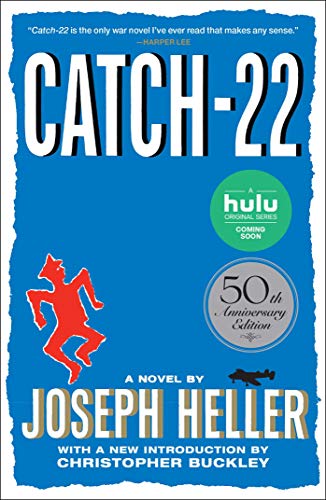 Catch-22 by Joseph Heller does what satire is supposed to do: it tells the truth about absurdity by embracing the absurdity completely. The paradox that gives the novel its title is that you can be grounded from flying if you are crazy, but asking to be grounded proves you are sane. Catch-22 is set during World War II and it captures something about the bureaucratic machinery of war that realistic fiction often misses. The novel is funny and disturbing because both the humor and the disturbance are accurate. War creates impossible situations and people respond with jokes because jokes are sometimes the only rational response to the irrational.
Poetry and the Witness
The Collected Poems of Wilfred Owen captures what prose literature sometimes cannot. Owen survived the trenches of the First World War and was killed a week before the armistice. The poems he left behind are not elegies. They are testimony. "What passing bells for these who die as cattle?" he writes. The violence in the poems is not metaphorical. It is exact and anatomical. Owen's genius was to find forms capable of holding that exactness, to make language do what language usually cannot, which is to make you feel, in your body, what it was like to experience what he experienced.
Additional Essential Works
Antoine de Saint-Exupery's Night Flight (1931) is not a war novel but a pilot novel, and it shares with war literature the same theme: a human being placed in conditions designed to test whether they will survive. The isolation, the risk, the sense that you might not come back, these create a consciousness that war and flight both produce.
Thomas Keneally's Schindler's Ark (1982), Booker Prize winner, tells the true story of Oskar Schindler, a German businessman who saved his workers from the Holocaust. It is war literature because it is about the Holocaust and the choices people make under extreme pressure. It is also war literature because it shows that even in the worst circumstances, individual action matters.
Three War Books Worth Reading Today
- All Quiet on the Western Front by Erich Maria Remarque, the anti-war novel that defined the genre and still carries devastating power.
- The Things They Carried by Tim O'Brien, a masterpiece about Vietnam that blurs the line between memory and invention.
- Birdsong by Sebastian Faulks, still the most read novel about the First World War in recent decades.
War literature is not entertainment, although some of these books are gripping page-turners. It is a way of bearing witness to experiences most people will never have. The books that accomplish that do not ask you to approve of the war or to feel helpless about it. They ask you to pay attention to what happened to real people when history arrived at their door. That attention is the beginning of understanding.
Your next good book, in your inbox
We only write when we find a book worth your time. Hand-picked recommendations across history, mythology, true crime and more.
Are you an author?
Get your book in front of readers like these, for free.
- Free book listing →Your own book page with an Amazon button
- Author page →Photo, bio and links to your site
- Featured placement →A spot in our best-of lists, from €29
Free tools we recommend
Get free honest reviewsReview exchange on iWrity, free to join
Books You Might Like

Sapiens: A Brief History of Humankind
Yuval Noah Harari
The Last Kingdom (The Saxon Stories, Book 1)
Bernard Cornwell

Meditations
Marcus Aurelius

The Hiding Place
Elizabeth Sherrill, John Sherrill Corrie ten Boom