Best Books on Rhodesia, Zimbabwe and Cold War in Southern Africa
Rhodesia declared independence from Britain in 1965, fought a brutal bush war against two liberation movements for fifteen years, and emerged as Zimbabwe in 1980 under Robert Mugabe. That sequence sits inside one of the Cold War's most complex proxy conflicts, with Soviet and Chinese arms flowing to rival liberation movements, South Africa propping up the white minority government, and the United States trying to keep multiple incompatible interests in play at once. The books below cover all of it, from the Smith government's Unilateral Declaration of Independence to the land reform crisis that destroyed Zimbabwe's economy two decades after independence.
Where the Cold War Meets Colonial History
Most Cold War histories treat southern Africa as a footnote to Angola, which got the proxy war with Cuban troops and the most direct superpower involvement. Rhodesia and Zimbabwe were different: the conflict there was primarily a colonial independence struggle with Cold War weapons poured into it from outside. ZANU received Chinese support; ZAPU received Soviet support; they fought each other almost as often as they fought the Rhodesian security forces. Understanding that triangular conflict is the key to understanding why the post-independence period went the way it did.
The Essential Books
The Dead Will Arise: Nongqawuse and the Great Xhosa Cattle-Killing Movement of 1856-7 by J.B. Peires
This title covers an earlier episode in southern African history rather than Rhodesia directly, but it belongs on this list because Peires's method, treating African political decisions on their own terms rather than as reactions to white colonialism, shaped how the next generation of historians approached Zimbabwe's liberation movements. If you want to understand how ZANU and ZAPU thought about themselves and their struggle, the historiographical approach Peires established is the right starting point.
Histories of Zimbabwe by Terence Ranger (various essays and books)
Ranger was the defining historian of Zimbabwean nationalism for fifty years. His work on the First Chimurenga (the 1896-97 uprisings), on peasant consciousness in the liberation war, and on the manipulation of tradition by both settlers and nationalists forms the backbone of the field. Peasant Consciousness and Guerrilla War in Zimbabwe is the most directly relevant title for understanding the Bush War period: it shows how ZANLA guerrillas built rural support, and why that support was more conditional and contested than the liberation narrative later claimed.
The Struggle for Zimbabwe by David Martin and Phyllis Johnson
Martin and Johnson were journalists embedded with ZANU during the war, and their account is the most detailed contemporary record of the liberation movement's internal politics. It is sympathetic to ZANU but precise on the factional conflicts, the Nhari rebellion, the Mgagao Declaration, and the internal purges that shaped the movement. You need to read it knowing its perspective, but no other single book covers the guerrilla war from inside ZANU with this level of detail.
The Cold War Dimension
The superpower angle is best covered in general Cold War histories that dedicate serious chapters to southern Africa. Odd Arne Westad's The Global Cold War is the standard reference, treating the liberation movements not as pawns but as actors with their own ideological commitments who used superpower rivalry for their own ends. The chapter on southern Africa covers Angola, Mozambique, and Zimbabwe together, which is the right frame: these were connected conflicts, not isolated ones.
Post-Independence: From Liberation to Crisis
Zimbabwe's post-independence history is where many readers' knowledge drops off. The Gukurahundi massacres in Matabeleland (1983-87), the fast-track land reform program after 2000, the hyperinflation, and the MDC opposition movement all need their own books.
Zimbabwe's Plunge by Andrew Meldrum covers the 2000-2003 crisis in detail from the perspective of a journalist who was eventually expelled from the country. It is the most readable account of how the Mugabe government used land reform as a political instrument to consolidate ZANU-PF power rather than to address structural inequality.
A Reading Order That Makes Sense
- Start with Ranger's Peasant Consciousness and Guerrilla War for the liberation war's internal dynamics.
- Then Martin and Johnson for the ZANU perspective on the same period.
- Then Westad's Global Cold War to place it in superpower context.
- Then Meldrum on the post-2000 collapse.
Further Reading
For related Cold War proxy conflicts in neighboring countries, see the full collection in our history books category.
Your next good book, in your inbox
We only write when we find a book worth your time. Hand-picked recommendations across history, mythology, true crime and more.
Books You Might Like

Sapiens: A Brief History of Humankind
Yuval Noah Harari
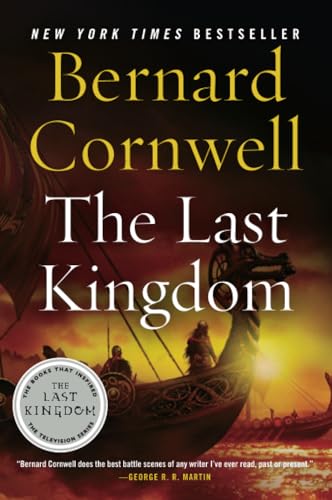
The Last Kingdom (The Saxon Stories, Book 1)
Bernard Cornwell

Meditations
Marcus Aurelius

The Hiding Place
Elizabeth Sherrill, John Sherrill Corrie ten Boom