Reflexivity in Ethnographic Research: What It Means and How to Practice It
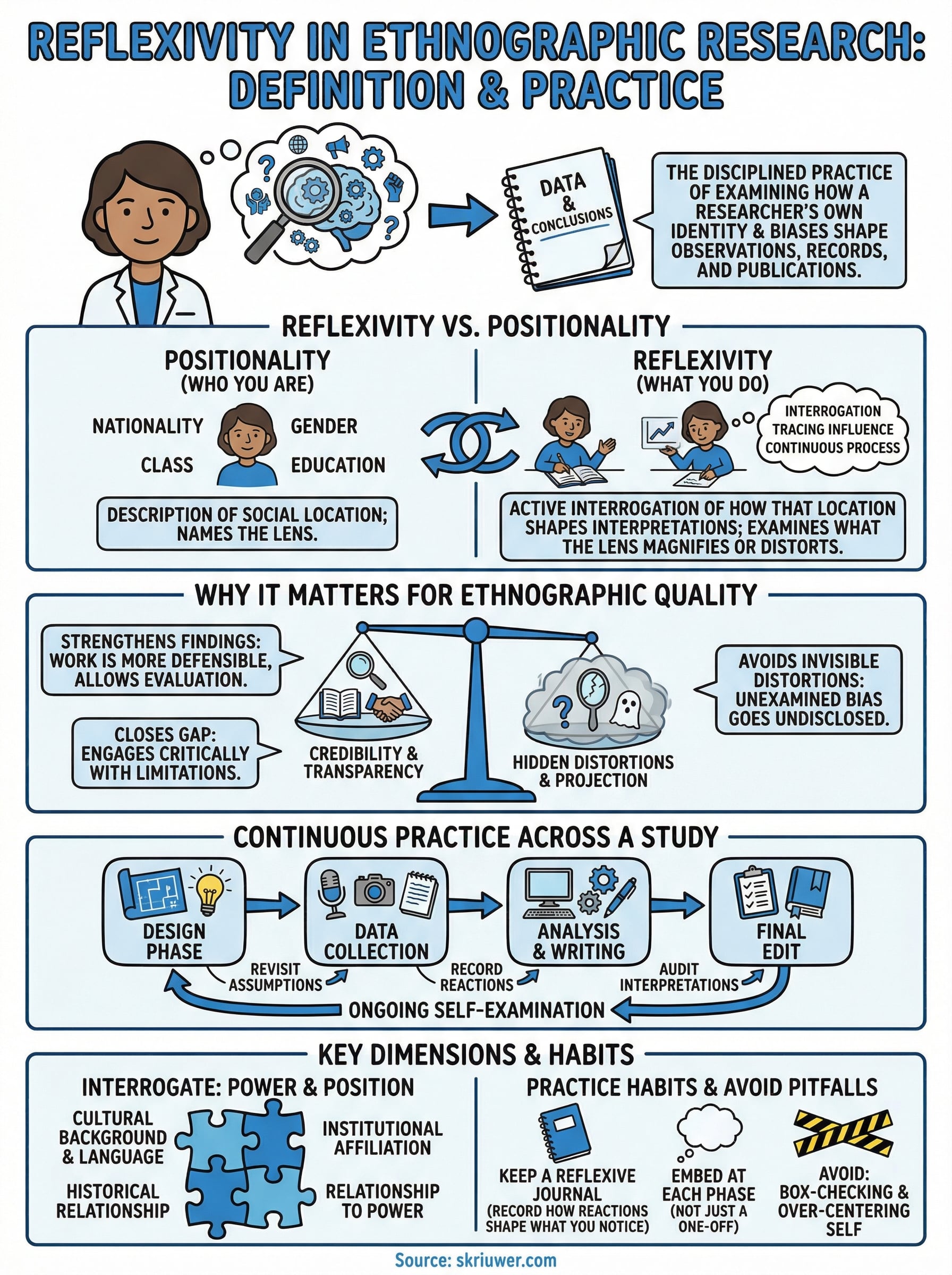
Every ethnographer carries baggage into the field, assumptions, cultural conditioning, political leanings, blind spots. Reflexivity in ethnographic research is the disciplined practice of turning that lens inward, examining how a researcher's own identity and biases shape what they observe, record, and ultimately publish. It's not navel-gazing. It's a methodological necessity that separates rigorous scholarship from projection dressed up as science.
At Skriuwer, we publish work that challenges dominant narratives around history, culture, and language, including perspectives on minority cultures like the Frisian community that mainstream academia frequently overlooks. That editorial focus gives us a front-row seat to the consequences of reflexivity done well and done poorly. When researchers fail to interrogate their own position, entire peoples and histories get flattened into footnotes. When they succeed, the resulting scholarship carries real weight because it accounts for its own limitations.
This article breaks down what reflexivity actually means in ethnographic practice, why it matters, and how to apply it concretely in your own academic work, from identifying positional bias to building reflexive habits into every stage of your research design.
What reflexivity means in ethnography
Reflexivity in ethnographic research refers to the ongoing, active process of examining your own position, assumptions, and influence throughout a study. Unlike a one-time disclosure at the start of a paper, reflexivity is continuous. You are not simply acknowledging that bias exists; you are actively tracing how your presence shapes the data you collect and the conclusions you draw. The concept rests on a foundational insight: ethnographic knowledge is co-produced between the researcher and the people they study.
A researcher who never questions their own lens is not producing ethnography; they are producing autobiography without realizing it.
Reflexivity versus positionality
These two terms often appear together, but they are not the same thing. Positionality describes who you are: your nationality, class, gender, and educational background, and how those characteristics locate you in relation to your research subjects. Reflexivity is what you do with that awareness. You can state your positionality in a single paragraph and never actually trace how it influenced a single interview or field note. Genuine reflexivity demands more.
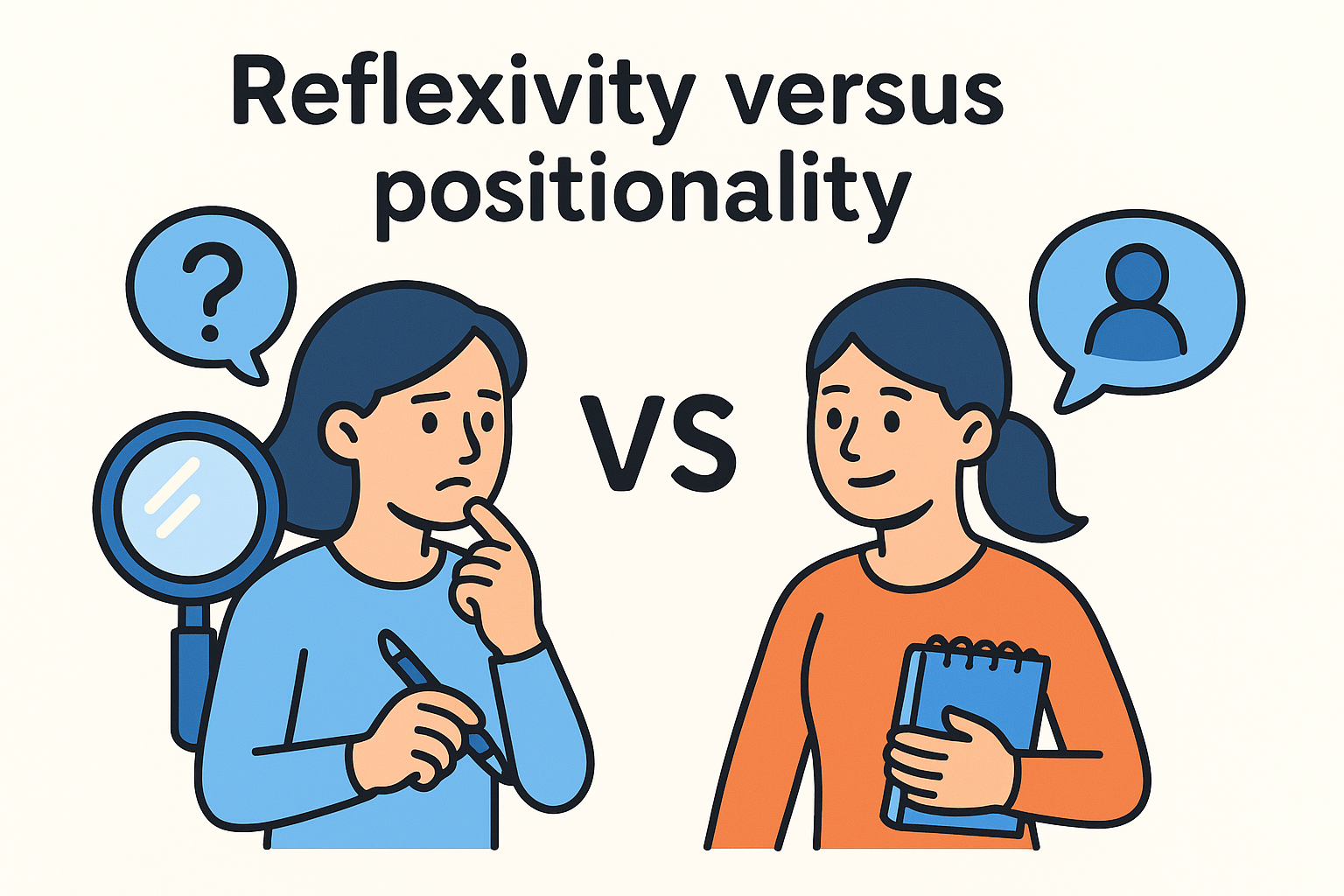
- Positionality: a description of your social location within the research context
- Reflexivity: an active, ongoing interrogation of how that location shapes your interpretations
- The core difference: positionality names the lens; reflexivity examines what that lens magnifies or distorts
Reflexivity as a continuous practice
Reflexivity is not a section you write once at the end of your methodology chapter. It runs from the moment you choose a research site through the final edit of your manuscript. At every stage, your decisions carry the imprint of your perspective, from who you interview to which quotes you select for emphasis. Treating reflexivity as a one-off exercise produces shallow scholarship. Treating it as a habitual, ongoing commitment produces research that can honestly account for its own constraints.
Why reflexivity matters for ethnographic quality
Ethnographic research lives or dies on the credibility of your interpretation. When you conduct fieldwork, you are not a passive recording device; your presence changes what people say, how they behave, and what they share with you. Without reflexivity in ethnographic research, those dynamics stay hidden, and your findings carry invisible distortions that readers cannot account for.
Unexamined bias does not disappear from your data; it simply goes undisclosed.
How reflexivity strengthens your findings
Researchers who practice reflexivity produce work that is more transparent and more defensible. You give readers the tools to evaluate your interpretations on their own terms, which is precisely what separates ethnography from anecdote. When you trace how your background shaped your analytical choices, you also open your conclusions to meaningful critique and replication, the hallmarks of solid academic work.
Your credibility as an ethnographer depends on demonstrating that you engaged critically with your own limitations rather than ignoring them. Committees, peer reviewers, and readers from the communities you study will all scrutinize the gap between your position and your claims. Reflexivity closes that gap honestly.
What to reflect on: positionality and power
When you practice reflexivity in ethnographic research, you need a concrete starting point. Your social position and your relationship to power within the research context are the two most productive places to begin. Both shape what questions you ask, whose voices you amplify, and which details you unconsciously filter out of your field notes.
The researcher who claims neutrality is not standing outside the power structure; they are simply failing to examine where they stand within it.
Key dimensions to interrogate
Your reflection should cover specific dimensions that directly influence your data collection and analysis. These include your cultural background and language, your institutional affiliation, and the historical relationship between your community and the community you study. Each of these creates asymmetries that affect trust, access, and interpretation in ways that compound over the course of a study.
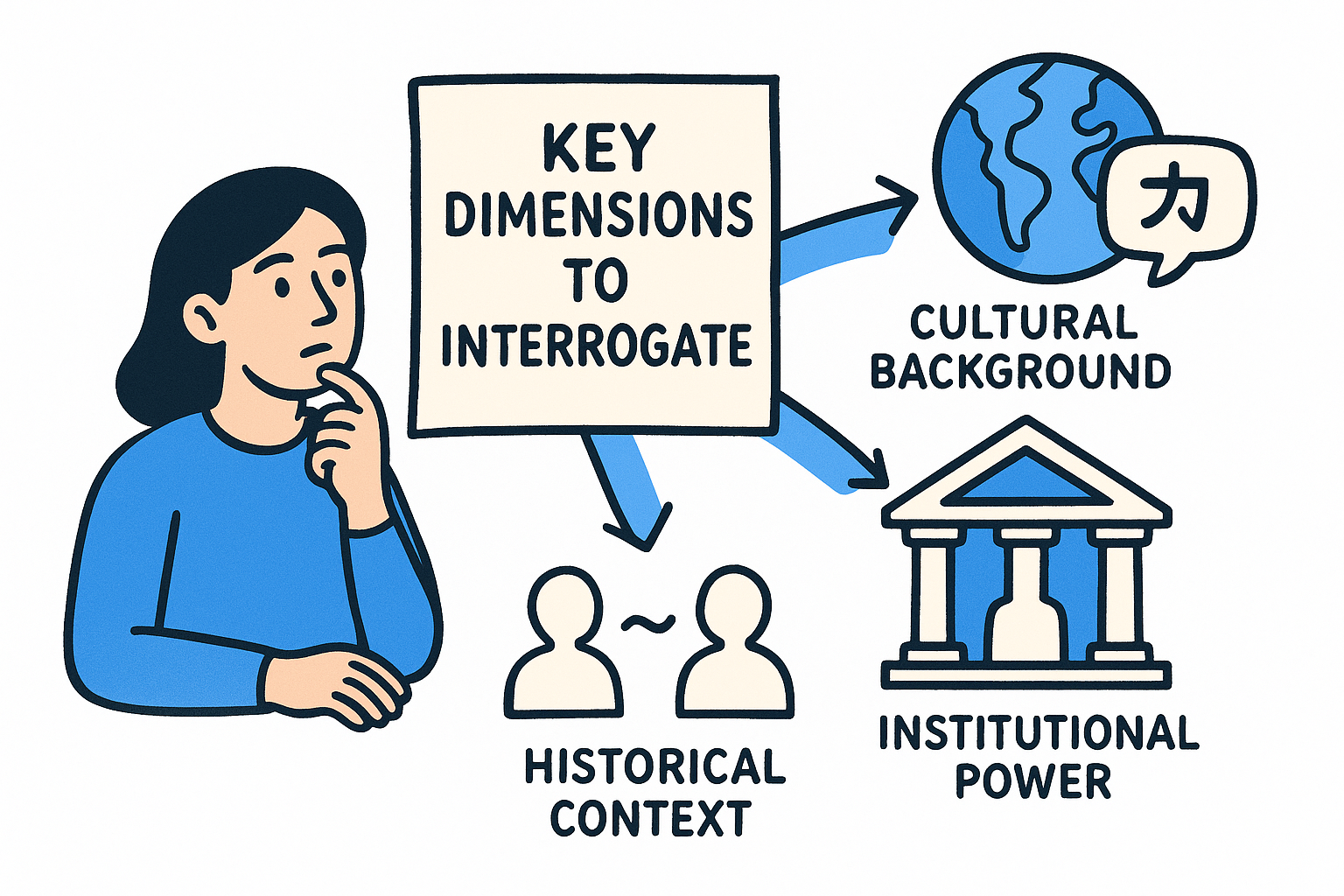
- Cultural background: shapes your default assumptions about behavior, authority, and family structure
- Institutional power: your university or funding body signals status to participants and can limit what they share
- Historical context: past research exploitation in a community creates wariness that directly affects data quality
- Language access: gaps between your fluency and your participants' preferred language distort nuance at every level
How to practice reflexivity across a study
Practicing reflexivity in ethnographic research requires concrete habits built into your workflow, not occasional reflection when you feel uncertain. You need to embed reflective practices at each stage of the study, from design through write-up, so that your self-examination becomes part of the data itself rather than an afterthought.
Keep a reflexive journal
A reflexive journal is the most practical tool available to you. Write in it after every field session, recording not just what happened but how your reactions, discomforts, and assumptions shaped what you noticed. Over time, patterns emerge that reveal where your position most strongly influences your interpretation.
A journal entry written the night after a difficult interview often surfaces bias that no amount of retrospective analysis will catch.
Revisit your assumptions at each phase
Designing your study, collecting data, and writing your findings each require a fresh round of interrogation. At each transition, return to your core assumptions and ask whether the evidence you gathered confirms them because they are accurate or because your methods were built to find them. This discipline keeps your conclusions honest across the full arc of the research.
Common pitfalls and how to avoid them
Most researchers who struggle with reflexivity in ethnographic research don't fail because they lack insight. They fall into predictable patterns that substitute the appearance of reflection for the real work.
Performing reflexivity for your committee is not the same as practicing it for your research.
Treating reflexivity as a box to check
Many researchers write a single positionality statement and consider the task complete, reducing a continuous practice to a one-time disclosure and leaving all subsequent analytical choices unexamined. Build reflexive checkpoints into your timeline at each major phase instead:
- Design: question why you chose this site and these participants
- Data collection: record how your reactions shape what you notice
- Analysis: track which interpretations feel most comfortable and push back on them
Over-centering yourself in the analysis
The opposite error is spending so much attention on your own position that your participants' voices get buried beneath your self-examination. Reflexivity should illuminate how your perspective shapes your interpretation, not replace your findings with personal narrative.
Your final write-up must center the people you studied, not your internal experience of studying them. Keep your reflective journal separate from your field notes, and audit your draft to ensure participant voices drive your conclusions.
Next steps
Reflexivity in ethnographic research is not a skill you acquire once and then apply mechanically. It grows with each project you complete, each community you spend time with, and each moment you catch yourself making an assumption you hadn't examined. The practical habits covered in this article, keeping a reflexive journal, interrogating your positionality, and auditing your analysis at each phase, give you a working foundation to build on.
Your next move is straightforward: start with your current or upcoming project and identify one dimension of your position that you have not yet examined in writing. Put it on paper. That first act of written reflection is where genuine reflexivity begins, and it compounds over time into stronger, more honest scholarship.
For readers interested in how alternative and minority perspectives get suppressed in mainstream scholarship, explore the full Skriuwer collection to find titles that take those blind spots seriously.
Recommended Reading
Deepen your understanding of how culture shapes interpretation:
- Ethnocentrism vs cultural relativism, the two opposing lenses every fieldworker has to navigate.
- What is critical race theory, a framework that put researcher positionality at the center of the debate.
Your next good book, in your inbox
We only write when we find a book worth your time. Hand-picked recommendations across history, mythology, true crime and more.
Books You Might Like


Through the Language Glass
Guy Deutscher

How to Learn Any Language
Barry Farber