Best Renaissance History Books in 2026: 12 That Capture the Era's Ambition and Brutality
THE RENAISSANCE IS USUALLY TAUGHT as a period of cultural flowering, a transition from medieval darkness into modern enlightenment. Artists rediscovered the classics, patrons competed to fund masterpieces, and the individual emerged as a new kind of historical force. This version of the Renaissance is true but incomplete. It is the version the Renaissance itself promoted, the story that powerful people told about themselves. The reality was far more violent and unstable.
The fourteenth through sixteenth centuries in Italy and beyond were defined by plague, famine, constant warfare between city-states, banking crises, political assassinations, religious upheaval, and the relentless scramble for power. The art that emerged during this period was not produced in a vacuum of peaceful contemplation. It was created by people living through genuine instability, often with their lives at risk, frequently under contract to patrons who themselves faced assassination attempts. These 12 books tell the story of the Renaissance as it actually was, not as it invented itself.
The Prince by Nicolo Machiavelli (1532)
Nicolo Machiavelli's handbook of Renaissance realpolitik remains the clearest-eyed analysis of how power actually works ever written. Written in 1513 as a job application to the Medici family after he had been tortured and exiled, The Prince argues that a successful ruler must do whatever is necessary to maintain power, including actions that are conventionally considered immoral. Machiavelli describes the fox and the lion, the virtues of appearing to be virtuous while acting without virtue, and the machinery of control that keeps a city-state functioning. Later readers have argued whether Machiavelli was describing reality or prescribing behavior. The argument is still ongoing, but what matters is that The Prince remains the most accurate description of how the Renaissance power structure actually operated. Find The Prince on Amazon.
Lives of the Artists by Giorgio Vasari (1550)
Giorgio Vasari's Lives of the Artists is the first art history ever written and it remains one of the best. Vasari, himself an artist and architect, wrote biographical sketches of artists from Giotto through his own contemporaries, creating a narrative arc that traced the rediscovery of ancient artistic principles and the gradual perfection of technique and vision. What makes Vasari essential is not just what he says but the way he says it. He combines factual information with anecdotes and gossip, creating vivid portraits of artists as complicated human beings rather than abstract creative forces. His book defined how art history could be written. Find Lives of the Artists on Amazon.
The Civilization of the Renaissance in Italy by Jacob Burckhardt (1860)
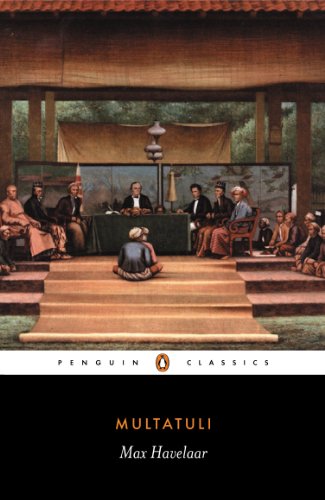
Jacob Burckhardt's foundational study did something audacious: it invented the Renaissance as a historical concept. Before Burckhardt, people did not really think of the period from roughly 1300 to 1600 as a unified era with a distinctive character. Burckhardt argued that the Renaissance produced a new kind of human being, the individual in the modern sense, aware of himself as a historical and social product, concerned with worldly achievement rather than purely with salvation. His thesis has been argued about ever since, revised and complicated by later historians. But Burckhardt's portrait of Renaissance Italy, its politics, its art, its social life, its personalities and rivalries, remains one of the great works of cultural history. Find The Civilization of the Renaissance in Italy on Amazon.
The Medici: Godfathers of the Renaissance by Paul Strathern
Paul Strathern's popular narrative history traces the Medici family from Cosimo the Elder through the later generations. The Medici ran Florence not as its official rulers but as its de facto government, maintaining power through banking, patronage, and political manipulation while presenting themselves as private citizens. Strathern follows the dynasty through the Pazzi Conspiracy, the Savonarola crisis, the involvement of the Medici popes, and the family's eventual decline. What makes Strathern's account essential is his eye for the telling detail, the human moment that reveals the machinery of power. The Medici are the central characters in the Renaissance story, and Strathern shows you why. Find The Medici on Amazon.
April Blood: Florence and the Plot Against the Medici by Lauro Martines (2003)
Lauro Martines focuses on a single moment, the Pazzi Conspiracy of 1478, when members of the rival Pazzi family attacked Lorenzo and Giuliano de' Medici during Easter Mass in Florence Cathedral. Giuliano was killed. Lorenzo barely survived. The conspiracy failed and the conspirators were hunted down and executed, but the event revealed the fragility of Renaissance power and the constant threat of violence that hung over even the most powerful families. Martines reconstructs the event in detail, showing the political context, the personal animosities, the financial interests at stake. April Blood is a masterclass in how to use a single event to illuminate an entire era. Find April Blood on Amazon.
Brunelleschi's Dome: How a Renaissance Genius Reinvented Architecture by Ross King (2000)
Ross King tells the story of how Filippo Brunelleschi, a goldsmith with no formal architectural training, built the dome of Florence Cathedral in the early fifteenth century. The dome was supposed to be impossible. It had to span 143 feet, larger than anything built since the Pantheon in ancient Rome, and nobody knew how to do it. Brunelleschi spent sixteen years solving the problem through engineering, innovation, and sheer determination. King's book is not just about architecture. It is about the Renaissance mind at work, the confidence that problems could be solved through empirical observation and creative thinking, the willingness to attempt what had not been attempted before. Find Brunelleschi's Dome on Amazon.
Michelangelo and the Pope's Ceiling by Ross King (2003)
King's companion volume follows Michelangelo painting the Sistine Chapel ceiling from 1508 to 1512. Michelangelo was not a trained fresco artist and he took the commission reluctantly. What followed was four years of physical and psychological struggle, working above his head, competing with other artists for the Pope's attention and funding, and attempting to execute a vision of unprecedented scope and ambition. King shows the logistical challenges, the artistic obstacles, the personality conflicts, and the sheer determination it took to paint the most famous ceiling in the world. It is a portrait of artistic genius under extraordinary pressure. Find Michelangelo and the Pope's Ceiling on Amazon.
Machiavelli: A Biography by Miles J. Unger (2011)

Miles J. Unger's biography of Nicolo Machiavelli places The Prince in the context of Machiavelli's full life and career. Machiavelli was not just a theorist of power. He was a diplomat, an active participant in Florentine politics, a man who experienced torture and exile for his political activities. Understanding his biography gives The Prince context and urgency. You see not just the ideas but the experiences that generated them. Unger writes with narrative skill and a clear eye for the way Machiavelli's life shaped his thinking. Find Machiavelli: A Biography on Amazon.
Girl with a Pearl Earring by Tracy Chevalier
Tracy Chevalier's historical novel follows Griet, a servant who becomes the subject of Johannes Vermeer's most famous painting. The novel is historical fiction rather than history, but it captures something essential about the Renaissance and early modern worlds: the power structures that bound artists to patrons, the lives of people who do not appear in official records, and the moment of artistic creation when vision becomes material reality. Chevalier's prose is spare and precise, and her portrait of Vermeer and the household he worked in rings true. Find Girl with a Pearl Earring on Amazon.
The Birth of Venus by Sarah Dunant
Sarah Dunant's novel is set in Florence during the reign of Savonarola, the fanatical friar who took control of the city in the 1490s and turned it into a theocracy. Alessandra is an artist who falls in love with a man from a rival family. Dunant captures the fear and passion of this moment in Renaissance history, when religious fervor and political instability collided in the city that had been the center of the Renaissance. The novel shows Florence at a moment of extreme vulnerability, which is often the most interesting moment in any city's history. Find The Birth of Venus on Amazon.
Renaissance Florence by Gene Adam Brucker
Gene Brucker's scholarly but readable overview approaches the Renaissance from the perspective of social history. What did daily life actually look like in fifteenth-century Florence? How did the city's institutions actually function? Brucker spent decades in Florentine archives and his scholarship shows. This is not glamorous history but it is essential history. It corrects the tendency to reduce the Renaissance to its great artworks and great men while ignoring the people who made the economic surplus those artworks required. Find Renaissance Florence on Amazon.
The Swerve: How the World Became Modern by Stephen Greenblatt (2011)
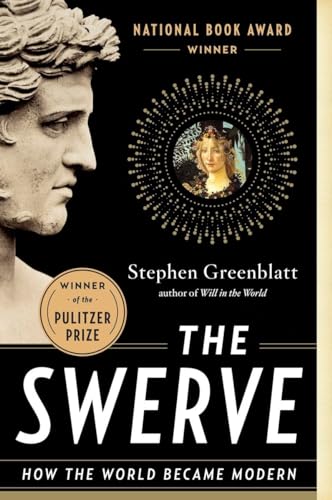
Stephen Greenblatt's Pulitzer Prize-winning book tells the story of how Poggio Bracciolini, a papal secretary and manuscript hunter, found a copy of Lucretius's De Rerum Natura in a German monastery in 1417 and changed the course of Western thought. Lucretius argued that the world consists of atoms in void, that the gods do not intervene in human affairs, that death is the end, and that pleasure is the highest good. Greenblatt traces how this rediscovered text filtered through the Renaissance and shaped Galileo, Montaigne, Shakespeare, and Jefferson. The Swerve is a book about how a single document can alter civilization. Find The Swerve on Amazon.
The Renaissance: A Very Short Introduction by Jerry Brotton
Jerry Brotton's compact survey provides a fast-paced overview of the period, moving across Italy, Northern Europe, and the Ottoman world. Brotton is particularly good on the role of trade and global exchange in shaping Renaissance culture. He challenges the idea that the Renaissance was an isolated European phenomenon, showing how it was shaped by contact with Islamic culture, by trade routes that extended to the Far East, and by the movement of ideas and objects across cultural boundaries. Find The Renaissance: A Very Short Introduction on Amazon.
Where to Start
If you want a fast overview, start with Greenblatt's The Swerve or Brotton's Very Short Introduction. If you want to understand Renaissance politics, read The Prince followed by April Blood. If you want to understand Renaissance art and ambition, read Brunelleschi's Dome and Michelangelo and the Pope's Ceiling. If you want the full social and political context, read Burckhardt. If you want narrative and character, read Strathern's The Medici. The Renaissance was not a time of peace but a time of competitive ambition played out against a background of constant violence. The art it produced was all the more remarkable because it emerged from that chaos and managed to transcend it.
Your next good book, in your inbox
We only write when we find a book worth your time. Hand-picked recommendations across history, mythology, true crime and more.
Are you an author?
Get your book in front of readers like these, for free.
- Free book listing →Your own book page with an Amazon button
- Author page →Photo, bio and links to your site
- Featured placement →A spot in our best-of lists, from €29
Free tools we recommend
Get free honest reviewsReview exchange on iWrity, free to join
Books You Might Like

Educated: A Memoir
Tara Westover

Sapiens: A Brief History of Humankind
Yuval Noah Harari

The Last Kingdom (The Saxon Stories, Book 1)
Bernard Cornwell