1 Hour of EPIC Napoleonic Wars History Facts: Sleep Stories to Fall Asleep To
Napoleon Bonaparte rose from a minor Corsican noble family to Emperor of the French in fifteen years. He rewrote the legal system of France and most of Europe, fought more than sixty battles and lost only a handful, and was finally beaten not by any single rival genius but by the simple reality of a continent that refused to stay conquered. Sleep stories covering 1 hour of epic Napoleonic Wars history facts carry you through the most dramatic quarter-century in European history before the twentieth century, all in a voice calm enough to let you drift off.
The Learn While You Sleep channel covers this topic in long-form, calm-narrated content built for nighttime listening. 144 videos covering history and mythology, all in the same steady, unhurried format that carries you from wakefulness into deep sleep.
1 Hour of EPIC Napoleonic Wars History Facts
The Story the Sleep Track Walks You Through
The Napoleonic Wars ran from roughly 1803 to 1815, though they grew straight out of the French Revolutionary Wars of the 1790s. Napoleon seized power in the coup of 1799, crowned himself Emperor in 1804, and spent the next decade smashing one coalition after another. Austerlitz in 1805 is still taught in military academies as a near-perfect battle. Jena and Auerstedt knocked Prussia flat in 1806. For a few years almost the whole of continental Europe answered to Paris, either as conquered territory, satellite kingdom, or reluctant ally.
For a deeper reading order on these campaigns, see our best books about the Napoleonic Wars guide, which sorts the recommendations by campaign rather than by year.
Two things broke him. The first was Spain, where a brutal guerrilla war, the original "guerrilla", meaning little war, bled his armies for years. The second was Russia. In 1812 Napoleon marched more than 600,000 men east; fewer than a tenth came back. The retreat from Moscow through the early winter is one of the great catastrophes in military history, and it is the moment the sleep narration lingers on, because the scale is almost hypnotic to take in slowly. After Russia came Leipzig in 1813, the largest battle in Europe before World War I, and finally Waterloo in June 1815.
What he left behind outlasted the wars by far. The Napoleonic Code reorganized French law around equality before the law, secular courts, and protected property, and versions of it still underpin the legal systems of dozens of countries from Belgium to Louisiana. His campaigns redrew the map of Europe, dissolved the thousand-year Holy Roman Empire, and spread the ideas of the French Revolution at bayonet point, which in turn lit the fuse of the nationalism that would shape the nineteenth and twentieth centuries. Few individuals have rewired a continent so quickly, which is exactly why the period still rewards a slow, unhurried listen.
Why This Format Works for Sleep
The sleep learning format works because it occupies the analytical mind just enough to stop it generating its own anxieties, while keeping the emotional stakes low enough to allow actual sleep. Historical content is ideal: genuinely interesting, intellectually engaging, but emotionally distant enough that your nervous system can relax. The events happened long ago, to people you will never meet, so your brain processes the narrative without firing the threat responses that keep you awake. Long videos matter too. A two-hour video that ends while you are still awake is a disruption, while a four-to-seven-hour track carries you through the night without a jolt.
More Sleep Stories on the Channel
Browse the full playlist at Fall Asleep to History, with videos covering everything from the Stone Age to World War Two. If the Napoleonic era leaves you wanting the next great continental war, our guide to the best World War 2 books picks up the thread a century later, and our wider history reading lists rank dozens of related titles.
Books to Read After the Sleep Story
The sleep track builds the framework. For the full story, our ranked guide to the best books about Napoleon is the place to go deeper, and these three are the strongest starting points:
- Napoleon: A Life by Andrew Roberts. The best single modern biography. Roberts read all 33,000 of Napoleon's surviving letters and it shows on every page.
- 1812: Napoleon's Fatal March on Moscow by Adam Zamoyski. The definitive account of the Russian disaster, told from both sides and impossible to put down.
- Waterloo by Bernard Cornwell. An hour-by-hour reconstruction of the final battle from the novelist whose research is famously exhaustive.
Find these and more in Skriuwer's curated history collection, with honest reviews and direct Amazon links. Subscribe to Learn While You Sleep and there will be new content waiting every night.
Your next good book, in your inbox
We only write when we find a book worth your time. Hand-picked recommendations across history, mythology, true crime and more.
Are you an author?
Get your book in front of readers like these, for free.
- Free book listing →Your own book page with an Amazon button
- Author page →Photo, bio and links to your site
- Featured placement →A spot in our best-of lists, from €29
Free tools we recommend
Get free honest reviewsReview exchange on iWrity, free to join
Books You Might Like

Sapiens: A Brief History of Humankind
Yuval Noah Harari
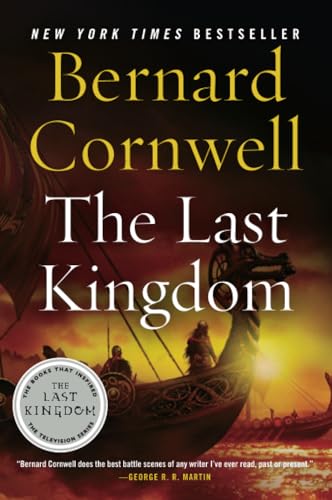
The Last Kingdom (The Saxon Stories, Book 1)
Bernard Cornwell

Meditations
Marcus Aurelius

The Hiding Place
Elizabeth Sherrill, John Sherrill Corrie ten Boom