The History of the Freemasons
No organization in modern history has attracted more conspiracy theories than the Freemasons. They have been accused of secretly controlling governments, orchestrating revolutions, plotting to establish a New World Order, serving as a front for Satanism, and running a global network of hidden power that manipulates world events from behind the scenes. These claims have been made by everyone from nineteenth-century anti-Masonic political parties to twentieth-century fascist governments to twenty-first-century internet forums. They share a common problem: they are not supported by the historical evidence.
What the historical evidence does support is interesting enough without embellishment. The Freemasons are the world's oldest and largest fraternal organization, with millions of members across virtually every country. Their history stretches back at least three hundred years and possibly further. They have counted among their members some of the most influential figures in Western history. And their organizational culture of secrecy, symbolism, and ritual has made them a perennial target for speculation precisely because the truth is genuinely obscure.
The Origins: Operative to Speculative Masonry
The Freemasons trace their origins to the medieval guilds of stonemasons and cathedral builders. This connection is real, not merely symbolic. Medieval masons who built the great cathedrals of Europe were skilled craftsmen who required special protections and a way to verify their qualifications when moving from one construction project to another. They developed passwords, handshakes, and signs that would allow a master mason in one city to recognize a genuine craftsman from another, distinguishing him from unqualified workers who might try to pass themselves off as skilled masons.
These practical craft guilds, known as operative masonry, began accepting non-craftsmen as members in the seventeenth century. By 1717, when four London lodges met at the Goose and Gridiron tavern to form the first Grand Lodge of England, the organization had transformed into what Freemasons call speculative masonry: a fraternal organization that retained the symbols and terminology of the craft but used them for philosophical and moral instruction rather than practical building. A speculative Mason who "works in the quarry" is not cutting stone; he is working on his own moral character.
The 1717 Grand Lodge is the documented origin point of modern Freemasonry as an institution, but lodges existed before this date, and the question of how far back the tradition actually goes is genuinely uncertain. Masonic historians in the eighteenth and nineteenth centuries constructed elaborate histories linking the organization to the Knights Templar, to ancient Egypt, to Solomon's Temple in Jerusalem, and to various other ancient sources. Most of these claims are now understood to be mythological elaborations rather than history, but they reflect how seriously early Masons took the question of their own origins.
Enlightenment Freemasonry and Its Influence
The eighteenth century was Freemasonry's golden age, particularly in Britain, France, and the American colonies. The lodge provided something that was rare in the highly stratified societies of the era: a space where men of different social classes could meet as equals, at least nominally. A nobleman and a prosperous tradesman who sat in the same lodge addressed each other as "brother" and operated under the same rules. This was genuinely radical for the time, even if the reality was often less egalitarian than the ideal.
The Masonic emphasis on reason, tolerance, and moral improvement aligned closely with Enlightenment values, and many of the leading figures of the Enlightenment were Masons. Voltaire was initiated into a Paris lodge in 1778, just before his death. Benjamin Franklin was a Mason and a Grand Master of the Pennsylvania Grand Lodge. George Washington was a Mason and was inaugurated as president with a Masonic ceremony. Many of the signers of the American Declaration of Independence were Masons, though the exact number is disputed.
Wolfgang Amadeus Mozart was a Mason, and his opera The Magic Flute is saturated with Masonic symbolism. The three-fold knocking, the progression from darkness to light, the tests of wisdom and courage, the brotherhood of initiates, all reflect Masonic ritual. Mozart's lodge brothers performed his Masonic Funeral Music at a memorial service after his death.
In France, Masonic lodges served as important meeting places for the reform-minded aristocrats and bourgeois intellectuals who drove the lead-up to the French Revolution. This gave ammunition to those who saw Freemasonry as a revolutionary conspiracy, most famously Abbé Barruel, whose 1797 "Memoirs Illustrating the History of Jacobinism" argued that the Revolution had been planned in Masonic lodges. Modern historians do not accept this theory: the Revolution had economic and political causes that Masonic lodgecraft did not produce, and many Masons were among its victims rather than its architects. But the association between Freemasonry and revolutionary change stuck in the European Catholic imagination and influenced papal condemnations of the organization that began in 1738 and continued intermittently for two centuries.
The Secrets and the Symbols
Freemasonry's reputation for secrecy is both accurate and exaggerated. The existence of the organization is not secret. Its membership rolls are not generally secret (though individual lodges vary on this). Many Masonic texts, rituals, and symbols have been published and are freely available. What Masons traditionally keep secret are the precise words and gestures of their rituals, the means by which members identify each other, and the proceedings of lodge meetings.
The symbolism of Freemasonry is drawn primarily from the tools of the stonemason's craft. The square represents morality and rectitude. The compass represents the ability to keep one's passions within bounds. The plumb line represents upright conduct. The level represents equality among members. These tools appear on Masonic buildings, rings, aprons, and documents, and their ubiquity has fueled speculation about their hidden meaning far beyond what the Masons themselves claim.
The most elaborate Masonic system, the Scottish Rite, has thirty-three degrees of initiation, each with its own ritual, symbolism, and moral lesson. The Scottish Rite degrees incorporate imagery and terminology from a wide range of traditions including Rosicrucianism, Hermeticism, Kabbalah, and medieval chivalric orders. This eclecticism reflects the Enlightenment interest in finding universal principles underlying all religious and philosophical traditions, but it has also made Freemasonry look, to outsiders, like a syncretic occult religion, which is not what its members understand it to be.
The Conspiracy Theories: Where They Come From
Anti-Masonic sentiment has come from multiple directions for different reasons. The Catholic Church's objections were primarily theological: Freemasonry required religious tolerance (Masons of any faith could join) and operated as a parallel community with its own rituals, which the Church saw as incompatible with Catholic exclusivity. Anti-Masonic sentiment also came from political conservatives who associated Masonry with the liberal, reformist tendencies of the Enlightenment and with revolutionary movements in France and elsewhere.
In the United States, the Anti-Masonic Party became a genuine political force in the late 1820s following the disappearance of William Morgan, a former Mason who had announced his intention to publish the secrets of Masonic ritual. Morgan disappeared in 1826, almost certainly murdered by Masons who wanted to prevent the publication. The scandal energized anti-Masonic sentiment across New England and New York, and the party won gubernatorial elections and congressional seats before being absorbed into the Whig Party in the 1830s.
In the twentieth century, fascist and Nazi movements incorporated anti-Masonic conspiracy theories into their broader ideology of hidden Jewish-Masonic plots to control the world. The Nazi regime persecuted Freemasons alongside Jews, Roma, and political opponents: an estimated 80,000 to 200,000 Masons died in Nazi concentration camps. This history is largely forgotten outside Masonic circles.
What Freemasonry Actually Is Today
Modern Freemasonry is primarily a fraternal organization with charitable functions. The Shriners, formally the Ancient Arabic Order of Nobles of the Mystic Shrine, are a Masonic body famous for their hospitals for children with burns and orthopedic conditions. Masonic lodges across the world raise significant money for local charities, scholarships, and community programs.
Membership has declined sharply in the United States since its mid-twentieth-century peak. The organization that once counted millions of American members now has perhaps 1.1 million. The reasons are the same ones affecting other fraternal organizations: changing social patterns, less interest in formal ritualized association, the erosion of the civic culture that made fraternal organizations central to community life.
The Freemasons are an interesting historical phenomenon and a genuine institution with real influence on Enlightenment thought, American political culture, and the development of civil society in many countries. They are not a secret government. Their power, such as it was, was always the informal influence that comes from shared identity among people in positions of authority, not any formal coordinated agenda. Understanding what they actually are is more interesting than the conspiracy version, because it tells us something real about how human beings build communities, transmit values, and create institutions that outlast any individual member. For readers who want to go deeper, our ranked guide to the best books about the Freemasons separates the serious history from the esoteric tradition from the conspiracy literature.
Your next good book, in your inbox
We only write when we find a book worth your time. Hand-picked recommendations across history, mythology, true crime and more.
Books You Might Like

Sapiens: A Brief History of Humankind
Yuval Noah Harari
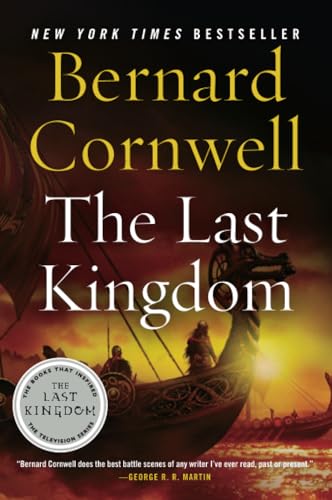
The Last Kingdom (The Saxon Stories, Book 1)
Bernard Cornwell

Meditations
Marcus Aurelius

The Hiding Place
Elizabeth Sherrill, John Sherrill Corrie ten Boom