What Is Paganism? Origins, Beliefs, and the Modern Revival (2026 Guide)
Long before Christianity, Islam, or Judaism shaped the spiritual identity of entire continents, what is paganism was not a question anyone needed to ask, because it was simply how people lived. The old religions of Europe, the Middle East, and beyond were rooted in nature, seasonal cycles, and a direct relationship with the divine that required no centralized authority or holy book.
So how did these deeply embedded traditions become a blanket label for everything "other"? The answer involves centuries of political maneuvering, forced conversion, and deliberate historical erasure, the kind of story that mainstream narratives tend to gloss over. At Skriuwer, publishing the overlooked and misrepresented side of history is exactly what we do, and paganism's real story deserves that same honest treatment.
This article breaks down paganism's origins, its core beliefs and practices, how it differs from the Abrahamic faiths, and why it's seeing a genuine revival in the modern era. Whether you're a seasoned reader of alternative history or encountering this subject for the first time, you'll walk away with a grounded, no-nonsense understanding of one of humanity's oldest spiritual traditions.
Why the word paganism means different things
The word "paganism" was never a self-chosen label. It was invented and applied from the outside, which is the first reason why answering what is paganism tends to produce a different answer depending on who you ask. The definition shifts based on who is doing the defining and in what historical period they lived.
Where the term actually comes from
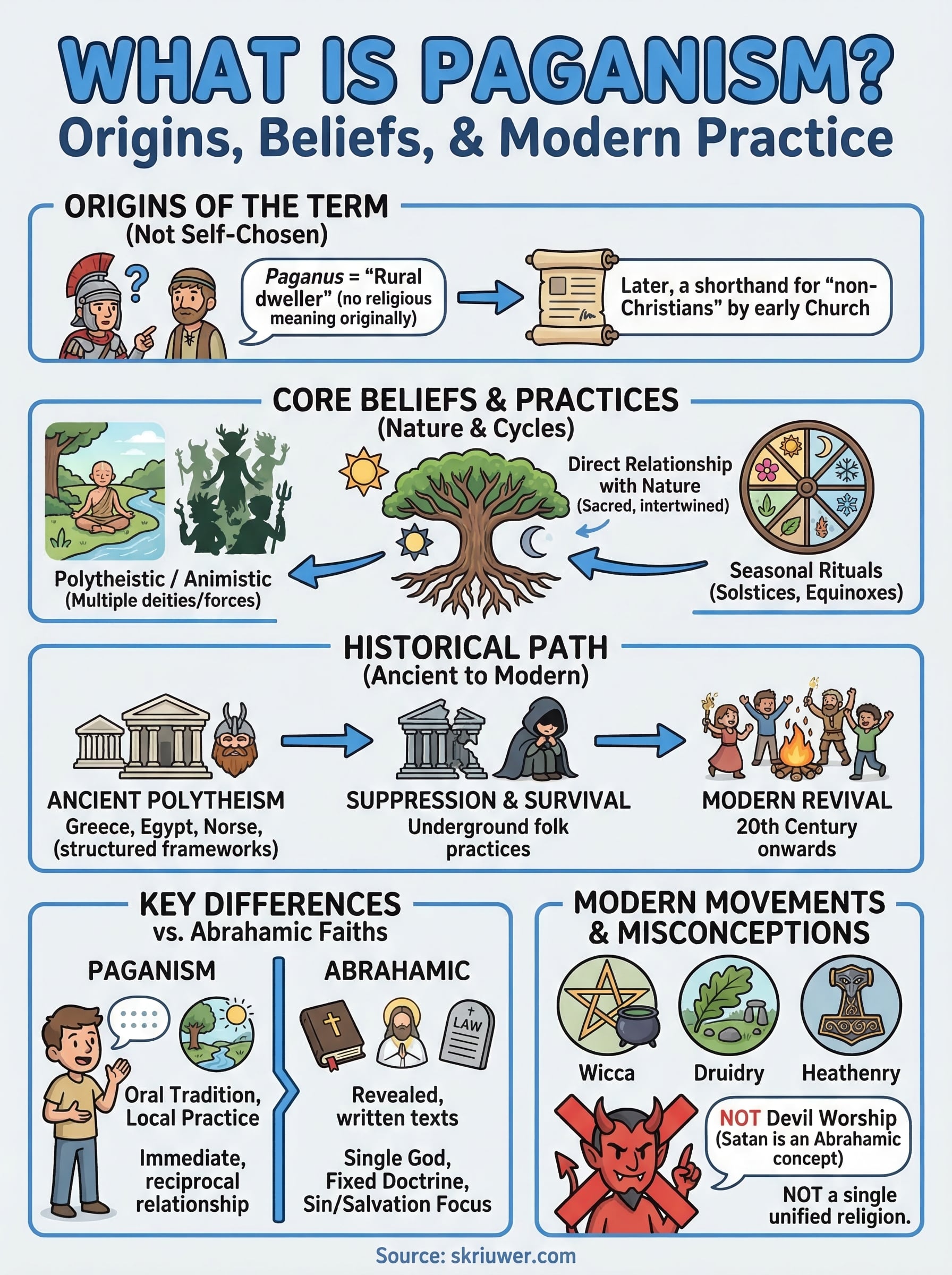
Paganus, the Latin root of the word, originally meant "rural dweller" or "villager," and it carried no religious meaning at all. When Christianity spread through the urban centers of the Roman Empire, the countryside remained attached to older traditions longer. Early Christian writers began using paganus as a shorthand for anyone outside the faith, and the word gradually accumulated its religious meaning through repeated use, not through any formal declaration.
The word was a social label before it was a spiritual one, and that origin still shapes how confusing and contested the term remains today.
A second layer of complexity came when church authorities applied the term beyond Rome's borders, attaching it to the practices of people who had never encountered Latin at all. This stretched the word far beyond anything its original speakers intended.
How the definition kept shifting
After Rome adopted Christianity, "pagan" came to cover an increasingly broad and mismatched range of beliefs: Greek polytheism, Celtic nature worship, Norse mythology, and dozens of regional folk traditions that shared almost nothing with each other. What unified them in the church's view was simply that they were not Christian.
For you as a modern reader, that history matters. You are dealing with a category built on exclusion rather than shared doctrine, and knowing that protects you from treating any single definition as the complete picture.
How to trace paganism from antiquity to today
Understanding what is paganism becomes much clearer when you look at the historical timeline rather than any single definition. Pagan traditions did not appear suddenly, and they did not disappear cleanly either. They evolved, fractured, went underground, and resurfaced across thousands of years of human history.
Ancient polytheism across cultures
The oldest pagan traditions stretch back to ancient Mesopotamia, Egypt, Greece, and Rome, where people worshipped multiple deities tied to natural forces, agriculture, and war. Celtic and Norse traditions followed similar patterns in Northern Europe, building rich mythological systems that governed everything from harvest cycles to burial rites. These were not primitive superstitions. They were structured spiritual frameworks that entire civilizations depended on.
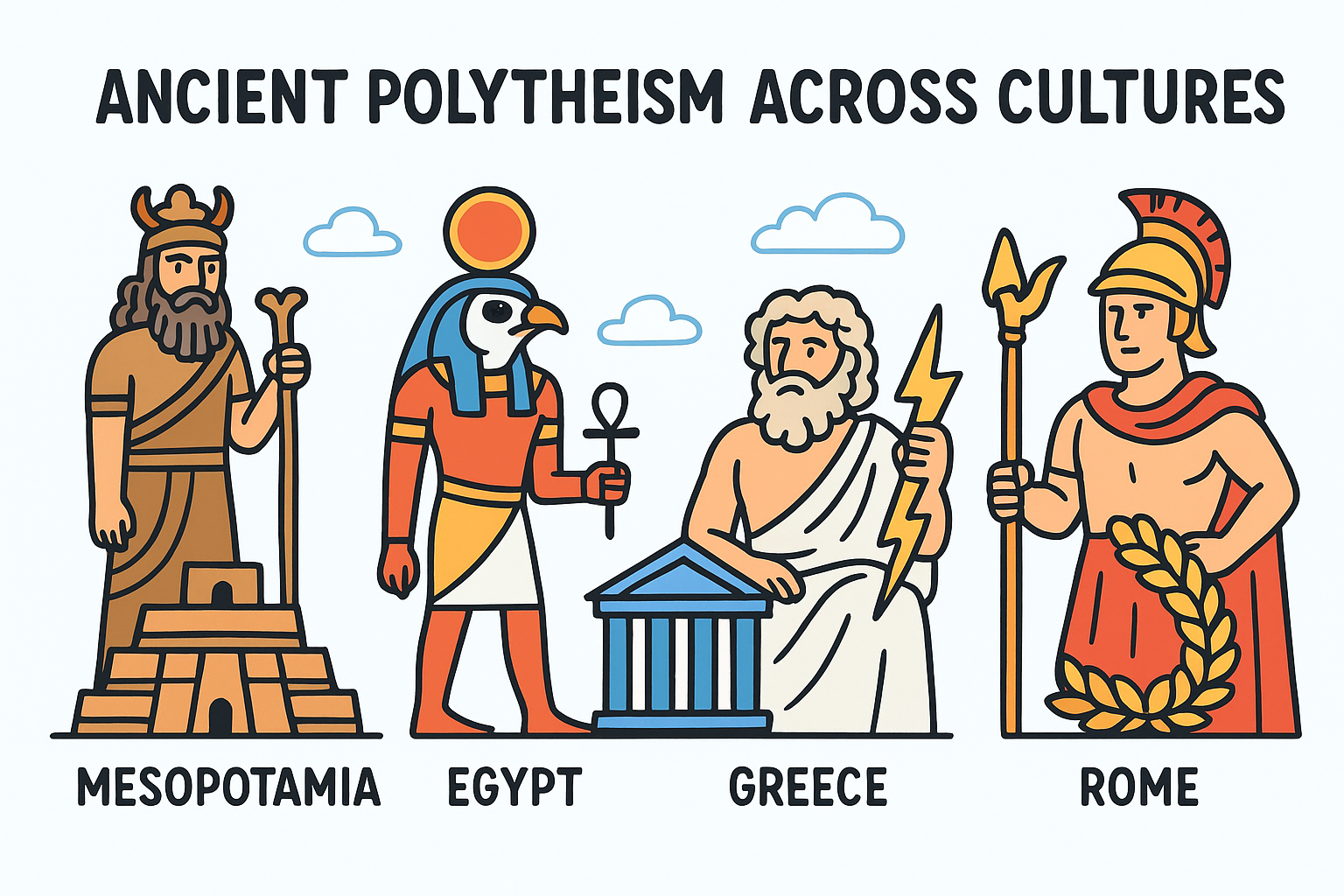
Many of the symbols and seasonal celebrations you recognize today, including midwinter festivals and spring rituals, trace directly back to these pre-Christian traditions.
Suppression and underground survival
When Christian authorities gained political power across Europe, systematic suppression of pagan practice followed. Temples were destroyed, rituals were criminalized, and older beliefs were reframed as devil worship. Despite this, folk practices survived in rural communities, quietly embedded in local customs and agricultural calendars for centuries before modern revival movements brought them back into open practice.
Core pagan beliefs and practices
When you ask what is paganism at the level of belief, the most consistent thread across traditions is a direct relationship with the natural world. Most pagan systems treat nature as sacred rather than separate from the divine, which means the spiritual and the physical are not in opposition but deeply intertwined.
The relationship with nature and deity
Most pagan traditions are polytheistic or animistic, recognizing multiple deities or spiritual forces rather than a single all-powerful god. These forces are typically tied to observable phenomena such as the sun, rivers, forests, and seasonal shifts. You will rarely find a strict theological hierarchy in pagan systems, since authority tends to be local, experiential, and decentralized.
This stands in sharp contrast to the structured doctrines of major world religions, where belief is shaped by fixed texts and institutional clergy.
Ritual, cycle, and community
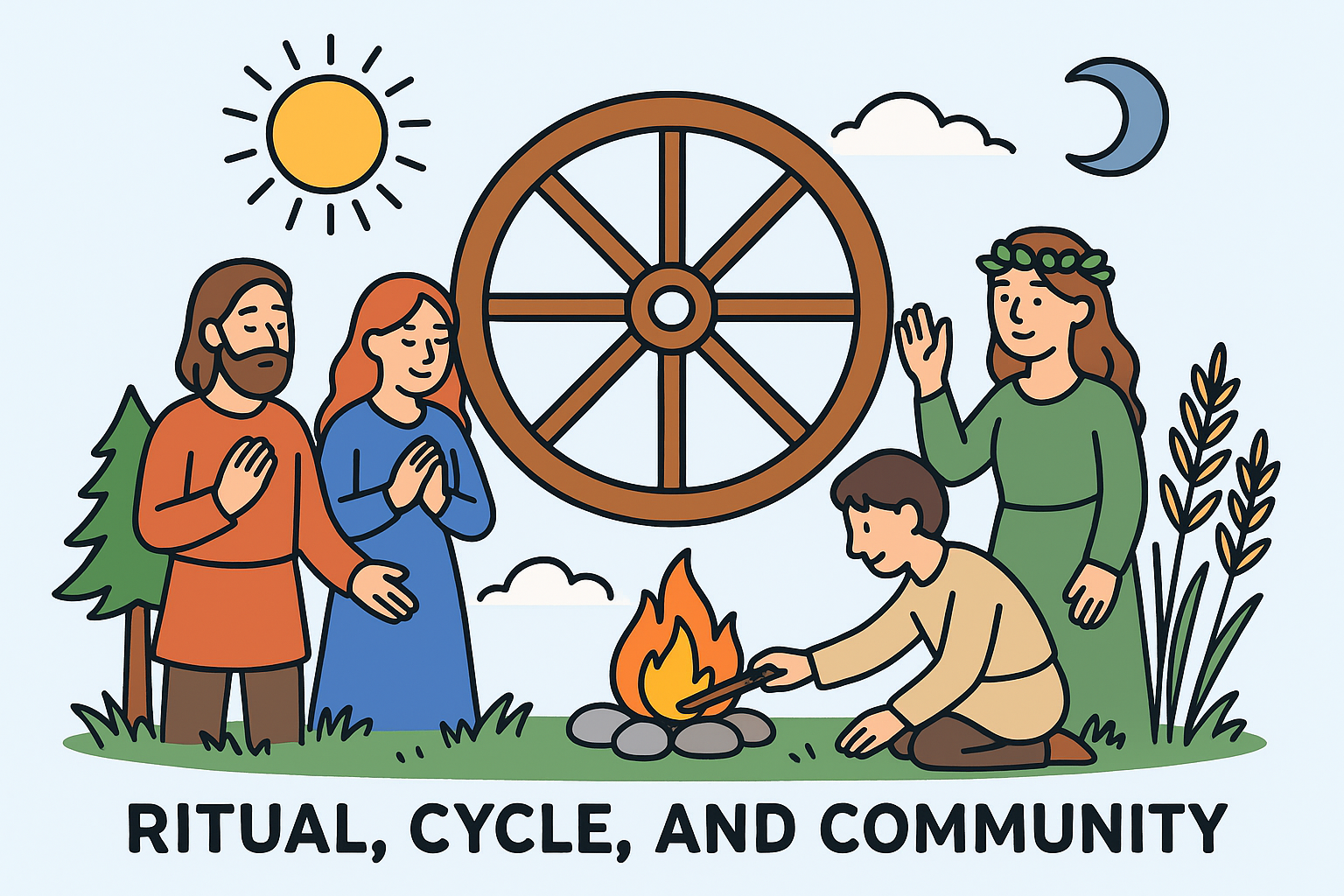
Pagan practice centers on seasonal rituals tied to agricultural and astronomical cycles: solstices, equinoxes, planting seasons, and harvest periods. These were not arbitrary ceremonies. They marked real turning points that communities depended on for survival, and participation reinforced social bonds as much as spiritual ones. Your understanding of modern pagan revivals becomes much sharper once you recognize how central this cyclical thinking was to ancient practitioners.
Paganism vs Christianity, Judaism, and Islam
Comparing paganism to the Abrahamic faiths reveals differences that go far beyond which deity you worship. The contrast is structural, affecting how authority, scripture, and spiritual purpose operate at every level.
Authority and scripture
Christianity, Judaism, and Islam each ground themselves in revealed, written texts that define doctrine for all followers, regardless of location or culture. The Bible, Torah, and Quran present a single God who stands apart from creation. Pagan traditions operated differently, passing knowledge through oral transmission and local practice with no universal canon.
Understanding what is paganism means recognizing that its truths were never meant to be universal. They were tied to specific landscapes and communities.
Sin, salvation, and the afterlife
The Abrahamic faiths build spiritual life around sin, divine law, and an afterlife shaped by how faithfully you follow that law. Pagan systems generally lack this framework entirely. Your relationship with the divine in most pagan traditions is immediate and reciprocal, focused on maintaining balance in the living world rather than earning a place in the next.
This worldview makes pagan ethics situation-specific and nature-driven rather than governed by absolute moral codes handed down from a single divine authority.
Modern pagan movements and common misconceptions
Paganism did not die out. Starting in the 20th century, organized revival movements brought ancient frameworks back into open practice. If you are asking what is paganism today, you are dealing with a living, evolving tradition with deep historical roots.
The numbers back this up. The 2021 census for England and Wales recorded roughly 74,000 people identifying as Pagan, alongside about 13,000 Wiccans and a sharp rise in those describing themselves as Shamanic practitioners, which grew nearly fivefold from the previous census a decade earlier. Pagan paths now rank among the fastest-growing minority belief categories in the English-speaking world, which makes the question of what is paganism more relevant in 2026 than it has been in centuries.
The main revival movements
Three paths dominate modern pagan practice, each drawing on a distinct cultural heritage. Understanding their differences gives you a clearer picture of the broader landscape.
- Wicca: Developed in mid-20th century Britain, focused on ceremonial magic, nature worship, and structured ritual practice
- Druidry: Revives Celtic spiritual traditions with a strong emphasis on nature, seasonal cycles, and land-based community
- Heathenry: Reconstructs Norse and Germanic belief systems using surviving texts like the Eddas and historical sagas
These are not costume religions or historical reenactments. Practitioners take their beliefs seriously and build real communities around them.
What paganism is not
The most persistent misconception is that paganism equals devil worship. This framing came directly from medieval Christian authorities trying to delegitimize older traditions, and it has no basis in pagan belief itself. Most pagan traditions have no concept of Satan at all, since that figure belongs entirely to the Abrahamic theological framework. A second misconception treats paganism as a single unified religion, when in reality each tradition carries its own gods, ethics, and rituals with no central governing body.
Final thoughts
Paganism is not a single religion, a costume, or a cultural relic. What is paganism comes down to this: a diverse family of nature-based spiritual traditions that predate the Abrahamic faiths, survived centuries of active suppression, and continue to evolve in the modern world. Your understanding of it shifts depending on which tradition, which era, and which community you examine.
These are exactly the kinds of overlooked and deliberately obscured histories that deserve far more than a footnote in a mainstream textbook. The story of how ancient spiritual systems were labeled, suppressed, and reframed as devil worship is part of a much larger pattern in how dominant narratives control what gets remembered and what gets buried.
If you want to explore subjects like this further, browse the curated lists in the religion category on Skriuwer, the mythology category, and our reading guide on the best Norse mythology books. For a closer look at pre-Christian belief, the related Skriuwer guide on Gnosticism covers the parallel suppressed Christian tradition. The same fear of older folk practice turned lethal during the witch hunts, which the best books about witch trials document in detail.
Recommended Reading
Explore the ancient spiritual traditions that preceded modern religions:
- Best Norse mythology books: a ranked reading list for the most influential surviving pagan tradition.
- Celtic mythology sleep stories: long-form audio for falling asleep to the older Celtic material.
- Best books on Gnosticism: the suppressed parallel tradition inside early Christianity, useful for understanding what "pagan" really meant in Late Antiquity.
Your next good book, in your inbox
We only write when we find a book worth your time. Hand-picked recommendations across history, mythology, true crime and more.
Books You Might Like

Man's Search for Meaning
Viktor E. Frankl

The Power of Now
Eckhart Tolle

The Hiding Place
Elizabeth Sherrill, John Sherrill Corrie ten Boom

The Case for Christ
Zondervan Lee Strobel