True Crime: The Zodiac Killer Mystery
Between December 1968 and October 1969, a killer attacked at least seven people in Northern California, killing five of them. He then wrote letters to newspapers and police departments taunting investigators, enclosing pieces of victim clothing as proof of identity, and including coded messages he claimed would reveal his identity. He was never identified. He was never caught. The case files remain officially open.
The Zodiac Killer is one of the most analyzed cold cases in American criminal history. Hundreds of amateur investigators, professional researchers, journalists, and former law enforcement officers have proposed suspects over the decades. None of the theories has been definitively confirmed. The mystery has generated a mythology that sometimes threatens to overwhelm the actual facts of what happened.
The Confirmed Attacks
The first confirmed Zodiac attack occurred on December 20, 1968, near a remote lovers' lane called Lake Herman Road in Benicia, California. David Faraday, 17, and Betty Lou Jensen, 16, had parked for the evening. A gunman approached, shot Faraday in the head at close range, and shot Jensen five times as she ran from the car. No witnesses. No apparent motive. No suspects.
Seven months later, on July 4, 1969, Darlene Ferrin and Michael Mageau were parked at Blue Rock Springs Park in Vallejo. A gunman approached, shot both of them repeatedly, and left. Mageau survived. Ferrin died. Later that night, someone called the Vallejo Police Department and calmly directed them to the bodies, also claiming responsibility for the Lake Herman Road murders.
The attacks at Lake Berryessa on September 27, 1969, introduced a new element of horror. Bryan Hartnell and Cecelia Shepard were college students picnicking near the lake. A man in a black hood with a symbol, a cross inside a circle, approached them. He tied them up, then stabbed them repeatedly. Hartnell survived with serious wounds. Shepard died two days later. The killer had drawn his symbol and the dates of his attacks on Hartnell's car door.
The final confirmed Zodiac attack was the murder of San Francisco taxi driver Paul Stine on October 11, 1969. The killer shot Stine in the head and tore a piece from his shirt. Two teenage witnesses observed the killer at the scene, giving police a detailed physical description that became the basis for the composite sketch that most people associate with the Zodiac.
The Letters and Codes
The Zodiac's communications with newspapers and police are what transformed a local murder case into a national obsession. He wrote at least 18 letters that are generally accepted as authentic, plus a number of others that are disputed. The letters were detailed, specific, taunting, and sometimes apparently playful. He used the name "Zodiac" to sign them starting in his second letter.
The first cipher, sent in three parts to three different newspapers in August 1969, consisted of 408 symbols. The Zodiac claimed it contained his identity. A high school teacher named Donald Harden and his wife Bettye cracked the 408-symbol cipher within a week. It did not contain the killer's name. Instead, it was a disturbing monologue about killing as a sport and a belief that his victims would be his "slaves" in the afterlife.
A second cipher, the 340-character cipher, was sent in November 1969 and remained unsolved for over fifty years. In December 2020, a team of three amateur codebreakers, one American, one Belgian, and one Australian working together, announced they had cracked it. The decrypted message did not reveal the killer's identity. It was another monologue, mocking police for their failure to catch him and referencing the film "The Most Dangerous Game."
A shorter cipher, the 13-character "My name is..." cipher, has never been definitively solved, though dozens of proposed solutions have been put forward over the decades.
The Suspects
The number of people who have been seriously proposed as the Zodiac Killer is in the dozens. A few have attracted sustained attention.
Arthur Leigh Allen, a convicted sex offender from Vallejo, was the most intensively investigated suspect during the original investigation and the one whose case has been most thoroughly documented. Retired detective Dave Toschi and many investigators considered him the most viable suspect. Allen had a watch with the crosshairs symbol. He had been fired from his job for molesting a child during the period of the murders. A witness described hearing Allen talk about wanting to hunt humans before the killings began. But handwriting analysis was inconclusive, fingerprints did not match, and DNA testing conducted in 2002 excluded him as the source of DNA recovered from stamps on the Zodiac letters.
The DNA evidence has complicated every suspect case since 2002. The sample is degraded and partial, so it cannot positively identify anyone, but it can exclude people whose DNA clearly does not match. This creates an evidentiary situation where absence of exclusion is treated as suggestive, which is not a sound basis for identifying a killer.
More recently, a team called the Case Breakers, a group of retired law enforcement and investigators, have proposed Gary Francis Poste, a former Air Force serviceman and housepainter who died in 2018. Their evidence includes photographs they claim show physical similarities, a cipher interpretation they say reveals Poste's name, and witnesses who claim to remember him from the period. The Vallejo Police Department reviewed their evidence and said it did not meet the threshold to name Poste as a suspect.
Why the Case Was Never Solved
Several structural factors made the Zodiac case extraordinarily difficult to solve, beyond the basic challenge of identifying an unknown attacker with no known motive for victim selection.
The attacks occurred across multiple jurisdictions: Solano County, Vallejo, Napa County, and San Francisco all had separate investigations with different agencies and limited coordination. Evidence sharing was inconsistent. There was no centralized criminal database in 1969. Fingerprint comparison required physical presence and manual examination.
The witnesses who saw the killer near Paul Stine's taxi gave descriptions that have driven decades of suspect comparisons, but eyewitness descriptions in poor light under stress are notoriously unreliable. The composite sketch derived from those descriptions has been applied to dozens of different men with sufficient superficial similarity to generate speculation.
The letters themselves introduced a different problem. By writing to newspapers, the Zodiac ensured that details of his crimes were publicly known, contaminating the pool of evidence. Anyone who wrote a subsequent letter claiming to be the Zodiac could incorporate accurate details they had read in newspapers. This makes authentication of later letters genuinely difficult.
The Claimed Victim Count
The Zodiac himself claimed to have killed 37 people. Law enforcement has confirmed five murders and two survivors from the specific attacks described above. The gap between the claimed count and the confirmed count has led to speculation about additional victims whose murders have never been attributed to the Zodiac.
Some researchers believe the real count is somewhere between five and a dozen, accounting for some additional attacks that fit the pattern but cannot be definitively confirmed. Others think the inflated claim of 37 was deliberate misdirection or a desire for notoriety rather than an accurate count. There is no consensus.
The Case Today
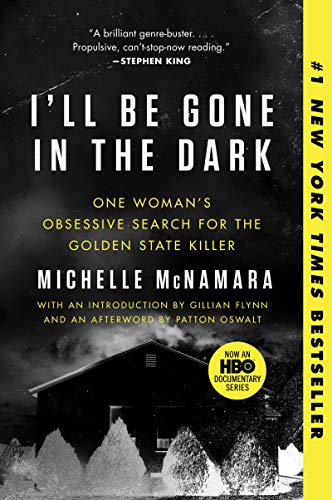
The Zodiac case remains officially open in all the jurisdictions where confirmed attacks occurred. The San Francisco Police Department and the Vallejo Police Department both maintain active case files. Modern forensic techniques, including genealogical DNA methods similar to those used to identify the Golden State Killer in 2018, have been proposed as a potential avenue for the Zodiac case, but the DNA sample available is degraded and may not be suitable for that approach.
The case has entered popular culture so thoroughly that it sometimes feels like the Zodiac is more myth than man. But there were real victims: David Faraday, Betty Lou Jensen, Darlene Ferrin, Cecelia Shepard, and Paul Stine. Bryan Hartnell and Michael Mageau survived and carried the trauma of those attacks for the rest of their lives.
Whoever the Zodiac was, he almost certainly died without being identified. The chances of a definitive resolution decrease with each passing year. What the case leaves behind is not just a mystery but a portrait of the limits of 1960s forensic science, the structural failures of multi-jurisdictional investigations, and the difficulty of solving crimes committed by someone with no prior relationship to their victims and no apparent logical motive. Those failures shaped the development of modern criminal investigation. The cost of the lesson was five lives.
Your next good book, in your inbox
We only write when we find a book worth your time. Hand-picked recommendations across history, mythology, true crime and more.
Books You Might Like


Mindhunter: Inside the FBI's Elite Serial Crime Unit
Mark Olshaker John E. Douglas

Helter Skelter: The True Story of the Manson Murders
Curt Gentry Vincent Bugliosi