Best Biographies in 2026: 12 Lives That Make You See Your Own Differently
Biography is the literary form that treats one human life as if it contains the whole world. At its best, this is not a conceit. A great life, examined closely enough, actually does. Robert Caro spent decades inside Robert Moses's world and came out with the definitive account of how power operates in American cities. Richard Ellmann spent years inside James Joyce's letters and notebooks and produced something that illuminates not just one writer but the entire creative process. These books are not profiles or tributes. They are arguments about how the world works, made through the specific details of a single person's existence.
The twelve biographies on this list are the ones that justify the form at its most ambitious. They range from 400 pages to over a thousand. They cover politicians, artists, soldiers, intellectuals, and rulers. What they share is the quality that distinguishes biography from history: you feel, at the end, that you have spent time inside another consciousness.
The Greatest American Biography
The Power Broker by Robert Caro
At 1,162 pages, this is the book that defines what American biography can be. Robert Moses was never elected to anything. He ran parks, bridges, highways, and housing authorities in New York for forty-four years through an accumulated architecture of political leverage that made him, in practical terms, more powerful than any mayor or governor he served under. Caro spent seven years researching this book, and the result is not just a biography but a treatise on power itself: how it is acquired, how it corrupts, and how people who are certain they are doing good can cause enormous suffering.
The Moses who emerges in Caro's account is not a simple villain. He built beaches and parks that genuinely transformed life for New York's working class. He also destroyed vibrant communities for highways that primarily served the white suburban middle class, deliberately designed overpasses too low for buses to pass under, and accumulated institutional power in ways that made him impossible to remove even when the evidence of harm was overwhelming. The book is essential for understanding how cities work and how political power persists outside electoral accountability.
The Years of Lyndon Johnson by Robert Caro
Caro's four-volume LBJ biography (with a fifth volume still pending) is the companion achievement to The Power Broker. Where Moses's power was institutional, Johnson's was intensely personal, a capacity for intimate domination that Caro documents with the same patient accumulation of detail. The scene in which LBJ manipulates Senator Richard Russell through years of careful personal cultivation to pass the Civil Rights Act is the most precise account of legislative persuasion ever written.
The paradox Caro returns to repeatedly is how the same machinery of manipulation and moral flexibility that Johnson used to destroy enemies and accumulate power also enabled the Great Society legislation that represented the most ambitious expansion of the American welfare state since the New Deal. Power, in Caro's telling, is neither good nor bad. It is the instrument. The character of the person holding it is everything.
Statesmen and Soldiers
John Adams by David McCullough
Adams is the founding father who gets overlooked. Washington gets the mythology, Jefferson gets the eloquence, Hamilton gets the musical. Adams got the presidency between them and spent much of it being unpopular for doing the right thing. McCullough's biography rehabilitates him as a man of genuine intellectual depth and moral seriousness, someone whose relationship with his wife Abigail was the most fully documented and movingly equal partnership of the founding generation.
McCullough's great gift is accessibility without condescension. The book reads like a novel, the research is invisible, and the portrait of Adams that emerges, stubborn, vain, honest to a fault, genuinely committed to ideas, is sympathetic without being hagiographic. It is the best gateway into the founding period for readers who find the academic histories too dry and the popular mythologizing too thin.
Grant by Ron Chernow
Grant has spent most of the past century being remembered as a drunk who got lucky in the Civil War and then presided over a corrupt administration. Chernow's 1,000-page rehabilitation is thorough and persuasive. The Grant who emerges here is one of the most consequential figures in American history: the general who understood that the Civil War had to be won through relentless pressure and grinding attrition when everyone else was still thinking in terms of a single decisive battle, and the president who pursued Reconstruction with a seriousness that his successors abandoned entirely.
Chernow is particularly strong on Grant's late-life memoir, written while he was dying of throat cancer in a race against bankruptcy, which Mark Twain published and which remains one of the greatest memoirs in American letters. The biography makes a compelling case that Grant deserves to be ranked among the major presidents rather than as a cautionary tale.
Theodore Rex by Edmund Morris
The middle volume of Morris's three-part TR biography covers the presidency itself, from 1901 to 1909, and it is the best of the three. Roosevelt in the White House is Roosevelt at full power: busting trusts, building the Panama Canal, negotiating the Treaty of Portsmouth that ended the Russo-Japanese War and won him the Nobel Peace Prize, and transforming the relationship between the federal government and corporate America in ways that are still contested today.
Morris writes with a density of detail and a controlled excitement that matches his subject. TR was genuinely one of the most energetic and intellectually curious people to hold the office, and Morris conveys both the exhilaration and the destructive egotism without smoothing either.
Women Reclaimed
Cleopatra: A Life by Stacy Schiff
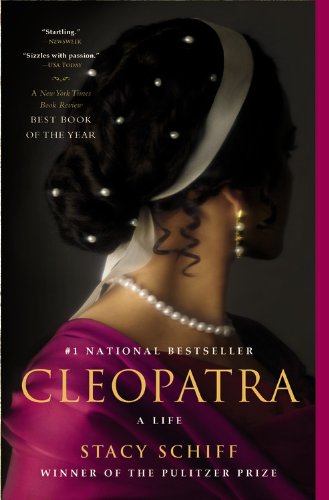
Most of what we think we know about Cleopatra was written by Romans who had every reason to portray her as a dangerous seductress. Schiff's biography strips back the mythologizing and reconstructs the ruler who survived the most dangerous court in the ancient world, governed Egypt through a period of extraordinary upheaval, and formed alliances with both Julius Caesar and Mark Antony that were as politically calculated as they were personal. She spoke nine languages and was the only member of the Ptolemaic dynasty who bothered to learn Egyptian.
Schiff is careful to signal where the sources fail, which is everywhere. Most of the primary documentation is hostile, second-hand, or written a century after the events. She works with what survives and argues explicitly for a Cleopatra who was primarily a strategist and ruler, not a temptress, using the tools available to her in a world where those tools were limited by gender. The result is both a biography and a study in how powerful women get remembered.
Artists and Writers
Leonardo da Vinci by Walter Isaacson

Isaacson's approach to Leonardo is thematic rather than strictly chronological: he is less interested in the sequence of events than in the quality of mind that made Leonardo possible. The curiosity, the cross-disciplinary thinking, the habit of filling notebooks with questions that had no practical application but led, decades later, to breakthroughs in painting and anatomy and engineering. The notebooks are the heart of the book, and Isaacson spends real time inside them.
The argument the biography makes implicitly is that Leonardo's methods are learnable: the practice of relentless questioning, the refusal to treat disciplines as separate, the obsessive observation of the physical world. Whether you buy this or find it motivational-poster adjacent, the portrait of Leonardo at work is the most vivid account of creative obsession currently available.
Richard Ellmann's James Joyce
The standard by which all literary biography is measured. Ellmann spent years tracking down everyone who had known Joyce across four countries and multiple decades, and the result is a book of such depth and sympathy that it changed how scholars think about the relationship between biography and literature. You cannot read Ulysses or Dubliners the same way after reading Ellmann's account of what Joyce took from his own life, his friendships, his betrayals, his family, the conversations he had on specific afternoons in Zurich and Paris.
The writing itself is exceptional. Ellmann does not condescend to explain Joyce's work but does illuminate it from behind, showing you the raw material and letting you draw your own conclusions about how it was transformed. It is a masterwork of the form.
Musicians and Thinkers
Mozart: A Life by Maynard Solomon
Solomon's Mozart is one of the most psychologically searching artist biographies ever written. Where most Mozart biographies treat the prodigy narrative as settled, Solomon examines what it actually meant to be constructed as a wonder-child from infancy, exhibited across Europe by a father who was both devoted and controlling, and then to have to spend your adult life dismantling that construction in order to become an independent artist. The creative eruption of the final decade of Mozart's life becomes, in Solomon's reading, an act of self-liberation as much as pure musical genius.
Solomon is a musicologist and the biographical argument is grounded in close reading of the music itself, not just the life. If you come to it knowing the major works, you will hear them differently afterward.
Napoleon: A Life by Andrew Roberts
The definitive modern Napoleon at 900 pages, built on direct access to Napoleon's letters in a way that no previous English-language biography had. Roberts is a committed admirer of his subject, which some critics find distorting, but the admiration does not obscure the evidence. The Napoleon here is the administrator and legal reformer as much as the general: the man who created the Napoleonic Code, reorganized French education, established the Bank of France, and built the prefectural system that still governs France today.
Roberts is particularly good on the military campaigns, where his admiration translates into clear-eyed analysis of what Napoleon actually did differently from his opponents. The late campaigns, where age and illness visibly eroded his judgment, are treated with the same honesty as the triumphs.
The Standard That Justifies the Form
Reading great biography changes how you think about your own life, and not in the self-help sense. It is more disorienting than that. When you spend time inside Caro's Moses or Ellmann's Joyce or Solomon's Mozart, you become aware of how much context, history, accident, and accumulated choice made each of these lives possible. The life that seems in retrospect inevitable was, at almost every juncture, contingent. This is humbling in one direction and clarifying in another. You are also made of contingency. The choices are still open.
Your next good book, in your inbox
We only write when we find a book worth your time. Hand-picked recommendations across history, mythology, true crime and more.
Are you an author?
Get your book in front of readers like these, for free.
- Free book listing →Your own book page with an Amazon button
- Author page →Photo, bio and links to your site
- Featured placement →A spot in our best-of lists, from €29
Free tools we recommend
Get free honest reviewsReview exchange on iWrity, free to join
Books You Might Like

Sapiens: A Brief History of Humankind
Yuval Noah Harari
The Last Kingdom (The Saxon Stories, Book 1)
Bernard Cornwell

Meditations
Marcus Aurelius

The Hiding Place
Elizabeth Sherrill, John Sherrill Corrie ten Boom