Best Books About Ancient Rome for Adults: Republic, Empire and Fall
Adult readers looking for Roman history books often face a choice between dense academic volumes and oversimplified popular narratives. The best books on ancient Rome sit between these extremes, treating adult readers as serious without assuming Classical background. This guide ranks the titles that hold adult attention across multiple genres: narrative history, primary sources, and specialized deep dives into Roman economy and warfare.
These selections are ranked by verified Amazon review count rather than academic prestige, so they represent books real readers finish and keep coming back to. Each title below tells you what it covers, what kind of adult reader it suits best, and where it sits in a longer reading sequence. If you want the full ranked collection of history books, visit our complete history collection.
The Essential Starting Point for Adult Readers
If you are an adult returning to history after years away, or coming to Roman history for the first time, one book appears on nearly every serious reading list. It is written for adults, respects adult intelligence, and gives you the timeline you need to place everything else.
SPQR: A History of Ancient Rome by Mary Beard covers a thousand years in one volume without ever sacrificing detail. Beard writes with the impatience of someone who has spent a career correcting popular misconceptions. She cuts through mythology to what the evidence actually shows. For an adult reader, this is where to start.
The Political Collapse: Understanding How the Republic Fell
Most adult readers know the Republic ended with Caesar, but few understand why two generations of civil wars were almost inevitable. These books show the slow normalisation of political violence that made the Republic's collapse predictable.
Rubicon: The Last Years of the Roman Republic by Tom Holland is the narrative account that turns the Republic's final century into a propulsive story. Holland shows why Caesar had to cross the river, why Pompey opposed him, and why Rome itself seemed to demand a single ruler. This is the book that adult readers keep recommending to friends.
The Storm Before the Storm by Mike Duncan fills in the half-century before Rubicon. Duncan was the historian behind the podcast of the same name, and his book covers Marius, Sulla, and the Gracchi brothers. For adults who want to understand causes rather than just dramatic events, this is the essential prequel.
The Imperial Period: Five Centuries Under the Caesars
The empire lasted longer than the Republic, yet most histories compress five centuries into a chapter. These books restore the scale and complexity that adult readers deserve.
Dynasty: The Rise and Fall of the House of Caesar by Tom Holland covers the first imperial dynasty without losing the political analysis underneath the soap-opera chaos. Holland shows why Augustus succeeded where Julius Caesar had failed, and why his heirs almost destroyed what he built.
The Fate of Rome by Kyle Harper rewrites the empire's ending through climate and disease. Harper shows how the Antonine plague, the Justinianic plague, and Little Ice Age climate swings reshaped Roman demography. This is how working historians now explain the fall, and it reads like detective work rather than traditional narrative.
The Decline and Fall of the Roman Empire by Edward Gibbon remains the ambitious literary masterpiece. Modern abridged editions make it practical for adult readers. Gibbon's conclusions have been revised on some points, but as a work of historical writing, nothing matches his scope.
Primary Sources: Reading the Romans Themselves
Most adult readers skip ancient sources entirely, thinking they will be too remote or dense. In fact, Roman writers are remarkably readable once you have the timeline down. A single primary source teaches you more about Roman thinking than a dozen secondary books.
The Twelve Caesars by Suetonius gives you the imperial archives through the eyes of someone who worked in them. The Robert Graves translation reads like modern narrative non-fiction. Nearly every famous anecdote about Caesar, Caligula, and Nero traces back to Suetonius.
Meditations by Marcus Aurelius is the private notebook of a second-century emperor. The Gregory Hays translation opens up the inner world of Stoic philosophy as lived by someone with absolute power. For adult readers interested in philosophy and psychology, this is irreplaceable.
Specialized Topics: The Army, Economy, and Everyday Life
The Roman Army at War by Adrian Goldsworthy explains how Rome held a Mediterranean empire through military organisation and logistics. Goldsworthy writes clearly enough for adult general readers, but with enough detail that you see how Roman power actually functioned.
These four books together give an adult reader a working knowledge of Roman history from the Punic Wars through the 5th century, the vocabulary to read anything else in the field, and the understanding of why the Roman world shaped everything that came after.
Three Essential Roman History Books to Buy Today
- SPQR: A History of Ancient Rome by Mary Beard, the single-volume history that works best for adult readers coming back to the subject.
- Rubicon: The Last Years of the Roman Republic by Tom Holland, the most readable narrative of why the Republic collapsed.
- The Fate of Rome by Kyle Harper, the current standard for understanding how the empire ended.
For more Roman history titles ranked by verified Amazon reviews, visit our comprehensive ancient Rome book guide. Related collections include our guides to Julius Caesar, Cleopatra, and gladiators.
Your next good book, in your inbox
We only write when we find a book worth your time. Hand-picked recommendations across history, mythology, true crime and more.
Books You Might Like

Sapiens: A Brief History of Humankind
Yuval Noah Harari
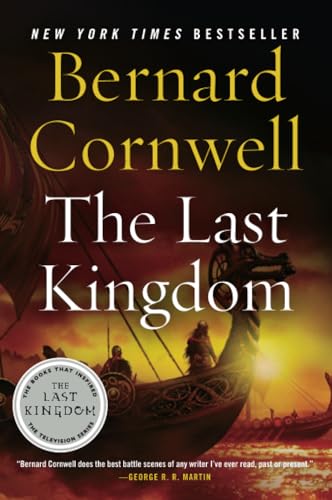
The Last Kingdom (The Saxon Stories, Book 1)
Bernard Cornwell

Meditations
Marcus Aurelius

The Hiding Place
Elizabeth Sherrill, John Sherrill Corrie ten Boom