Best Books About Art and Music in 2026: 10 That Will Change How You Listen and Look
Most writing about art and music falls into one of two failure modes. Academic writing explains the work with so much theoretical scaffolding that the actual experience of encountering the painting or hearing the record gets buried. Popular writing goes the other direction and treats every artist as an inspirational figure, smoothing out the contradictions, the failures, and the outright moral disasters that tend to accompany creative genius at the highest level.
The books on this list avoid both traps. They take their subjects seriously enough to show them fully, which means showing the obsession, the difficult personality, the particular way certain artists and musicians see things that other people do not. These books will change what you notice when you walk through a gallery or put on an album.
What are the best books about art and music?
For art, the best book is Walter Isaacson's Leonardo da Vinci, a biography built from Leonardo's own notebooks. For music, Patti Smith's Just Kids (a National Book Award winner about the New York art scene) and Keith Richards's Life are the standouts. Start with Isaacson if you want art, Patti Smith if you want music and memoir together.
Why Art and Music Books Matter
Context does not replace experience, but it deepens it. Understanding that Leonardo da Vinci's sfumato technique came from his obsessive study of optics, dissection, and fluid dynamics changes how you look at the Mona Lisa. It stops being a famous image you have seen reproduced everywhere and becomes evidence of a particular mind trying to solve problems that nobody had attempted before.
The same applies to music. Knowing the session history behind a Miles Davis record, who played on it, what Davis was demanding from the musicians, how he set up situations where people had to react in real time and could not fall back on rehearsed patterns, changes how you hear the music. These books give you that kind of access.
Leonardo da Vinci by Walter Isaacson
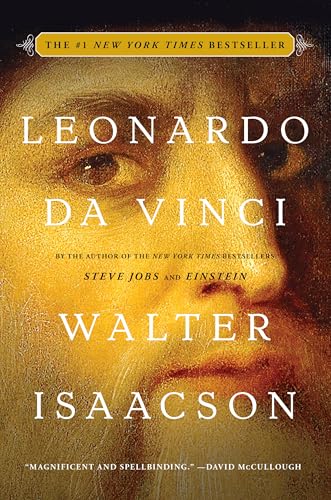
Walter Isaacson has written biographies of Steve Jobs, Albert Einstein, and Benjamin Franklin. His biography of Leonardo da Vinci is the best of them. Isaacson had access to Leonardo's notebooks, 7,200 pages of observations, sketches, to-do lists, anatomical drawings, and ideas that Leonardo never developed into finished work.
What emerges is a portrait of a mind that refused to separate disciplines. Leonardo did not think of himself as a painter who also studied science, or a scientist who also painted. He studied the mechanics of water so he could paint it more accurately. He dissected dozens of corpses so he could understand how muscles worked beneath skin. His unfinished paintings were unfinished because he kept stopping to go deeper into problems that most painters would never have noticed. Isaacson argues convincingly that Leonardo's curiosity was not a distraction from his art but the source of it.
Lives of the Artists by Giorgio Vasari
Giorgio Vasari published his Lives of the Artists in 1550, and it remains essential reading for anyone who wants to understand the Italian Renaissance from the inside. Vasari knew many of the artists he wrote about. He trained under Michelangelo. He was present at events that later historians could only reconstruct from documents.
The book is not objective. Vasari had opinions, preferences, and a clear sense of hierarchy among Renaissance masters. He believed Michelangelo was the culmination of everything Italian art had been building toward, and he shaped his entire narrative to support that conclusion. But that bias is also part of what makes the book valuable: you are reading how a sophisticated sixteenth-century artist thought about the artistic tradition he was part of, which is a different and irreplaceable kind of knowledge.
Just Kids by Patti Smith
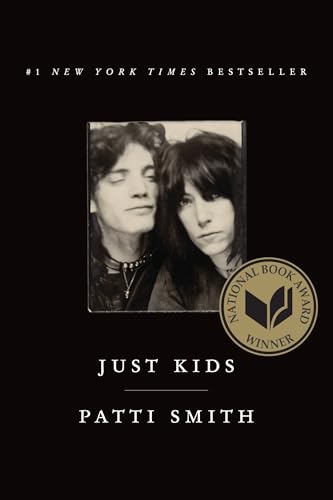
Patti Smith's memoir about her relationship with the photographer Robert Mapplethorpe in New York during the late 1960s and 1970s is one of the most beautiful books about artistic friendship ever written. They were both broke, both unknown, both living at the edge of what the city would tolerate, and they sustained each other through the years before either of them became famous.
Just Kids won the National Book Award in 2010. Smith writes about the Chelsea Hotel, CBGB, Max's Kansas City, and the specific texture of a creative life lived with no money and complete certainty that the work mattered. The book is also a portrait of a friendship that outlasted Mapplethorpe's death from AIDS in 1989. The ending is devastating and earned.
Life by Keith Richards
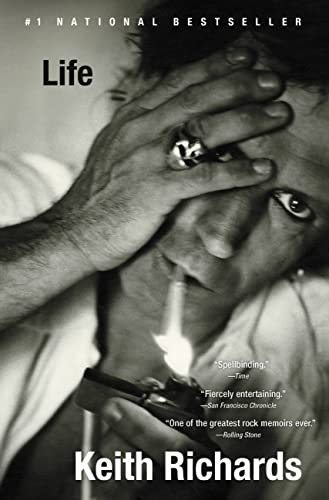
Keith Richards's memoir is 560 pages of one of the most disreputable and interesting careers in popular music history. Life covers the formation of the Rolling Stones, the relationship and rivalry with Mick Jagger, the drug years, the famous Toronto arrest, the deaths of friends and bandmates, and five decades of touring. Richards has total recall for music and selective recall for everything else, which makes the book honest in a way that most rock memoirs are not.
What Richards is exceptional at is explaining how he hears music. The chapters about open G tuning, about the way a guitar riff develops from a chord structure, about the specific quality of sound Richards was always chasing, are as good as anything written about how songwriters actually work. You finish the book with a different understanding of how rock and roll was built, chord by chord, in studios and hotel rooms across thirty years.
Miles: The Autobiography by Miles Davis
Miles Davis recorded some of the most important music of the twentieth century across five distinct phases of his career, each of which would have been enough to define most musicians' entire legacy. The autobiography, written with Quincy Troupe, is confrontational, funny, explicit about race, explicit about drugs, and completely unwilling to present Davis as a likable figure. He was not, by most accounts, a pleasant person to spend time with.
What the book captures is Davis's competitive obsession with innovation. He was genuinely disgusted by musicians who played safe, who repeated what had worked before, who let comfort replace invention. The chapters about recording Kind of Blue, about the formation of the second great quintet with Wayne Shorter, about the electric period of the early 1970s, show a musician who was always trying to hear something that did not exist yet and build the band that could play it.
A Life of Picasso by John Richardson
John Richardson's multi-volume biography of Picasso is the definitive account of the most influential artist of the twentieth century. Richardson knew Picasso personally from the 1950s onward. He had access to family members, former lovers, and studio assistants who talked to almost nobody else. The biography is exhaustive, sometimes exhausting, and completely irreplaceable.
Richardson does not shy away from Picasso's treatment of the women in his life, which was frequently terrible. He also shows exactly how Picasso's relationships fed his work, how each major period corresponded to a different woman, a different circle of friends, a different city. The art and the life are inseparable in ways that are sometimes admirable and sometimes very hard to look at.
Coltrane: The Story of a Sound by Ben Ratliff
Ben Ratliff's book about John Coltrane is not a conventional biography. It is a study of how Coltrane's sound developed over the course of his career, and more unusually, how that sound continued to influence jazz musicians for decades after his death in 1967. Ratliff interviews contemporary saxophonists about what they hear in Coltrane, what they took from him, and what they had to work against.
The result is a book that explains musical influence with unusual clarity. Coltrane developed a technique of playing through chord changes that became known as sheets of sound, a way of implying multiple harmonic possibilities simultaneously. Ratliff shows you where this came from, what it cost Coltrane to develop it, and why musicians are still working out its implications fifty years later.
The Through Line
All seven of these books share a conviction that understanding the artist's working process matters as much as experiencing the finished work. They are not interested in the mythology of genius as a spontaneous gift from nowhere. Leonardo's notebooks show a man working problems to exhaustion. Richards's account of open G tuning shows a guitarist doing the same. Davis's account of setting up a recording session shows a bandleader engineering conditions where something unexpected had to happen.
Creative work at this level is not mysterious if you look at it closely enough. These books let you look closely.
Where to Start
- Leonardo da Vinci by Walter Isaacson - The best entry point. Accessible, grounded in primary sources, and genuinely illuminating about how visual art and scientific investigation can be the same activity.
- Just Kids by Patti Smith - The best book about the experience of being an artist before anyone knows who you are. Beautiful prose, exact memories, and one of the most moving portraits of friendship in American memoir.
- Life by Keith Richards - The best rock memoir ever written. Honest about the disasters, exceptional on the music, and unlike most band books, completely uninterested in being fair to anyone including the author.
Your next good book, in your inbox
We only write when we find a book worth your time. Hand-picked recommendations across history, mythology, true crime and more.
Are you an author?
Get your book in front of readers like these, for free.
- Free book listing →Your own book page with an Amazon button
- Author page →Photo, bio and links to your site
- Featured placement →A spot in our best-of lists, from €29
Free tools we recommend
Get free honest reviewsReview exchange on iWrity, free to join
Books You Might Like
Marin Coloring Book
Braydan Young

Needlepoint Stash & Project Log
Quiet Canvas Press