Best Books About Frisian Culture and History in 2026: 10 Windows Into Europe's Most Overlooked Culture
Picture the North Sea coastline in the early medieval period: a low, wet land of tidal mudflats and raised terp mounds, populated by seafarers whose language was closer to Old English than to anything spoken on the European continent. That was Frisia. It stretched roughly from what is now the Netherlands across northern Germany into Denmark, and the Frisians who lived there were traders, raiders, missionaries, and, for a brief window in the eighth century, the dominant maritime power in the North Sea.
Today, West Frisian survives as a co-official language in the Dutch province of Friesland, spoken by around 400,000 people. It is one of the closest living relatives to Old English. Yet outside the Netherlands it barely registers in popular history writing. The reading list below fixes that gap. These books cover the language itself, the medieval tribal world, the literary tradition, the Reformation context, and the quiet modern fight to keep Frisian culture alive. If you want to go further and actually learn some Frisian, LearnFrisian.com is a free platform with 7,000 questions and 800 lessons.
The Hidden Culture of the North Sea Coast
Frisian identity is built around the idea that the Frisians were never properly conquered. The Romans bypassed most of Frisia. Charlemagne fought the Frisians hard and won, but the legend of a free people persisted for centuries in the legal concept of "Frisian freedom," the claim that Frisians owed allegiance to no feudal lord, only to the sea and their own law. Whether that was historically accurate matters less than how deeply it shaped Frisian self-understanding.
The books below will push back on some of that mythology while taking the underlying culture seriously. Start with the history, then move to the language, then the literature.
Christopher Wickham, The Inheritance of Rome (2009)
This is not a Frisian book. It is the best single volume on the early medieval world that the Frisians inhabited, and it is the right place to start if you want to understand Frisian tribal society in context. Wickham covers Europe from roughly 400 to 1000 CE, and the Frisian trading network through ports like Dorestad gets serious attention. You will understand why Frisian merchants mattered to the Carolingian economy and what the Viking raids of the ninth century did to that commercial world. The Inheritance of Rome on Amazon is the standard gateway into the early medieval North Sea world.
Peter Schrijver, Language Contact and the Origins of the Germanic Languages (2014)
Dense, scholarly, and one of the most important books written about why Frisian and English are so similar. Schrijver's argument is that the similarities between Old Frisian, Old English, and Old Saxon are not just a matter of proximity but reflect deep substrate influence from pre-Germanic populations along the North Sea coast. This book is for readers who want to understand the linguistic archaeology behind the Frisian language. It is not a casual read, but for anyone curious about how a language survives for two thousand years on a stretch of mudflat coastline, it is essential.
Goffe Jensma, De Gemaskerde God (2004)
The most famous controversy in Frisian cultural history. In 1827, a Frisian schoolteacher named Hendrik Over de Linden claimed to have discovered an ancient manuscript, the Oera Linda Book, describing a lost Frisian civilization predating classical Greece. It was almost certainly a nineteenth-century forgery, but the story of why it was created, who believed it, and how it was used by German nationalists in the twentieth century is a window into how small nations construct mythic pasts. Jensma's book is the definitive scholarly investigation. It is written in Dutch, which limits its English audience, but it belongs on this list because no understanding of modern Frisian cultural politics is complete without it.
Philippus van Marnix van Sint Aldegonde and the Dutch-Frisian Reformation
Marnix was not Frisian by birth, but his Wilhelmus, the Dutch national anthem he almost certainly wrote, emerged from the Reformation politics that also reshaped Frisian religious life in the sixteenth century. The Calvinist Reformation hit Friesland hard: monasteries dissolved, Latin manuscripts destroyed, and the emerging Dutch language began competing with Frisian for literate prestige. Any reader interested in why Frisian lost ground to Dutch in formal writing should explore this period. Alastair Duke's Reformation and Revolt in the Low Countries covers the broader context accessibly.
Tsjêbbe Hettinga, Selected Poems (2004)
Hettinga is the most internationally recognized Frisian poet of the twentieth century, and his work has been translated into English, German, and several other languages. His poems draw on the Frisian landscape, particularly the coastal fenland and the polder, and on a sense of cultural margin. The English translations collected in Selected Poems are the easiest entry point into Frisian literary tradition for readers without Dutch. They are also simply very good poems, spare and imagistic. If you have never encountered Frisian literature before, start here.
Durk van der Ploeg, Frisian Fiction
Van der Ploeg is one of the most prolific and widely read novelists writing in the Frisian language. His fiction is rooted in rural Frisian life and deals with themes of identity, loss, and the pressure of modernization. Most of his work has not been translated into English, which is itself part of the story of Frisian culture: a rich literary tradition that remains invisible to outside readers because the market for translation is tiny. Frisian readers will find his novels rewarding; English readers can look for occasional translated excerpts in comparative literature journals.
Lotte Jensen, De Verhalen Van Nederland (2020)
Jensen's book covers the national narratives of the Netherlands from the Batavian myth through the twentieth century, and the Frisian freedom myth receives serious attention. For English readers, this is a harder find because it is published in Dutch, but it is the best recent analysis of how Frisian identity fits into the broader Dutch national story. Jensen is a cultural historian at Radboud University and writes accessibly for a general audience. If you read Dutch, this belongs immediately on the list.
Hans Douma and the Language Revival
The effort to keep Frisian alive in schools, media, and public life has been ongoing since the nineteenth century, and Hans Douma has been one of the researchers documenting both its successes and its failures. The academic literature on Frisian language policy is substantial, but for a general reader, the most accessible entry is through the Fryske Akademy's published research overviews, which are available partially in English on their website. The core finding: Frisian is stable in numbers but losing ground in daily use, especially among younger speakers who default to Dutch.
If you want to experience the language directly rather than read about it, LearnFrisian.com has free lessons built on real Frisian vocabulary and audio recorded by native speakers. It is the fastest way to understand what makes Frisian phonologically distinct from Dutch and English.
The Best Starting Point for Most Readers
If you are new to Frisian history and want a single book, start with Christopher Wickham's The Inheritance of Rome. It gives you the early medieval world in which Frisian culture formed, and it will make the more Frisian-specific books far easier to read. Follow it with Tsjêbbe Hettinga's poetry for the literary angle, and then Schrijver's linguistics book if you want to go deep on why Frisian is so distinct.
What These Books Reveal
Frisian culture is not a curiosity. It is a case study in how a language and identity survive at the margins of larger nations for over two thousand years. The Frisians had their own law codes when most of Europe was illiterate. They produced the first vernacular legal text in the Germanic world. Their poetry tradition predates the Dutch literary canon. And their language is, structurally, the closest living thing to the English spoken in England before the Norman Conquest.
Most people have never heard of any of this. That is an accident of geopolitics, not of cultural depth.
For related reading on the wider Northern European world, see our guide to the best Viking books and the best Norse mythology books. The Celtic parallel, another language family pushed to Europe's margins, is covered in our best books about Celtic mythology and history. Or browse the history category for reading lists across every era.
Your next good book, in your inbox
We only write when we find a book worth your time. Hand-picked recommendations across history, mythology, true crime and more.
Are you an author?
Get your book in front of readers like these, for free.
- Free book listing →Your own book page with an Amazon button
- Author page →Photo, bio and links to your site
- Featured placement →A spot in our best-of lists, from €29
Free tools we recommend
Get free honest reviewsReview exchange on iWrity, free to join
Books You Might Like

Sapiens: A Brief History of Humankind
Yuval Noah Harari
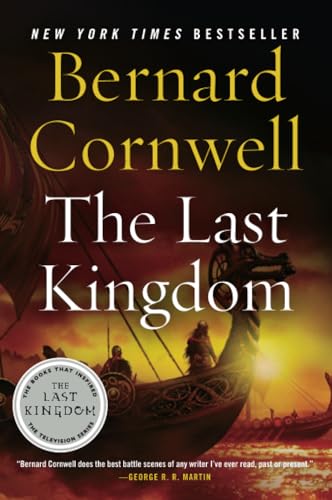
The Last Kingdom (The Saxon Stories, Book 1)
Bernard Cornwell

Meditations
Marcus Aurelius

The Hiding Place
Elizabeth Sherrill, John Sherrill Corrie ten Boom