Best Byzantine History Books in 2026: 12 That Reveal the Roman Empire That Survived a Thousand Years Longer Than You Thought
Byzantium was the Roman Empire. Not a continuation of it, not a successor state, not a medieval imitation: the actual Roman Empire, which called itself the Roman Empire, considered its citizens Romans, and maintained an unbroken institutional and legal continuity from Augustus to the fall of Constantinople in 1453. The word "Byzantium" was invented by Western European historians in the sixteenth century to describe a civilization they had already decided was decadent and peripheral to their own story. The Byzantines themselves would not have recognized the term.
What the Byzantines were, in fact, was the most successful long-duration state in European history: a thousand years of continuous existence, preserving Roman law, Greek philosophy, and Christian theology through the centuries that Western Europe spent in the early medieval period. They also transmitted the ancient world to the Renaissance, produced some of the greatest surviving art and architecture of the medieval period, and fought off Islam, the Persians, the Bulgars, the Rus, the Crusaders, and the Mongols with varying success before finally succumbing to the Ottomans in 1453. These are the best Byzantine history books to read in 2026.
The Best Introductions: Start Here
1. Byzantium: The Surprising Life of a Medieval Empire by Judith Herrin
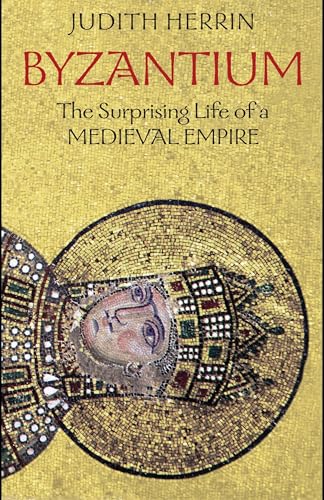
Herrin's book is the best accessible introduction to Byzantine history written in English. It is organized thematically rather than chronologically, which means it can explain what the Byzantine world was like before plunging the reader into narrative. Herrin's central argument, made with considerable force, is that Byzantium was not a curious medieval survival but a genuinely important civilization whose contributions to European and world history have been systematically undervalued because of Western European bias. The book covers art, theology, law, diplomacy, and the daily life of the empire with equal attention. It is the book to give someone who has never thought about Byzantium before.
Byzantium: The Surprising Life of a Medieval Empire by Judith Herrin is the entry point for everyone who knows the word Byzantine but does not yet know what it actually refers to.
2. Lost to the West by Lars Brownworth
Brownworth's narrative history of Byzantium began as a podcast series and became one of the most widely read popular histories of the empire. It covers the full span of Byzantine history through the lives of key emperors and empresses, maintaining narrative momentum where scholarly histories often sacrifice it for completeness. Brownworth is not a professional historian and the book reflects that in places, but it is by far the most readable single-volume narrative of Byzantine history in English and the one that has brought most general readers to the subject. Read this alongside Herrin's thematic overview for the strongest introduction.
3. The Byzantines by Averil Cameron
Cameron is one of the leading Byzantine scholars of her generation and this short Oxford University Press volume is the best brief scholarly overview available. At around 200 pages it covers the full span of Byzantine history, culture, religion, and society without sacrifice of accuracy. Cameron is particularly strong on the theological controversies that shaped Byzantine politics, the Iconoclasm dispute above all, and on the question of what made Byzantine identity distinct from both the earlier Roman and the Western medieval identities that bracketed it. This is the book for readers who want scholarly rigor in compact form.
The Comprehensive Histories
4. Byzantium: The Early Centuries (and the trilogy) by John Julius Norwich
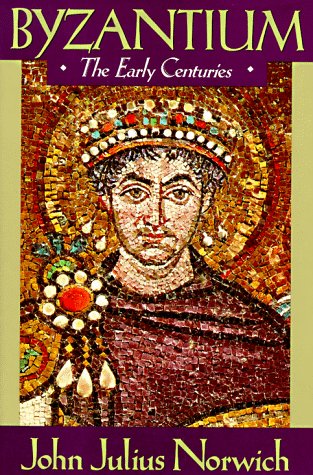
Norwich's three-volume history, covering the Early, Apogee, and Decline and Fall of Byzantium, is the comprehensive narrative account in English. Norwich was not a professional historian but he wrote with exceptional clarity and pace, and the trilogy covers every significant emperor, every major external threat, every theological controversy, and every military campaign from Constantine to 1453. It is nearly 1,500 pages across the three volumes and worth every one of them if you want the full story. The narrative voice is that of a deeply engaged enthusiast who has read everything and wants to tell you about it. The first volume is the most gripping because it covers the period most people know least.
Byzantium: The Early Centuries by John Julius Norwich is the first volume of the trilogy that constitutes the standard comprehensive narrative history of the empire in English.
5. A History of the Byzantine State and Society by Warren Treadgold
Treadgold's 1,000-page single-volume history is the scholarly standard reference. It is more demanding than Norwich's trilogy and less entertaining, but it is also more accurate on disputed points and more thorough on social and economic history. Treadgold covers not only political and military history but the population of the empire, its economy, the size and composition of its army, and the material conditions of Byzantine life in ways that narrative history cannot accommodate. For serious students of the period, this is the book you need on the shelf alongside the more accessible accounts.
The Primary Sources: Byzantines Writing About Byzantium
6. The Secret History by Procopius
Procopius was the official court historian of the Emperor Justinian in the sixth century. He wrote formal histories of Justinian's wars that are among the most important primary sources for sixth-century Byzantine history. He also wrote, apparently for no audience but possibly posterity, a secret account of the court that was not discovered until the seventeenth century. The Secret History describes Justinian and his wife Theodora in terms that are, to put it mildly, unflattering: Justinian as a demon who could remove his head, Theodora as a former prostitute of extraordinary depravity who ruled the empire through her husband. How much of it is true is a matter of scholarly debate. It is the most scandalous ancient text after Suetonius's Lives of the Twelve Caesars and among the most entertaining primary sources for any period of ancient history.
7. The Alexiad by Anna Komnene
Anna Komnene was the daughter of the Emperor Alexios I Komnenos and wrote a history of his reign in the twelfth century. She is the first woman to write a major historical work in European history, and the Alexiad is a remarkable document: it is a biography of her father written by a woman who believed she should have been his successor, who was denied that succession when her brother became emperor, and who spent the second half of her life in a monastery writing what is both a genuine historical account and an argument for her father's greatness. Anna's perspective is partial, but she was present at many of the events she describes, and her account of the First Crusade's arrival in Constantinople is one of the most vivid pieces of medieval historical writing that survives.
8. Fourteen Byzantine Rulers by Michael Psellus
Psellus was an eleventh-century Byzantine courtier and intellectual who wrote memoirs of the fourteen emperors and empresses he served or observed between roughly 976 and 1078. The work is usually translated as Fourteen Byzantine Rulers or the Chronographia. It reads like court gossip elevated to literature: Psellus had access, he had opinions, and he was not shy about either. The portrait of the Empress Zoe, who ruled in her own right and co-ruled with two husbands and a nephew, is one of the most vivid characterizations of any medieval ruler in any language. Psellus is also a primary source for the period of political instability that preceded the catastrophic defeat at Manzikert in 1071.
The Broader Picture: Culture, Scholarship, and Legacy
9. Byzantium: The Empire of New Rome by Cyril Mango
Mango's book focuses on culture and society rather than political and military history. It covers Byzantine art, architecture, theology, literature, and intellectual life with the depth that narrative histories cannot provide. Mango is particularly valuable on the ways Byzantine culture was both continuous with the classical world and genuinely different from it, and on the internal theological debates (over icons, over the nature of Christ, over the relationship between Greek philosophy and Christian doctrine) that shaped Byzantine identity more than any external conflict. It is a complement to narrative history rather than a replacement for it.
10. Sailing from Byzantium by Colin Wells
Wells's book answers a question that most Byzantine histories do not ask: how did the intellectual content of the ancient world survive into the European Renaissance? The answer, he argues, runs substantially through Byzantium. Byzantine scholars preserved and transmitted Greek philosophy, mathematics, and literature through the centuries when Western Europe had limited access to Greek. When Byzantine scholars fled to Italy after the fall of Constantinople in 1453, they brought manuscripts and knowledge that became central to the Italian Renaissance. Wells makes this argument clearly and accessibly, connecting Byzantine intellectual history to a transformation in Western European culture that most people have not been taught to understand as Byzantine in origin.
11. The Decline and Fall of the Roman Empire (Byzantine volumes) by Edward Gibbon
Gibbon's eighteen-century masterpiece shaped how the English-speaking world thought about Byzantium for two hundred years, and much of that shaping was negative. Gibbon considered Byzantium a decadent and increasingly irrelevant civilization, and his accounts of the theological controversies that occupied Byzantine emperors and clergy are laced with Enlightenment contempt. The book is foundational and biased in equal measure. It is worth reading because it is the source of so many received ideas about Byzantine decline, and because understanding its biases explains why Byzantium has been undervalued in Western historiography. Read it alongside Herrin or Norwich to calibrate the distortion.
12. The Byzantine Empire by Robert Browning
Browning's account is shorter than Treadgold's and more scholarly in tone than Norwich's, occupying a useful middle ground for readers who want more rigor than popular history but less density than the academic standard reference. Browning is particularly strong on the early centuries of the empire and on the relationship between Byzantine and Islamic civilization, a relationship of conflict and exchange that shaped both traditions in ways that later historians have often underweighted. The book is out of print but widely available secondhand and worth finding.
Three Byzantine History Books Worth Buying Today
- Byzantium: The Surprising Life of a Medieval Empire by Judith Herrin — the best accessible introduction to what Byzantium actually was and why it matters.
- Byzantium: The Early Centuries by John Julius Norwich — the first volume of the narrative trilogy that tells the full story of the empire from Constantine through the fall.
- The Secret History by Procopius — the most scandalous primary source from any period of ancient history, written by the court historian who apparently could not stop himself.
For more history reading lists, see our history collection. If the broader story of the Roman world interests you, our ancient civilizations overview covers the context from which Byzantium emerged.
Your next good book, in your inbox
We only write when we find a book worth your time. Hand-picked recommendations across history, mythology, true crime and more.
Are you an author?
Get your book in front of readers like these, for free.
- Free book listing →Your own book page with an Amazon button
- Author page →Photo, bio and links to your site
- Featured placement →A spot in our best-of lists, from €29
Free tools we recommend
Get free honest reviewsReview exchange on iWrity, free to join
Books You Might Like

Sapiens: A Brief History of Humankind
Yuval Noah Harari
The Last Kingdom (The Saxon Stories, Book 1)
Bernard Cornwell

Meditations
Marcus Aurelius

The Hiding Place
Elizabeth Sherrill, John Sherrill Corrie ten Boom