Best Science Communication Books in 2026: 12 That Explain the Universe Without Dumbing It Down
There is a myth that explaining science requires dumbing it down, removing the details and the real difficulty so that ordinary people can understand. That is wrong. The best science writers do the opposite. They keep the rigor, the actual findings, the genuine complexity, and they make it clear instead of obscure. They do this not by removing content but by removing jargon, by building scaffolding so that readers understand the conceptual foundations before moving to the technical details, by using examples from ordinary life that illuminate rather than oversimplify. The result is that science read this way is more interesting, not less. You understand not just what scientists found but why it matters, what they were trying to do, what they still do not understand.
The books on this list share a conviction that wonder and rigor are not opposites. Explaining how something actually works does not make it less interesting. It makes it more interesting because the real mechanisms are more elegant than the folk explanations. Understanding evolution better does not diminish nature. It deepens it. Knowing the physics of black holes makes them more fascinating, not less. These books are written by scientists who understand that clarity is a virtue, that the public understanding of science is not a luxury but a requirement for democratic decisions about technology, medicine, and the environment, and that you can explain difficult ideas without condescension.
The Manifesto: Science as Skepticism and Civic Virtue
 The Demon-Haunted World by Carl Sagan. Sagan wrote this as a defense of scientific thinking against superstition, pseudoscience, and wishful thinking. He explains what science actually is: a method for testing claims against evidence, a way of avoiding fooling yourself. He introduces the "baloney detection kit," a set of practical tools for evaluating any claim. He shows how pseudoscience works, how it exploits cognitive biases and emotional needs. But he does not dismiss people who believe pseudoscience. He explains why superstition is appealing, why the universe can seem hostile without some framework to make sense of it. The book is equal parts history of pseudoscience, philosophy of science, and self-help guide. It is the best defense of scientific thinking written in the twentieth century, and it is still relevant because the fundamental battles have not changed. The struggle between evidence-based thinking and narrative-based thinking remains.
The Demon-Haunted World on Amazon
The Classic: Cosmos and the Beauty of Understanding
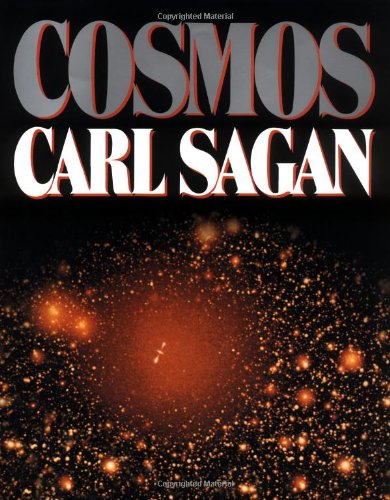 Cosmos by Carl Sagan. Sagan's Cosmos is the most beautiful popular science book ever written. It is the companion to the television series, but the book stands on its own as a meditation on science and the human place in the universe. Sagan traces the history of astronomy, the expanding understanding of space and time, the strangeness of modern physics, the search for extraterrestrial life. He writes with genuine wonder about these subjects. He does not hide the technical details. He explains them in prose that makes them clear. The book works because Sagan saw science not as a collection of facts but as a way of encountering the universe, a conversation between human curiosity and the material world. Reading it is like taking a course in the history and philosophy of science with the best teacher alive.
The Joy of Discovery: Why Science Matters as Craft
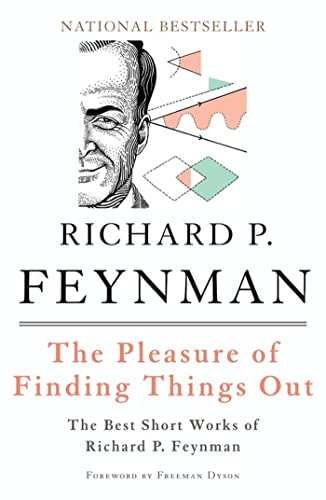 The Pleasure of Finding Things Out by Richard Feynman. This is a collection of Feynman's talks, written down and edited. He talks about the joy of scientific discovery, the pleasure of not knowing and finding out, the mistake of teaching science as received truth rather than as a process of wondering and testing. He talks about how to solve problems, how to think about complex systems, the corruption of science when it becomes about credentials rather than curiosity. The book is short, conversational, and vital. Feynman was one of the greatest physicists of the twentieth century, but his real gift was explaining why science mattered beyond the specific problems being solved. He made you understand that the joy was in the investigation, not in being right. That insight is more important for science communication than any specific concept.
The Pleasure of Finding Things Out on Amazon
The Evolution Perspective: The Gene's Eye View
 The Selfish Gene by Richard Dawkins. Dawkins takes evolutionary theory and approaches it from a novel angle: instead of asking how organisms survive, he asks how genes survive. From this perspective, organisms are vehicles for genes. This reframing is not just clever. It simplifies evolutionary biology and makes surprising predictions that turn out to be true. It explains behaviors that seem to go against survival advantage. It is a beautiful example of how a change in perspective can make a whole field suddenly clearer. The book is still relevant and still controversial because the implications challenge how people think about themselves, their families, their communities. That is the mark of good science writing: it tells you something true that changes your picture of the world.
Evolution Through Natural History: Essays and Observations
 The Panda's Thumb by Stephen Jay Gould. Gould was an evolutionary biologist who wrote essays about evolution, not as theory to be defended, but as lens for understanding nature. The title essay asks why pandas have a "thumb" that is actually an enlarged wrist bone, not the elegant solution that intelligent design would predict. The answer is evolution, which works with what it has, not from first principles. He explains how evolution explains not just what exists but what is awkward and imperfect in nature. The book is full of essays like this, using particular natural history examples to illuminate evolutionary principles and also to show the beauty of nature itself. Gould is a writer first and a scientist second, and that is why his science writing works so well.
The Human Brain: Case Studies and Stories
 The Man Who Mistook His Wife for a Hat by Oliver Sacks. Sacks was a neurologist who wrote case studies of patients with unusual neurological conditions. What makes the book work is that he writes about them as people, not as cases. He explains the neurology, what has gone wrong in the brain, but he also explores how the person experiences their condition, what meanings they make, how they adapt. He covers visual agnosia, where a patient cannot recognize faces. Tourette's syndrome, an excess of involuntary movement and sound. Musical hallucinations. Autism. In each case, Sacks uses the neurology to understand the condition, but he never loses sight of the person living it. The book is the best medical writing in English because it combines technical knowledge with human empathy. It shows that science writing does not have to be detached. It can be full of feeling and still be true.
The Man Who Mistook His Wife for a Hat on Amazon
The Universe and Time: Physics for the General Reader
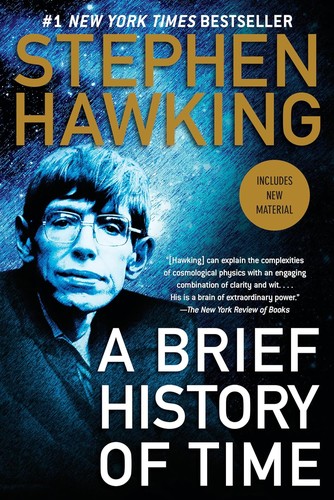 A Brief History of Time by Stephen Hawking. Hawking writes about black holes, the singularity, the nature of time, the question of how the universe began. He is one of the leading physicists of the twentieth century writing about his own field. The book is famous for being a bestseller that people did not finish, but that is not the book's fault. Hawking does not simplify the ideas. He explains them. Black holes are not simple and Hawking does not pretend they are. What he does is build toward them, establishing the concepts you need to understand them, then explaining what happens at the edge of a black hole. The book is worth reading slowly, pausing to think about what has been explained. It is the best account of modern cosmology written for non-specialists.
A Brief History of Time on Amazon
The Unity of Knowledge: Synergy and Integration
 Consilience by E.O. Wilson. Wilson was the leading biologist of his generation and spent his career on ants and on philosophy. Consilience means the jumping together of knowledge from different disciplines, the idea that if you are understanding something true, the findings from biology, psychology, physics, and the other sciences should align and point toward consistent conclusions. Wilson argues for a unified science and shows why that matters. He covers human nature, ethics, the future of human society, arguing that scientific understanding can inform these domains. The book is ambitious and sometimes overreaching, but it models what it means to think at scale, to connect domains that are usually kept separate, to see science as a conversation across disciplines rather than a collection of isolated fields.
Stress and Health: Why Your Body Reacts the Way It Does
 Why Zebras Don't Get Ulcers by Robert Sapolsky. Sapolsky is a primatologist who specializes in stress biology. He explains how the stress response, which was evolutionarily useful for survival, becomes harmful when it is activated chronically in modern life. He covers how cortisol and adrenaline work in the body, how they affect the immune system, the cardiovascular system, memory formation. He uses animal examples, zebras on the Serengeti, stressed primates, to illustrate principles that apply to humans. He does not simplify the biochemistry. He explains it clearly. By the end you understand why stress causes disease, how the body works, and why a society structured to activate the stress response constantly is making you sick. Science writing like this has immediate personal utility, but it also teaches you biology.
Why Zebras Don't Get Ulcers on Amazon
Dark Humor and Human Cadavers: The Macabre and the Scientific
Stiff by Mary Roach. Roach writes about what happens to human cadavers, how they are used in medical research, testing car safety, ballistics experiments, forensic training. The subject is morbid but her approach is not. She treats it with respect for the bodies and the researchers who use them, but she is also funny, curious, sometimes appalled. The book is the proof that science writing can have a dark sense of humor and still be respectful. She explains the science, the ethical frameworks around human experimentation, the history of how cadavers came to be used in research, but she does it with a voice that is both funny and serious. You will laugh and learn simultaneously, and you will come away understanding the research apparatus that keeps medicine moving forward.
Quantum Mechanics Without Mathematics: Many Worlds Explained
Something Deeply Hidden by Sean Carroll. Carroll is a theoretical physicist and popular science writer who tackles quantum mechanics, specifically the many-worlds interpretation, which says that every quantum possibility actually happens in a branching universe. The book does not require mathematics, which is remarkable because quantum mechanics is usually described as impossible to explain without equations. What Carroll does is build up the conceptual foundations, explain what the experiments show, then introduce the interpretation. He also explains why most physicists have not accepted many-worlds despite it being logically elegant. The book is rigorous and clear, and by the end you understand both quantum mechanics and why physicists disagree about what it means. That is good science writing: it explains not just what we know but how we know it and why we are uncertain about what it means.
Something Deeply Hidden on Amazon
Why Scientific Literacy Matters Now
The world runs on science. Technologies that determine your life, from the vaccines that protect you to the algorithms that show you information to the climate systems that will affect where you can live, all rest on scientific knowledge. Understanding science communication is not about understanding every technical detail. It is about understanding how scientists think, what counts as evidence, what we are confident about and what we are uncertain about, how to evaluate claims and separate science from pseudoscience. That literacy is a prerequisite for participating in a democratic society making decisions about technology and the environment. Every person should read at least one of these books. Most people would benefit from reading several.
A Reading Order
Start with Sagan's The Demon-Haunted World if you want to understand how to think scientifically. Start with Feynman's Pleasure of Finding Things Out if you want to understand why science matters as a human activity. Start with Sacks's The Man Who Mistook His Wife for a Hat if you want science writing that is deeply human. For specific topics, read Dawkins for evolution, Gould for natural history, Sapolsky for biology and stress, Roach for macabre science, Carroll for quantum mechanics. Read Sagan's Cosmos for the big picture, Hawking for cosmology. Wilson's Consilience works as a capstone, showing how individual sciences connect into a picture of the world.
Your next good book, in your inbox
We only write when we find a book worth your time. Hand-picked recommendations across history, mythology, true crime and more.
Are you an author?
Get your book in front of readers like these, for free.
- Free book listing →Your own book page with an Amazon button
- Author page →Photo, bio and links to your site
- Featured placement →A spot in our best-of lists, from €29
Free tools we recommend
Get free honest reviewsReview exchange on iWrity, free to join
Books You Might Like

Sapiens: A Brief History of Humankind
Yuval Noah Harari

The Body Keeps the Score
M.D. Bessel van der Kolk

Why We Sleep
Matthew Walker

Astrophysics for People in a Hurry
Neil deGrasse Tyson