Best Viking Historical Fiction Books in 2026: 10 Novels That Put You in the Longship
Viking historical fiction has one serious problem: there is a lot of bad stuff sitting on top of the good. Pulpy berserker fantasies, watered-down retellings, and "Viking" novels that know nothing about oar rigging or shield-wall tactics. The books below are the real thing. Each one is grounded in the actual Viking Age, each one has a serious novelist behind it, and each one puts you somewhere you have not been before.
The list runs from pure historical fiction to mythologically inflected novels that stay rooted in the period. All of them hold up to scrutiny from a reader who also reads Viking history. None of them use horned helmets.
Why Viking Historical Fiction Hits Different
The Viking Age, roughly 793 to 1066 CE, is unusually good material for fiction. The period is short enough to feel coherent but wide enough to cover three continents. The sources are thin enough that novelists have genuine room to move. And the central conflicts are genuinely dramatic: a warrior culture running headlong into Christianity, pagan kings watching the old world collapse around them, settlers in lands so new they had no names for them.
Good Viking fiction exploits all of that. It uses the historical record as a skeleton and builds something living on top of it. The novels below are ranked roughly in terms of where to start, not overall quality. They are all worth your time.
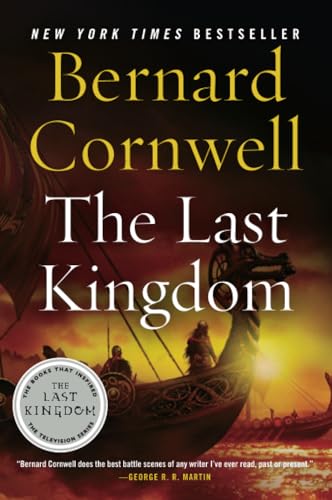
1. The Last Kingdom by Bernard Cornwell
There is no more logical starting point. The Last Kingdom opens the Saxon Stories series, which follows Uhtred of Bebbanburg across eleven novels through the wars between the Danes and Alfred the Great's Wessex. Cornwell did his homework. The shield-wall sequences feel like documentary footage. The Danish characters are not villains; they are people with their own logic and gods and appetites. Uhtred himself is one of the finest narrators in historical fiction, a Saxon raised by Danes who never quite belongs to either world.
The series became the basis for the Netflix show, which is fine, but the novels are better. Start here and plan to lose a month.
Get The Last Kingdom on Amazon
2. The Whale Road by Robert Low
Robert Low's Oathsworn series begins with The Whale Road, and it is the grittiest Viking fiction in print. Low's Norsemen are not romantic raiders. They smell. They argue over food. They follow a half-mad oath to find Attila's silver hoard, and the oath itself is as much a prison as a bond. The prose is terse and physical in a way that most writers in the genre never achieve. Low worked as a war correspondent before writing fiction, and it shows.
If Cornwell's work is a long, confident stride through the Viking Age, Low's is a sprint through knee-deep mud. They complement each other well.
3. The Long Ships by Frans Bengtsson
Published in Sweden in the 1940s and translated into English in 1954, The Long Ships is the ancestor of all Viking fiction that came after it. Bengtsson's hero, Red Orm, moves through a world that stretches from the Moorish court of Cordoba to Kievan Rus to England, and the novel manages to be both historically serious and laugh-out-loud funny. That combination is rare. Bengtsson understood the Viking world as a trading and travelling culture rather than just a raiding one, and he wrote it decades before the archaeology confirmed that picture.
It is out of print in some editions, but worth hunting down. Nothing else feels quite like it.
4. The Viking Trilogy by Tim Severin
Tim Severin spent most of his career recreating historical voyages in period-accurate vessels. His Viking trilogy, beginning with Odinn's Child, brings that same obsessive accuracy to fiction. The novels follow Thorgils Leifsson across Iceland, Greenland, Vinland, and eventually Ireland and further east, and Severin's firsthand knowledge of seamanship and navigation gives the sea passages a credibility no landlocked author could fake. If you want to understand how the Norse actually sailed, these novels work better than most non-fiction.
5. Raven: Blood Eye by Giles Kristian
Giles Kristian's Raven series starts with Blood Eye and follows a young man with no memory of his past who falls in with a Norwegian warband. Kristian writes action sequences exceptionally well, and the series has a clarity of physical detail that keeps the reader anchored in the Viking world rather than drifting toward generic fantasy. The novels are notably good on the relationship between the Norse and the English communities they raided and occasionally settled among. Cornwell's is still the gold standard, but Kristian is the obvious next step after you finish the Saxon Stories.
6. The Gospel of Loki by Joanne Harris
Harris's novel is the outlier on this list because it is narrated by Loki and told entirely from within Norse mythology rather than from the historical Viking Age. It belongs here because Harris approaches the mythology as a serious literary project rather than a fantasy exercise. Her Loki is genuinely complex: charming, amoral, occasionally sympathetic, and ultimately trapped by his own nature. If you come to Viking fiction through an interest in the mythology, this is where that thread leads. It reads fast and sticks around.
Get The Gospel of Loki on Amazon
7. Wolf of Wessex by Matthew Harffy
Matthew Harffy is the writer most likely to satisfy readers who have already worked through Cornwell and Kristian. Wolf of Wessex is a standalone set in ninth-century Wessex during the Danish occupation, following a forest hermit drawn back into a world of violence he had tried to leave behind. Harffy writes tight, disciplined historical fiction with a clean sense of period detail. His longer Bernicia Chronicles series covers the earlier Anglo-Saxon period and runs to twelve books if you want more after this one.
8. The Thrall's Tale by Judith Lindbergh
Lindbergh's novel is set in Greenland during the early settlement period and told through the perspective of a thrall, a slave woman, rather than a warrior or chieftain. That shift in viewpoint changes everything. The Greenland settlement was a brutal experiment in survival at the edge of the known world, and Lindbergh does not soften the realities of Norse slavery or the violence that underpinned the society's social structure. It is the least typical novel on this list and one of the most affecting.
9. Valhalla: The Myths of Norsemen by Rex Warner
Warner's retelling of the Norse myths is not fiction in the strict sense, but it sits naturally alongside this list for readers who want the mythological scaffolding that Viking Age people actually lived inside. Warner's prose is clean and he takes the material seriously. Read it alongside the fiction and the two illuminate each other. If you want a more contemporary version, Neil Gaiman's Norse Mythology covers similar ground with a novelist's ear for rhythm and character.
10. Eaters of the Dead by Michael Crichton
Crichton's novel begins with a real document: the actual tenth-century account by Ahmad ibn Fadlan, an Arab diplomat who traveled north and left one of the few outside descriptions of Norse customs we have. Crichton takes that document and builds a Beowulf retelling around it, with the monsters rationalised as a remnant Neanderthal population. It sounds like it should not work. It works completely. The Norse characters are drawn from the real historical record and the book is, incidentally, a masterclass in how to smuggle serious anthropological material into a thriller.
Where to Start If You Are New to the Genre
The Last Kingdom first, always. After that, the choice depends on what pulled you to the Vikings in the first place. If it was the warfare, go to Robert Low. If it was the voyages, go to Tim Severin. If it was the mythology, go to Joanne Harris. If you want something quieter and more human, go to Judith Lindbergh.
For the history behind the fiction, our guide to the best Viking books covers the non-fiction side, including the modern archaeological scholarship that has changed the picture substantially in the last decade. And if Norse mythology is the entry point, the best Norse mythology books guide ranks the retellings and primary sources separately.
Three to Buy Today
- The Last Kingdom by Bernard Cornwell is the best place to start in Viking historical fiction, with more than a decade of reviews behind it and ten sequels waiting.
- The Long Ships by Frans Bengtsson is the foundational novel of the genre, funny and historically serious in equal measure.
- The Gospel of Loki by Joanne Harris is the best way into the mythology from a literary angle, and one of the most readable books on this list.
Your next good book, in your inbox
We only write when we find a book worth your time. Hand-picked recommendations across history, mythology, true crime and more.
Are you an author?
Get your book in front of readers like these, for free.
- Free book listing →Your own book page with an Amazon button
- Author page →Photo, bio and links to your site
- Featured placement →A spot in our best-of lists, from €29
Free tools we recommend
Get free honest reviewsReview exchange on iWrity, free to join
Books You Might Like

Sapiens: A Brief History of Humankind
Yuval Noah Harari
The Last Kingdom (The Saxon Stories, Book 1)
Bernard Cornwell

Meditations
Marcus Aurelius

The Hiding Place
Elizabeth Sherrill, John Sherrill Corrie ten Boom