6 Hours of Ancient History's Greatest Mysteries: Sleep Stories to Fall Asleep To
Some questions in ancient history have been definitively answered. Many have not. Why did the Bronze Age civilizations collapse simultaneously around 1200 BCE? What happened to the population of Easter Island? Why did the Maya cities of the southern lowlands empty out between 800 and 1000 CE? What do the Nazca lines actually represent? Sleep stories covering 6 hours of ancient history's greatest mysteries take you into the genuine unsolved questions at the edges of ancient history.
The Learn While You Sleep channel covers this topic in long-form, calm-narrated sleep content built for nighttime listening. 144 videos covering history and mythology, all in the same steady, unhurried format that carries you from wakefulness into deep sleep.
6 Hours of Ancient History's Greatest Mysteries
The Real Unsolved Questions of Ancient History
Pop history sells "ancient mysteries" by exaggerating. The genuine open questions are different from the ones that get clickbait treatment, and most of them resist a tidy single-cause answer. The Late Bronze Age collapse around 1200 BCE wiped out the Hittite Empire, drove Egypt into decline, ended Mycenaean Greece, and ruptured the trading network that connected them. Climate change, drought, internal revolts, raids by the Sea Peoples, and supply-chain failure all play a role in the leading theories. No single cause holds up alone. Eric Cline's 1177 B.C.: The Year Civilization Collapsed remains the standard treatment because it treats the collapse as a systems failure rather than a single event.
Easter Island works the same way. The old story of ecological self-destruction by deforestation has been challenged in the past decade by archaeological evidence pointing to rat-driven palm tree loss and post-contact disease as the bigger drivers of population decline. The Maya collapse is even more layered. Drought, soil exhaustion, internal warfare between city-states, and shifts in trade routes all show up in the record. Sleep stories work well for this material because the open questions invite slow thinking, and the absence of a clean answer suits the drift toward sleep.
Why This Format Works for Sleep
The sleep learning format works because it occupies the analytical mind just enough to prevent it from generating its own anxieties, while keeping the emotional stakes low enough to allow actual sleep. Historical content is ideal for this. Genuinely interesting, intellectually engaging, but emotionally distant enough that your nervous system can relax. The events happened long ago, to people you will never meet. Your brain processes the narrative without activating the threat responses that keep you awake.
Long videos matter too. A two-hour video that ends while you are still awake is a disruption. A four-to-seven-hour video carries you through the night without interruption. The channel produces content at the length that sleep actually needs.
Other Ancient Mysteries Worth a Closer Look
The Indus Valley civilization left behind cities the size of Mohenjo-daro and Harappa but no decoded script. We can read Sumerian cuneiform from the same period. The Indus script, with around 400 distinct signs and inscriptions rarely longer than five characters, has resisted every decipherment attempt for a century. Some researchers argue it may not encode a language at all. Göbekli Tepe in southeastern Turkey predates Stonehenge by 6,000 years and was built by hunter-gatherers before settled agriculture. The site overturns the standard model that complex monumental architecture follows farming, not precedes it. The Antikythera mechanism, recovered from a Roman-era shipwreck, is a gear-driven astronomical calculator dating to the second century BCE. Nothing else of that mechanical sophistication appears in the record for another 1,400 years.
More Sleep Stories on the Channel
Browse the full playlist at Fall Asleep to History, 109 videos covering everything from the Stone Age to World War Two. New content added regularly. For more in this format, see our roundup of the ancient civilizations timeline, and our guide to learning history while you sleep.
Books on Ancient History's Greatest Mysteries
Sleep stories build the framework. These books fill in the detail:
- 1177 B.C.: The Year Civilization Collapsed by Eric H. Cline. The standard work on the Late Bronze Age collapse, treating it as a systems failure across the eastern Mediterranean.
- Collapse: How Societies Choose to Fail or Succeed by Jared Diamond. A comparative study of collapses including Easter Island, the Maya, and the Norse settlements in Greenland.
- The Lost World of the Old Ones by David Roberts. Fieldwork on the unanswered questions about the Ancestral Puebloans of the American Southwest, including why they left their cliff dwellings.
Find these and more at Skriuwer's curated history collection, with honest reviews and direct Amazon links. Subscribe to Learn While You Sleep and there will be new content waiting every night.
Your next good book, in your inbox
We only write when we find a book worth your time. Hand-picked recommendations across history, mythology, true crime and more.
Are you an author?
Get your book in front of readers like these, for free.
- Free book listing →Your own book page with an Amazon button
- Author page →Photo, bio and links to your site
- Featured placement →A spot in our best-of lists, from €29
Free tools we recommend
Get free honest reviewsReview exchange on iWrity, free to join
Books You Might Like

Sapiens: A Brief History of Humankind
Yuval Noah Harari
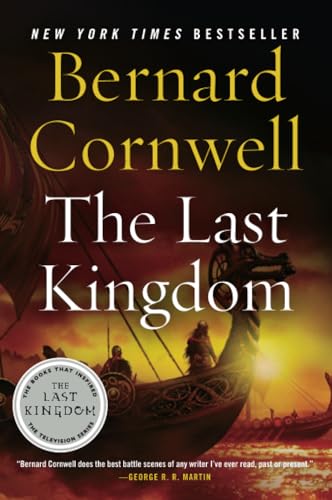
The Last Kingdom (The Saxon Stories, Book 1)
Bernard Cornwell

Meditations
Marcus Aurelius

The Hiding Place
Elizabeth Sherrill, John Sherrill Corrie ten Boom