2 Hours of EPIC Black Death History Facts: Sleep Stories to Fall Asleep To
The Black Death killed between a third and half of Europe's population between 1347 and 1351. In some regions the mortality was higher. Florence lost more than half its people. Entire villages were abandoned and never resettled. The social and economic consequences, the collapse of the feudal labour system, the questioning of Church authority, and the long shift in the balance of power between landlords and peasants, shaped everything that came after. Sleep stories covering Black Death history facts take you through one of the defining catastrophes of human history in a calm, steady voice built for nighttime listening.
The Learn While You Sleep channel covers this topic in long-form, calm-narrated sleep content. 144 videos covering history and mythology, all in the same unhurried format that carries you from wakefulness into deep sleep.
2 Hours of EPIC Black Death History Facts
How the Plague Spread So Fast
The disease was almost certainly bubonic plague caused by the bacterium Yersinia pestis, carried by fleas living on black rats and spread along the trade routes that had made medieval Europe prosperous. It reached the Crimean port of Caffa in 1346, travelled by Genoese ship to Sicily in October 1347, and from there moved through Italy, France, Spain, England, and into Scandinavia and Russia within four years. The same roads and sea lanes that carried grain, wool, and silver carried the plague. Medieval medicine had no understanding of contagion in the modern sense, so quarantine, when it was tried at all, was improvised and patchy. The word quarantine itself comes from the forty-day isolation period the Venetians began imposing on arriving ships.
What the Black Death Changed
The deaths were only the beginning. With a third of the workforce gone, surviving peasants could suddenly demand higher wages and better terms, and the rigid feudal bond between lord and labourer began to break. Attempts to freeze wages by law, like England's Statute of Labourers, mostly failed and helped fuel revolts such as the Peasants' Revolt of 1381. The plague battered confidence in a Church that could neither explain nor stop it, opening space for the religious questioning that would feed into the Reformation. Some historians link the labour shortage to the wave of innovation and the cultural energy that helped drive the Italian Renaissance. For a later pandemic that reshaped the modern world in similar ways, see the Spanish Flu history sleep story.
Why This Format Works for Sleep
The sleep learning format works because it occupies the analytical mind just enough to prevent it from generating its own anxieties, while keeping the emotional stakes low enough to allow actual sleep. Historical content is ideal for this. The events happened long ago, to people you will never meet. Your brain processes the narrative without activating the threat responses that keep you awake. Long videos matter too. A two-hour video that ends while you are still awake is a disruption. A multi-hour video carries you through the night without interruption.
What Recent Plague DNA Research Added
The last decade transformed Black Death scholarship. Researchers have recovered Yersinia pestis DNA directly from the teeth of plague victims in mass graves across Europe, confirming the bacterium beyond doubt and even reconstructing its genome. A widely discussed 2022 study traced the likely origin of the 1340s outbreak to the Tian Shan region of Central Asia, using burials near Lake Issyk-Kul dated to 1338 and 1339. Newer work in 2024 and 2025 has examined how the plague reshaped human immune genes, suggesting that survivors passed on genetic variants that affected the immune response of later generations. The Black Death is no longer just a story from chronicles; it is a story now written in ancient DNA.
More Sleep Stories on the Channel
Browse the full playlist at Fall Asleep to History, 109 videos covering everything from the Stone Age to World War Two. For more medieval episodes, try the medieval history sleep stories hub, and for similar grim subjects the dark history sleep stories hub.
Books on This Topic
Sleep stories build the framework. These books fill in the detail:
- The Great Mortality by John Kelly. The best narrative account of the Black Death in English, gripping and meticulously researched.
- A Distant Mirror by Barbara Tuchman. The fourteenth century in full, including the plague and its long aftermath, told through the life of a single French nobleman.
- Plagues and Peoples by William McNeill. The broader history of infectious disease as a driver of historical change, the classic that put epidemics at the center of world history.
For more curated dark history and pandemic books, browse the Skriuwer dark history collection with honest reviews and direct Amazon links. Subscribe to Learn While You Sleep and there will be new content waiting every night.
Your next good book, in your inbox
We only write when we find a book worth your time. Hand-picked recommendations across history, mythology, true crime and more.
Are you an author?
Get your book in front of readers like these, for free.
- Free book listing →Your own book page with an Amazon button
- Author page →Photo, bio and links to your site
- Featured placement →A spot in our best-of lists, from €29
Free tools we recommend
Get free honest reviewsReview exchange on iWrity, free to join
Books You Might Like

Sapiens: A Brief History of Humankind
Yuval Noah Harari
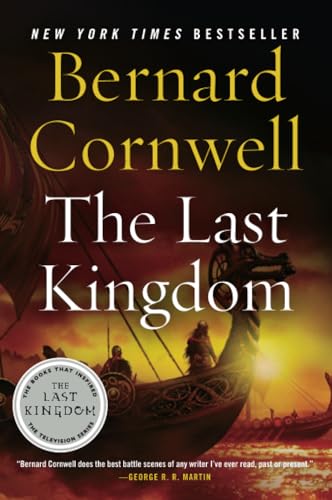
The Last Kingdom (The Saxon Stories, Book 1)
Bernard Cornwell

Meditations
Marcus Aurelius

The Hiding Place
Elizabeth Sherrill, John Sherrill Corrie ten Boom