5 Hours of FASCINATING Inca Empire History Facts: Sleep Stories to Fall Asleep To
The Inca Empire was the largest empire in pre-Columbian America and, at its height around 1500, the largest empire in the world. It controlled a territory stretching nearly 4,000 kilometres along the Andes, governed dozens of distinct ethnic groups, and built a road network that rivalled Rome's, all without iron tools, the wheel, or a written language. These sleep stories covering 5 hours of fascinating Inca Empire history facts take you inside a civilization that ran on entirely different principles from anything in the Old World.
The Learn While You Sleep channel covers the Inca in long-form, calm-narrated audio built for nighttime listening. The pacing is steady and unhurried, designed to carry you from wakefulness into deep sleep while the story of the Andes unfolds in the background.
5 Hours of FASCINATING Inca Empire History Facts
An Empire That Ran Without Writing or Money
The most startling fact about the Inca is how much they achieved without tools the rest of the world considered essential. They had no alphabet. Instead they used the quipu, bundles of knotted strings that recorded census figures, tax obligations, and storehouse inventories, and possibly narrative information that scholars are still trying to decode. They had no money and no markets in the European sense. The economy ran on labor: every household owed the state a set number of days of work, the mita, in exchange for protection and access to vast public storehouses that could feed entire provinces through a famine.
The road system tied it all together. Roughly 40,000 kilometres of stone-paved highway crossed deserts, climbed mountain passes above 5,000 metres, and spanned gorges on woven suspension bridges that were rebuilt every year. Relay runners called chasqui carried messages and even fresh fish from the coast to the capital at Cusco, covering distances that would take a modern hiker weeks.
How the Empire Fell So Fast
For all its organization, the Inca Empire collapsed with shocking speed. When Francisco Pizarro landed in 1532 with fewer than 200 men, he arrived at a moment of catastrophic weakness. A civil war between two royal brothers, Atahualpa and Huascar, had just torn the empire apart, and a smallpox epidemic spreading ahead of the Europeans had already killed the previous emperor and much of the ruling class. Pizarro captured Atahualpa, collected a literal roomful of gold and silver as ransom, then executed him anyway. Resistance continued for another 36 years from the jungle stronghold of Vilcabamba, but the centralized empire was finished. Disease, steel, horses, and Inca disunity did in a few years what no Andean rival had managed in a century.
Why This Format Works for Sleep
The sleep learning format works because it occupies the analytical mind just enough to stop it generating its own anxieties, while keeping the emotional stakes low enough to allow actual rest. Historical content is ideal: genuinely interesting, intellectually engaging, but emotionally distant enough that your nervous system can relax. The events happened long ago, to people you will never meet, so your brain processes the narrative without firing the threat responses that keep you awake.
Length matters too. A short video that ends while you are still awake becomes a disruption. A five-hour recording carries you through the whole night without interruption, which is why this format suits the slow, sprawling story of an Andean empire so well.
Books to Go Deeper on the Inca
Sleep stories build the framework. These three books, all widely reviewed and respected, fill in the detail:
- The Last Days of the Incas by Kim MacQuarrie. The Spanish conquest told with the pace of a thriller, following the search for the lost capital of Vilcabamba. The best entry point for most readers.
- The Conquest of the Incas by John Hemming. The definitive scholarly account of the empire's fall, still unmatched decades after publication and built on both Spanish and indigenous sources.
- Turn Right at Machu Picchu by Mark Adams. A modern travel memoir retracing Hiram Bingham's route to Machu Picchu, weaving the history of the site into a genuinely funny adventure.
For more on the great cultures of the Americas, see our ranked list of the best ancient civilizations books and the broader best history books collection.
More Sleep Stories on the Channel
Browse the full sleep stories collection, or pair this with our companion episodes on the Aztec Empire and the Maya civilization. You can also explore Skriuwer's curated book collection. Subscribe to Learn While You Sleep and there will be new content waiting every night.
Your next good book, in your inbox
We only write when we find a book worth your time. Hand-picked recommendations across history, mythology, true crime and more.
Are you an author?
Get your book in front of readers like these, for free.
- Free book listing →Your own book page with an Amazon button
- Author page →Photo, bio and links to your site
- Featured placement →A spot in our best-of lists, from €29
Free tools we recommend
Get free honest reviewsReview exchange on iWrity, free to join
Books You Might Like

Sapiens: A Brief History of Humankind
Yuval Noah Harari
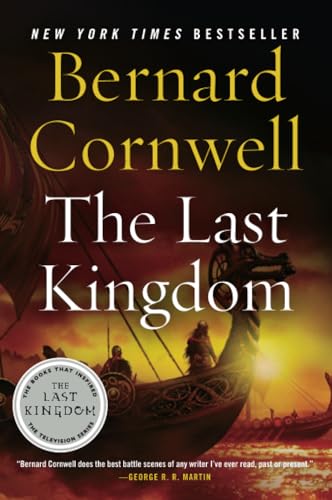
The Last Kingdom (The Saxon Stories, Book 1)
Bernard Cornwell

Meditations
Marcus Aurelius

The Hiding Place
Elizabeth Sherrill, John Sherrill Corrie ten Boom