Best Books About Addiction and Recovery in 2026: 10 That Illuminate the Darkest Struggle
Updated June 2026. Beth Macy's Dopesick became a Hulu series in 2021, and the resulting attention pushed opioid addiction writing back into the mainstream conversation in a way it had not been since the late-1990s heroin memoirs. The addiction memoir has a long and contested history: critics have argued that the genre romanticises self-destruction, that unreliable narrators make the accounts epistemically useless, and that recovery narratives impose a false arc on what is, for many people, a lifelong negotiation rather than a clean ending. The best books in the genre know all of this and reckon with it honestly. The ones below were selected because they do not look away and do not lie.
Addiction writing sits at an intersection that most genres avoid: it requires the author to indict themselves clearly enough to be believed, without performing contrition so thoroughly that the reader stops trusting them. The books that get this right are among the most technically difficult memoirs in any category. They are also often the most useful for people who are not themselves addicted but are trying to understand someone who is.
Skriuwer ranks by honesty, literary quality, and the accuracy of the account against what the clinical and public-health literature describes. For connected reading, our guides to the best books about mental health and therapy and the best books about grief and loss cover adjacent territory.
The Foundational Addiction Memoir
 Junky by William S. Burroughs. Published in 1953 under the pseudonym William Lee, Junky is the first serious literary account of heroin addiction in American writing. It is also one of the strangest: Burroughs does not write as a man who has suffered and learned. He writes as a man reporting on a foreign country he has spent years living in, and his tone is flat, observational, and almost completely without self-pity. The flatness is the point. Burroughs is describing the logic of addiction from inside it, not from the recovered vantage point where most addiction memoirs are written, and what he captures is the way addiction reorganises a person's entire system of value around a single requirement. The prose is not beautiful. It is accurate. That accuracy is why the book has remained in print for over seventy years while more polished addiction memoirs have been forgotten.
The Anatomy of Alcohol
 Drinking: A Love Story by Caroline Knapp. Knapp was a Boston journalist who drank heavily for twenty years before getting sober in her mid-thirties. Her 1996 memoir is built around the thesis that her relationship with alcohol was a relationship in the full psychological sense: that it provided the emotional regulation, the sense of identity, and the feeling of being held that she had never been able to find in actual human relationships. The framing might sound like therapeutic jargon in another writer's hands; in Knapp's, it is precise and unsentimental. She describes the specific pleasures of drinking, the specific humiliations, and the specific terror of trying to live without it, with equal clarity. The book is widely regarded as the best account of alcohol dependence written from a woman's perspective, partly because it addresses the particular way that female perfectionism and alcohol dependency interact, a dynamic that most addiction writing built around male archetypes does not capture.
Drinking: A Love Story on Amazon
The Son's Account
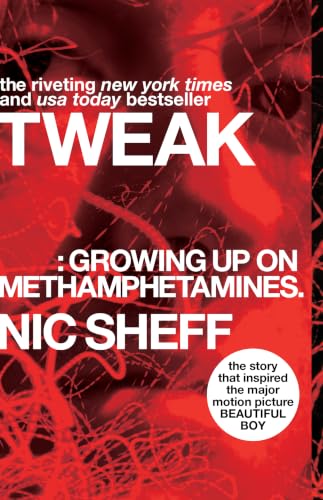 Tweak: Growing Up on Methamphetamines by Nic Sheff. Nic Sheff was in his early twenties when he wrote this memoir of his meth addiction, and the proximity to the events shows in the prose: the chaos is not retrospectively organised into meaning, which is both the book's weakness and what makes it useful. Where most recovery memoirs are written from a point of stable sobriety that imposes retrospective clarity, Sheff was still close enough to the disorder that the book has the texture of the experience rather than the analysis of it. The book was published alongside his father David Sheff's Beautiful Boy, which covers the same period from a parent's perspective. Reading both is one of the more uncomfortable and useful exercises in understanding how addiction operates across a family system. The Nic Sheff account is rawer and less polished; it is also the harder one to dismiss.
The Overlooked Addiction
The Elephant in the Room: One Fat Man's Quest to Get Smaller in a Growing America by Tommy Tomlinson. Tomlinson is a journalist who spent most of his adult life at over 400 pounds and who spent years refusing to call what he had an addiction because food addiction does not carry the same cultural recognition as drug or alcohol dependency. This memoir, published in 2019, is an account of his attempt to lose weight at 51, but more precisely it is an account of the specific psychological mechanics that bind a person to a substance or behaviour they know is killing them, when the substance is one they cannot simply abstain from. The chapters on shame are among the clearest writing on how social stigma interacts with and worsens addictive behaviour, regardless of the substance involved. Tomlinson applies the same journalistic scrutiny to himself that he would apply to any subject, which produces exactly the kind of self-examination that addiction writing usually avoids.
The Elephant in the Room on Amazon
The Literary Investigation
The Recovering: Intoxication and Its Aftermath by Leslie Jamison. Jamison's 2018 book is the most formally ambitious thing on this list: it is simultaneously a memoir of her own alcohol dependency, a literary history of addiction writing from De Quincey through Burroughs and beyond, and an investigation of the social and cultural conditions that shape who gets to tell addiction stories and how they are received. The structure could easily become self-indulgent; instead it produces a genuinely unusual double vision, reading addiction writing as a genre while living inside the experience it describes. Jamison is particularly strong on the way that addiction narratives are gendered, the way that the romantic mythos of the male addict-genius coexists with contempt for women who drink or use, and on the specific temptation that recovery poses to a writer who has built an identity around suffering. The book is long and it asks a lot of the reader. It repays the effort.
The Fiction That Reads as Memoir
 Bad News by Edward St Aubyn (Patrick Melrose series, volume 2). The Patrick Melrose novels are fiction, but St Aubyn has confirmed that they are closely autobiographical, and Bad News is the volume that covers his heroin addiction most directly. The novel takes place over a single day in New York, during which Melrose, recently arrived to collect his father's ashes, spends most of his time using. St Aubyn's technique is to render the experience of being high with the same cool, analytical prose he applies to everything else, which produces a disorienting effect: the sentences are beautiful; what they describe is not. The Patrick Melrose series is the most sustained literary portrait of a mind shaped by childhood abuse and self-medication in English fiction, and Bad News is where the connection between the two is most direct. Read the series in order; the context from the first volume, Never Mind, makes the addiction volumes considerably more explicable.
Bad News (Patrick Melrose) on Amazon
The Public Health Investigation
Dopesick: Dealers, Doctors, and the Drug Company That Addicted America by Beth Macy. Macy is a journalist who spent years reporting on opioid addiction in southwestern Virginia before writing this 2018 account of how the opioid crisis was constructed, sustained, and responded to at the community level. Where the memoirs on this list tell addiction from the inside, Macy tells it from the outside: through the families, the public health workers, the emergency room doctors, and the law enforcement officers who watched communities collapse in the space of a decade. The book's argument is that the opioid crisis is not primarily a story about individual weakness but about a systematic failure to regulate a pharmaceutical industry that knowingly marketed a highly addictive drug using false claims about addiction risk. The structural argument does not absolve the individuals who made bad decisions; it provides the context without which those decisions are inexplicable.
What the Other Lists Miss
Addiction reading lists are heavily weighted toward substances. Two areas consistently go underrepresented. The first is gambling: a clinical addiction with a large and growing evidence base, gambling disorder appears in almost no popular addiction writing despite affecting a significant portion of the population. Marc Lewis's The Biology of Desire is the most careful popular account of the neurological mechanisms that underlie addiction across substances and behaviours; it argues against the disease model and for a learning model without being dismissive of the real suffering involved. The second gap is the experience of family members: David Sheff's Beautiful Boy covers one father's experience, but the literature of loving someone who is addicted is thin relative to the literature written by addicted people themselves.
The Reading Order
Start with Burroughs for the baseline: the clearest account of what addiction looks and feels like from inside it, stripped of recovery narrative. Then Knapp for the emotional anatomy of alcohol dependency. Then Jamison for the literary and cultural context, which reframes everything else on the list. Macy for the structural and public health dimension, which is the most useful frame for understanding opioid addiction specifically. Tomlinson, Sheff, and St Aubyn fill in the specific experiences of food addiction, stimulant addiction, and the long shadow of childhood trauma respectively. Read St Aubyn's series in full if the literary mode is your preferred entry point.
Where to Go After the Addiction Books
Addiction rarely exists in isolation from other psychological conditions. The best books about mental health and therapy cover the trauma, depression, and anxiety that most addiction writing identifies as upstream causes. For the aftermath of losing someone to addiction, the best books about grief and loss address what comes after.
Your next good book, in your inbox
We only write when we find a book worth your time. Hand-picked recommendations across history, mythology, true crime and more.
Are you an author?
Get your book in front of readers like these, for free.
- Free book listing →Your own book page with an Amazon button
- Author page →Photo, bio and links to your site
- Featured placement →A spot in our best-of lists, from €29
Free tools we recommend
Get free honest reviewsReview exchange on iWrity, free to join
Books You Might Like
The Psychology of Money
Morgan Housel

Thinking, Fast and Slow
Daniel Kahneman

Man's Search for Meaning
Viktor E. Frankl

The Body Keeps the Score
M.D. Bessel van der Kolk