Best Books About Grief and Loss in 2026: 10 That Give Words to the Unspeakable
Updated June 2026. Paul Kalanithi's When Breath Becomes Air has now been in print for a decade and shows no sign of leaving the conversation. The same is true of Joan Didion's The Year of Magical Thinking, which won the National Book Award in 2005 and remains the most frequently recommended book on acute grief in the English language. What these books share, and what distinguishes them from lesser grief writing, is that they do not offer comfort. They offer precision. They describe what grief actually is rather than what people wish it were, and the precision turns out to be more useful than reassurance.
Grief writing fails in a particular way: it tends to move too quickly toward meaning. A death has occurred; the author has suffered; the author has found a way to live with the suffering; here is what you can take from this. The arc is real and it matters, but the speed at which it is covered in most grief books elides the part that readers in acute grief most need: the description of what is happening to them right now. The books on this list spend longer in the hard middle than most.
Skriuwer ranks by honesty, literary quality, and the degree to which each book accurately describes the experience rather than managing the reader's distress. For connected reading, see our guides to the best books about mental health and therapy and the best books about relationships and love.
The Shortest and Most Honest
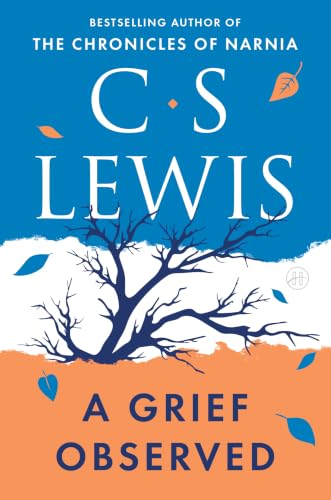 A Grief Observed by C.S. Lewis. Lewis wrote this 1961 book in the weeks following the death of his wife Joy Davidman from cancer, and he wrote it as a journal, not as a meditation or a theological argument. The rawness shows. Lewis, who had spent his career arguing for the rational and emotional coherence of Christian faith, finds that his faith provides none of the consolation he expected it to, and he records his anger at God with the same precision he brought to his apologetics. The book is only 80 pages. Every sentence is doing something. What makes it useful rather than simply moving is that Lewis does not resolve the anger into acceptance or the doubt into renewed certainty; the resolution that comes is a different kind, one that does not require pretending the loss is less than it is. It was published pseudonymously as N.W. Clerk and Lewis did not acknowledge authorship until after his death; the anonymity makes the desperation in the early pages more credible, not less.
The Widow's Account
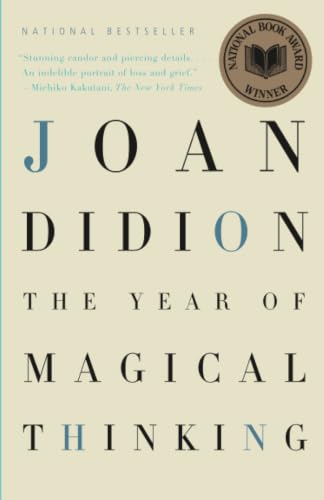 The Year of Magical Thinking by Joan Didion. Didion's husband John Gregory Dunne died of a cardiac arrest in December 2003, while their daughter Quintana was hospitalised in a coma. The book Didion wrote the following year is structured around the concept she names in the title: the way that bereaved people persist in the irrational belief that the dead person might return, and organise their behaviour around that belief in ways they know are irrational and cannot stop. The account of this specific cognitive distortion, which grief researchers now recognise as a normal component of acute grief rather than a pathological one, is the most precise description in the popular literature of how grief works in the weeks and months immediately after a death. Didion also covers the way that grief interacts with identity: who is a person who has been part of a pair for forty years when the pair is broken? The question is not answered; it is held with a precision that makes it possible to look at directly.
The Year of Magical Thinking on Amazon
A Parent's Grief
 Death Be Not Proud by John Gunther. Gunther was one of the most prominent American journalists of the mid-twentieth century, and in 1947 he published this account of his son Johnny's death from a brain tumour at seventeen. The book is now 75 years old, and the medical details are entirely dated, but the emotional account has not aged. What distinguishes it from later grief memoirs is the portrait of Johnny himself: Gunther spends as much time describing his son's intellectual curiosity, his cheerfulness in the face of treatments that were causing him severe pain, and his philosophical engagement with his own dying as he spends on his own grief. The result is a book about loss that is simultaneously a biography of a person who deserved a longer life, which is a different and more difficult thing to write than a first-person account of mourning.
Grief After Sudden Death
 Option B: Facing Adversity, Building Resilience, and Finding Joy by Sheryl Sandberg and Adam Grant. Sandberg's husband Dave Goldberg died unexpectedly in 2015, and this book, co-written with psychologist Adam Grant, is the account of her grief in the first two years after his death. The book is more explicitly practical than the others on this list: Grant's presence ensures that the psychological research on grief, resilience, and post-traumatic growth is represented alongside the memoir sections. This makes it more useful for some readers than purely literary accounts and more clinical for others than they want in the acute stage. The observation that was most widely shared when the book was published, Sandberg's account of going to a school event after her husband's death and finding that well-meaning friends avoided mentioning his death because they did not want to upset her, which made her feel even more alone, captures something about how community support fails the bereaved that no research paper had made as clear.
Extending the Five Stages
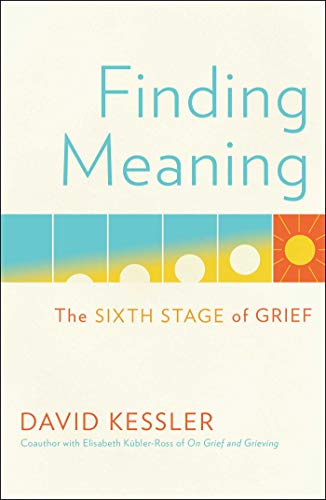 Finding Meaning: The Sixth Stage of Grief by David Kessler. Kessler co-authored two books with Elisabeth Kubler-Ross before her death, and this 2019 book is his extension of her five-stage model to include a sixth stage: meaning-making. The five stages (denial, anger, bargaining, depression, acceptance) are the most widely cited framework in popular grief literature and among the most widely misunderstood. Kubler-Ross developed them to describe the emotional states of people who were dying, not primarily the emotional states of the bereaved, and the stages were never meant to be sequential or universal. Kessler's book is partly a corrective to the misreadings of the original model and partly a genuine extension of it. The meaning-making stage is the most practically useful addition: the argument that grief does not have to end with acceptance, that many people find it possible to construct a positive meaning from loss without denying the loss, is supported by the post-traumatic growth research and matches the experience of many bereaved people more accurately than acceptance alone does.
The Original Clinical Framework
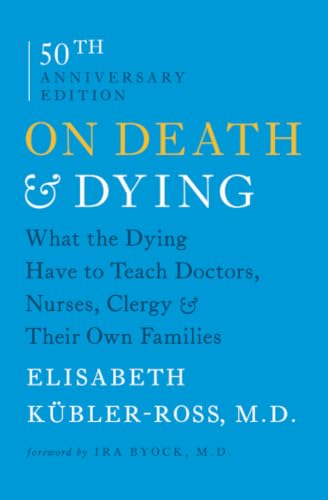 On Death and Dying by Elisabeth Kubler-Ross. Published in 1969, this is the book that introduced the five stages to popular consciousness, and reading it in the original is consistently surprising to people who know the framework only secondhand. Kubler-Ross was a psychiatrist working with terminally ill patients at the University of Chicago, and the book is based on seminars she ran with dying patients who were willing to talk about their experience. The patients are allowed to speak at length in their own voices, which makes the book feel less like a clinical classification system and more like what it actually is: a collection of testimony from people who are navigating a situation no one has prepared them for. The five stages emerge from the testimony rather than being imposed on it, which is why they have remained useful for half a century: they are descriptions of what many people report experiencing, not prescriptions for how people should grieve.
Dying and Knowing It
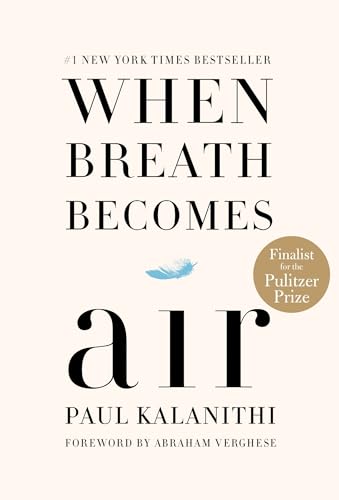 When Breath Becomes Air by Paul Kalanithi. Kalanithi was a neurosurgery resident at Stanford in his mid-thirties when he was diagnosed with stage IV lung cancer. He had spent his career working with dying patients and thinking about questions of meaning and mortality; the diagnosis forced him to apply that thinking to his own situation with no buffer. The book he wrote before his death in 2015 is not a grief memoir in the conventional sense: it is written by the dying person, not by someone mourning them. What it offers is something different from and complementary to the other books on this list: the account of a person deciding what matters in a life that is ending, and how the clarity that comes with a terminal diagnosis changes the relationship to time, work, and other people. The afterword written by his wife Lucy Kalanithi after his death adds the conventional grief perspective and completes the picture in a way that makes the whole greater than either part alone.
When Breath Becomes Air on Amazon
What the Other Lists Miss
Grief reading lists are heavily weighted toward spousal loss and parental loss of children. Two areas get less attention than they deserve. The first is anticipatory grief: the mourning that begins before a death, during a long illness or a terminal diagnosis, which is clinically distinct from post-death grief and is addressed in almost no popular writing. The second is disenfranchised grief: the mourning of losses that society does not recognise as losses, the death of an ex-partner, the loss of a miscarriage or early pregnancy, the end of an estrangement with someone who dies before reconciliation. Kenneth Doka's academic work on disenfranchised grief is the best source, though it is not popular reading; the popular literature has not caught up.
The Reading Order
Start with Lewis for the baseline: the most honest account of what grief feels like in the immediate aftermath, stripped of consolation. Then Didion for the longer arc and the specific cognitive distortions of acute grief. Then Kubler-Ross in the original to understand what the five-stages framework actually says before reading Kessler's extension of it. Kalanithi for the perspective of the dying person, which reframes all the preceding accounts. Gunther, Sandberg, and Kessler cover the specific grief of a parent, the grief of sudden loss, and the search for meaning respectively.
Where to Go After the Grief Books
Grief, at sufficient intensity and duration, becomes indistinguishable from clinical depression. The best books about mental health and therapy cover that territory. The relationship between grief and the bonds that precede it is addressed in the best books about relationships and love: understanding what attachment is and how it works makes the devastation of losing it more explicable. If you want the same weight in novel form, our list of books similar to A Little Life covers fiction that treats grief and loss with the same refusal to look away.
Your next good book, in your inbox
We only write when we find a book worth your time. Hand-picked recommendations across history, mythology, true crime and more.
Are you an author?
Get your book in front of readers like these, for free.
- Free book listing →Your own book page with an Amazon button
- Author page →Photo, bio and links to your site
- Featured placement →A spot in our best-of lists, from €29
Free tools we recommend
Get free honest reviewsReview exchange on iWrity, free to join
Books You Might Like
The Psychology of Money
Morgan Housel

Thinking, Fast and Slow
Daniel Kahneman

Man's Search for Meaning
Viktor E. Frankl

The Body Keeps the Score
M.D. Bessel van der Kolk