Best Books About Mental Health and Therapy in 2026: 10 That Help You Understand Your Mind
Updated June 2026. Bessel van der Kolk's The Body Keeps the Score has been on the New York Times nonfiction bestseller list for over 170 weeks as of June 2026, making it one of the longest-running bestsellers in the history of popular psychology. The sustained interest reflects something real: a large portion of the population is either in therapy, has been in therapy, or is trying to understand someone who is, and the popular literature has historically been poor at explaining what therapy actually is, why it works when it works, and why the same diagnoses can mean radically different things to different people. The books on this list were selected because they are honest about the limits of what psychiatry and therapy know, not just what they claim.
Mental health writing has a credibility problem that runs in two directions: clinical accounts tend to abstract away the human experience, while memoirs tend to personalise so heavily that the structural patterns become invisible. The best books bridge the gap, and they do it without pretending that the field's knowledge is more settled than it is.
Skriuwer ranks by accuracy, literary quality, and the degree to which each book honestly represents what is known and not known about mental illness and its treatment. For related reading, see our guides to the best books about addiction and recovery and the best books about grief and loss.
The Therapist's Account
 Love's Executioner and Other Tales of Psychotherapy by Irvin Yalom. Yalom is an emeritus professor of psychiatry at Stanford and one of the most prominent proponents of existential psychotherapy, a mode that organises treatment around the patient's confrontation with the four unavoidable facts of human existence: death, freedom, isolation, and meaninglessness. This 1989 collection of ten case studies is the best single account of what actually happens in a therapy room available to a general reader. Each case is written as a narrative rather than a clinical report, which means the reader sees Yalom thinking, making mistakes, revising his judgements, and responding to patients in ways that do not always reflect well on him. The honesty about the therapist's own countertransference, the feelings a therapist has toward their patient that shape the treatment whether acknowledged or not, is unusual in clinical writing and makes the book considerably more trustworthy than accounts that present therapy as a clean, directed process.
The Trauma Framework
 The Body Keeps the Score: Brain, Mind, and Body in the Healing of Trauma by Bessel van der Kolk. Van der Kolk is a psychiatrist who spent decades researching post-traumatic stress disorder and who argues, drawing on neuroimaging research and clinical experience, that trauma is not primarily a psychological event but a physiological one: that traumatic experiences are stored in the body and expressed through the body in ways that talking therapy alone cannot always reach. The book is the most thorough popular account of what PTSD is and how it differs from ordinary stress responses, and it covers a range of treatment approaches, from EMDR to yoga to neurofeedback, that have evidence behind them but that conventional psychiatry has been slow to incorporate. Critics have argued that van der Kolk overstates the evidence for some of the body-based treatments he advocates; the chapters on the neuroscience of trauma are more settled than the treatment sections. Read with that caveat in place; the trauma framework itself has held up under subsequent research.
The Body Keeps the Score on Amazon
The Foundational Text on Trauma and Recovery
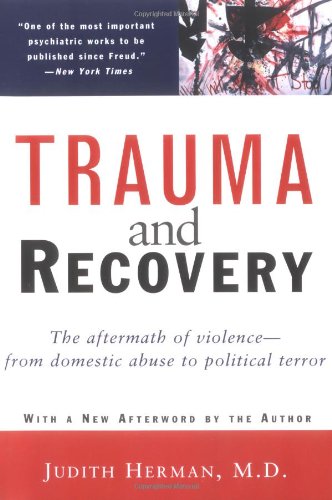 Trauma and Recovery: The Aftermath of Violence from Domestic Abuse to Political Terror by Judith Herman. Herman is a psychiatrist at Harvard Medical School whose 1992 book established the conceptual framework that most trauma treatment still uses. Her central contribution was to demonstrate that the psychological effects of domestic violence, child abuse, and political torture follow the same patterns, and that those patterns required a new diagnostic category: complex PTSD. The DSM did not include complex PTSD until 2022 in the ICD-11 (and the DSM-5 still does not formally recognise it), which gives a sense of how far the clinical establishment has lagged behind the research. The book is also the clearest account of why trauma survivors behave in ways that are often misread as manipulation or instability by people who do not understand what chronic trauma does to the nervous system. It is essential reading before engaging with any of the other books on this list.
Living with Bipolar Disorder
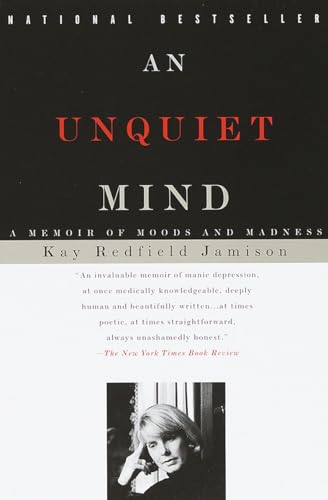 An Unquiet Mind: A Memoir of Moods and Madness by Kay Redfield Jamison. Jamison is a professor of psychiatry at Johns Hopkins and one of the world's leading researchers on bipolar disorder, and she has bipolar disorder. The combination of clinical knowledge and lived experience makes this 1995 memoir something unusual: an account of severe mental illness written by someone who can evaluate her own experience against the research literature while also acknowledging where the research fails to capture what the experience is actually like. The manic episodes she describes are presented without the romanticisation that mars most literary accounts of mania; the depressive episodes are presented without the hopelessness that mars most clinical accounts of depression. Jamison is also unusually direct about the ambivalence many people with bipolar disorder feel about medication, the way that lithium's mood-stabilising effects feel like a loss of self to some patients, which is the most honest treatment of medication compliance in the popular literature.
The Psychiatric Inpatient Experience
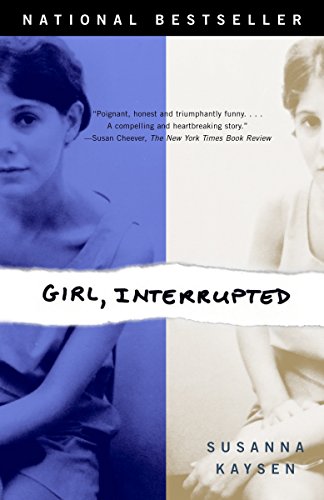 Girl, Interrupted by Susanna Kaysen. Kaysen was 18 when she was admitted to McLean Hospital in Massachusetts in 1967 and spent 18 months there. Her 1993 memoir is partly an account of that experience and partly an investigation into her diagnosis, borderline personality disorder, which she subjects to the same analytical scrutiny she applies to the institution itself. The book is the most sustained critical examination of how psychiatric diagnosis functions as a social practice, not just a medical one, in the popular literature. Kaysen is not arguing that mental illness is not real; she is arguing that the criteria for hospitalisation, and the criteria for diagnosis, are less purely medical and more social and institutional than psychiatry presents them as being. The DSM entries she reproduces and interrogates are as dated as the hospital itself, which makes the book useful for understanding both the history of psychiatric classification and the degree to which that classification has changed, and has not changed, since the 1960s.
The Case for Surviving
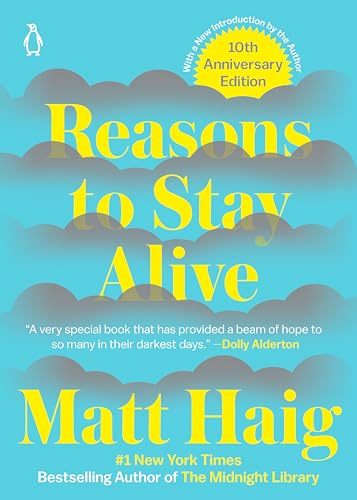 Reasons to Stay Alive by Matt Haig. Haig is a British novelist who had a severe depressive and anxiety breakdown at 24 and wrote this memoir twenty years later. The book is the most widely read on this list and, in some ways, the most modest in its claims: Haig is not a clinician or a researcher, and he is not arguing from evidence about what works in treatment. He is reporting what worked for him, and doing so with the honesty to acknowledge that his specific recovery, through time, through relationships, through writing, may not generalise to everyone. The book's value is partly in its tone: it is written for people who are currently in the worst of it, not for people who are retrospectively curious about depression, and the directness about how bad it gets before it gets better is what distinguishes it from more optimistic mental health writing. Haig has been criticised for some of the lifestyle suggestions in later chapters; the memoir sections are more reliable than the prescriptive ones.
Reasons to Stay Alive on Amazon
The Unreliable Narrator Problem
Lying: A Metaphorical Memoir by Lauren Slater. Slater is a psychologist and memoirist who has written about her own mental illness, including a book about depression and a book about taking Prozac, that have generated significant controversy because of questions about their factual accuracy. Lying is the most honest of her books precisely because it announces in its subtitle that it is a metaphorical memoir, that some of what she describes as literal truth may be emotional truth instead. The book opens with a claim that she has epilepsy; by the end, it is unclear whether the epilepsy is real or is a metaphor for her experience of mental illness. The effect is unsettling and illuminating in equal measure: it forces the reader to think about what they want from a mental illness memoir, and whether the demand for literal factual accuracy is compatible with an accurate account of what psychosis, dissociation, or severe depression actually feels like from inside. No other book on this list asks that question as directly.
Lying: A Metaphorical Memoir on Amazon
What the Other Lists Miss
Mental health reading lists are dominated by trauma and depression. Two areas get consistent short shrift. The first is psychosis: schizophrenia and schizoaffective disorder are among the most common serious mental illnesses, but first-person accounts that are both readable and accurate are rare. Elyn Saks's The Center Cannot Hold is the best of them: Saks is a professor of law and psychiatry at USC who has schizophrenia, and the combination of lived experience and clinical literacy produces the same useful double vision as Jamison's bipolar memoir. The second gap is the patient's experience of medication: the popular literature on psychiatric drugs is dominated by either advocacy or critique, and books that accurately represent what it is like to take antidepressants, antipsychotics, or mood stabilisers long-term, with their side effects and their partial effectiveness, are almost non-existent.
The Reading Order
Start with Herman's Trauma and Recovery for the conceptual framework that underlies most of the other books on this list. Then van der Kolk for the neurological mechanisms. Then Yalom for the inside view of how therapy actually operates. Then Jamison and Kaysen as a pair, both accounts of living inside a serious mental illness diagnosis from people positioned to evaluate that diagnosis critically. Haig for the ground-level experience of acute depression. Slater last, because her challenge to the genre's conventions is most useful once you know what the conventions are.
Where to Go After the Mental Health Books
The mental health literature connects directly to the addiction and grief literatures: most addiction memoirs involve underlying mental illness, and grief, at sufficient severity, is clinically indistinguishable from depression. The best books about addiction and recovery and the best books about grief and loss extend the territory this list covers. For the relationship dimension of psychological health, the best books about relationships and love address the interpersonal side of what therapy works on.
Your next good book, in your inbox
We only write when we find a book worth your time. Hand-picked recommendations across history, mythology, true crime and more.
Are you an author?
Get your book in front of readers like these, for free.
- Free book listing →Your own book page with an Amazon button
- Author page →Photo, bio and links to your site
- Featured placement →A spot in our best-of lists, from €29
Free tools we recommend
Get free honest reviewsReview exchange on iWrity, free to join
Books You Might Like
The Psychology of Money
Morgan Housel

Thinking, Fast and Slow
Daniel Kahneman

Man's Search for Meaning
Viktor E. Frankl

The Body Keeps the Score
M.D. Bessel van der Kolk